

Maddy summaryThe Head Start for Our Future Act amends Section 441(c)(1) of the Higher Education Act of 1965 to replace "literacy training" with "child development and early learning (including Head Start programs and Early Head Start programs carried out under the Head Start Act), literacy training." This technical change formally integrates Head Start and Early Head Start programs into the federal definition of early learning initiatives under the Higher Education Act, while maintaining a separate reference to literacy training. The bill directly affects how federal grants for early childhood education are categorized and administered under the Higher Education Act. It does not alter funding levels, program requirements, or operations but updates administrative terminology to explicitly include Head Start services.
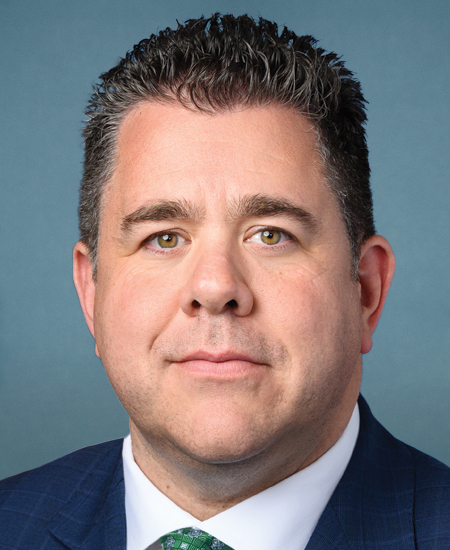
Rep. Nick LaLota
Sponsored bills
Maddy summaryThe CONNECT for Health Act of 2025 expands Medicare telehealth coverage by removing geographic restrictions that limited where patients could receive care, expanding the types of health care providers who can offer telehealth services, and eliminating the requirement for an in-person visit before receiving telemental health services. The bill includes specific provisions to support telehealth use for Native American health facilities, rural health clinics, and Federally Qualified Health Centers. It requires the Centers for Medicare & Medicaid Services to collect and publish data on telehealth usage and impacts, and to develop resources to improve accessibility for people with disabilities and limited English proficiency. Program integrity measures are added to monitor telehealth billing practices and prevent fraud while maintaining coverage for telehealth services during public health emergencies.
Maddy summaryHR 4190, the Defining Humanitarian Demining Assistance Act of 2025, clarifies definitions for two types of U.S. foreign assistance programs under existing law (10 U.S.C. §407). It precisely defines "humanitarian demining assistance" as activities to detect and clear landmines and explosive remnants of war, including training and equipment based on international standards. It also defines "stockpiled conventional munitions assistance" as support for safely managing and disposing of weapons stockpiles, including small arms and missiles. The bill directly affects U.S. government programs providing foreign aid for mine clearance and explosive ordnance safety, ensuring consistent application of these definitions in aid delivery.
Maddy summaryHR 3946, the FIGHT Act of 2025, amends the Animal Welfare Act to specifically prohibit gambling on animal fighting events and restrict the interstate transport of roosters used in such ventures. It defines "rooster" as male chickens over six months old and makes it unlawful to sponsor, exhibit, attend (for those under 16), or gamble on animal fighting events - whether in-person or broadcast. The bill creates a civil enforcement mechanism allowing any person to file a lawsuit to stop violations after providing 60 days' notice to authorities, with potential fines up to $5,000 per violation. It also establishes seizure of property used to facilitate violations and clarifies that state laws on animal fighting remain in effect unless directly conflicting with federal provisions.
Maddy summaryHR 3981 would grant a federal charter to the Veterans Association of Real Estate Professionals (VAREP), a California-based nonprofit already recognized as a veterans service organization under IRS rules. This charter would formalize VAREP's status as a federally chartered entity under Title 36 of the U.S. Code, requiring it to maintain its tax-exempt status under the IRS Code to keep the charter. The bill outlines VAREP's purposes, including advocating for veterans' homeownership, providing financial literacy education, offering housing counseling, and connecting real estate professionals with veterans' needs, while prohibiting political activities, stock issuance, or profit distribution. This is a procedural bill focused on organizational structure, not policy changes.
Maddy summaryHRES 506 is a non-binding House resolution expressing support for preserving Social Security. It states the House believes Social Security must be protected for current beneficiaries (over 66 million Americans receiving retirement, disability, and survivor benefits) and future generations. The resolution emphasizes that workers’ payroll taxes create a promise of income security that should be honored. It does not create new law or change policy - it solely reflects the House’s position. The resolution was introduced by multiple representatives and referred to the Ways and Means Committee.
Maddy summaryThis bill requires the Small Business Administration (SBA) to relocate all its regional, district, and local offices out of jurisdictions classified as "sanctuary jurisdictions" - defined as areas with policies restricting sharing of immigration information with federal authorities or refusing to comply with certain immigration detainer requests. Offices must be moved within 60 days to a location outside a sanctuary jurisdiction, and operations must pause during relocation. The bill excludes jurisdictions with policies protecting crime victims or witnesses from being deemed sanctuary jurisdictions. It directly affects SBA offices (excluding headquarters) in 37 states and localities with such policies, mandating their physical relocation.
Maddy summaryHRES 478 is a symbolic House resolution designating the month of July as "American Patriotism Month." It does not create new laws or policies but encourages voluntary observance through ceremonies, educational activities, and community events celebrating American history and values. The resolution highlights historical events like Independence Day, Pearl Harbor, and 9/11 as examples of patriotism, while urging schools, organizations, and communities to participate in commemorations. It has no binding effect on citizens or government operations and merely requests the President issue an annual proclamation. This is purely a ceremonial recognition with no direct impact on individuals or policy implementation.
Maddy summaryHR 1816, the WOSB Accountability Act, changes how the federal government counts women-owned small businesses (WOSBs) for contracting goals. It removes self-certified WOSBs (businesses claiming to be women-owned without formal SBA review) from federal goal calculations, requiring formal certification by the Small Business Administration (SBA) or an approved entity instead. The bill creates a transition period for businesses already self-certified before the law takes effect, allowing them to count toward goals until SBA reviews their applications. It also mandates quarterly reports to Congress on certification applications, processing times, costs, and outreach efforts to track implementation. This focuses on improving accountability in meeting federal contracting goals for women-owned businesses.
Maddy summaryHR 787, the Plain Language in Contracting Act, requires federal agencies to write contracting notices for small businesses in clear, concise language that follows existing federal plain language guidelines. It mandates that these notices include key words to help small businesses easily identify and understand opportunities on the government's single point of entry for contracts (as defined in 41 U.S.C. § 1708). The Small Business Administration must issue implementing rules within 90 days of the bill's enactment. This law directly affects small businesses seeking government contracts and federal agencies publishing contracting notices, aiming to make the process more accessible.