

Maddy summaryThis bill creates a new federal tax on money received by former U.S. presidents, their immediate family members, or their controlled businesses from civil lawsuits against the government. Under the law, any settlement or verdict awarded to these individuals would be subject to a 100 percent tax, and the payments would not be counted as taxable income for other purposes. To enforce this, the bill requires trustees and administrators to file public reports detailing these payments and imposes a $10,000 penalty for failing to do so. These rules would apply to any funds received on or after May 20, 2026.
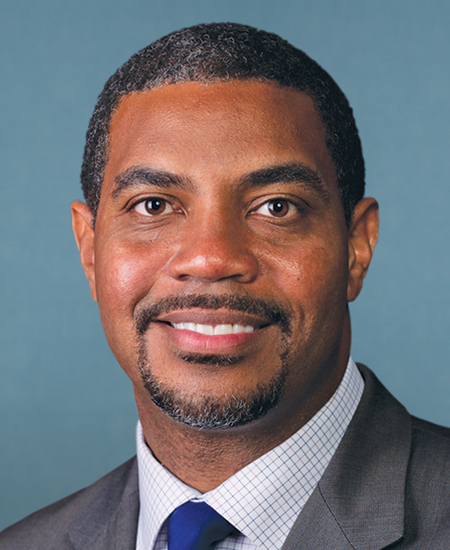
Rep. Steven Horsford
Sponsored bills
Maddy summaryThe IMPACT to Save Moms Act directs the Centers for Medicare & Medicaid Services to run a five-year demonstration project from 2027 to 2031, allowing states to test new payment models for maternity care under Medicaid and state child health plans. This initiative aims to improve health outcomes for pregnant and postpartum individuals, with a specific focus on reducing disparities among groups that experience higher rates of maternal mortality and severe complications. To achieve these goals, the project requires states to consider alternative payment structures that account for pregnancy risk levels, include diverse care teams with training on bias, and address social factors affecting health. The bill also mandates that the federal government evaluate the project's impact on health outcomes and spending, and submit a final report to Congress with recommendations on whether to expand the program nationwide.
Maddy summaryThis bill, known as the Digital Asset PARITY Act, updates U.S. tax laws to clarify how digital assets are treated for income, capital gains, and charitable contributions. It primarily affects individuals and businesses that buy, sell, or hold cryptocurrencies and other digital tokens by establishing specific rules for stablecoins, mining, and staking activities. Key provisions include exempting regulated payment stablecoins from immediate gain recognition when traded at a price near $1, expanding the definition of "specified assets" to include digital assets for wash-sale rules, and allowing taxpayers to defer income on newly created assets earned through validation activities like mining or staking. The legislation also introduces stricter reporting requirements for charitable donations of digital assets and directs the Treasury Department to study ways to reduce compliance burdens for small, personal consumer transactions.
Maddy summaryThe Restoring Overtime Pay Act of 2026 raises the minimum salary required for certain employees to be exempt from federal overtime pay rules, starting at $45,000 per year and increasing annually until it reaches $75,000 by 2029. The bill also mandates that this threshold automatically updates each year to match the 55th percentile of weekly earnings for full-time salaried workers nationwide, with adjustments taking effect based on Bureau of Labor Statistics data. Additionally, the law modifies the duties test for exemption, requiring that at least 20 percent of an employee's time be spent on executive or administrative tasks rather than the current 40 percent standard. These changes directly affect employers and workers covered by the Fair Labor Standards Act by redefining eligibility for overtime exemptions and establishing a new mechanism for adjusting salary requirements over time.
Maddy summaryThis bill, the Tax Cut for Striking Workers Act of 2026, allows workers who are on strike or lockout to receive tax-free strike benefits from their labor unions. These benefits are intended to replace wages lost due to the labor dispute and will not be counted as taxable income for the recipient. The law applies to compensation received after December 31, 2026, and specifically covers members of tax-exempt labor organizations. By excluding these payments from gross income, the bill aims to provide financial relief to striking employees without increasing their tax liability.
Maddy summaryThe Moms Matter Act directs the Department of Health and Human Services to create two main grant programs aimed at improving maternal mental health and reducing health disparities among pregnant and postpartum individuals. The first program provides funding to community organizations and healthcare providers to expand services that integrate mental health care into prenatal and postpartum settings, with a specific focus on groups facing higher risks of mortality and morbidity. The second program offers grants to educational institutions to train and recruit a diverse workforce of mental health professionals who specialize in caring for pregnant and postpartum patients. Both initiatives require recipients to submit annual reports on their activities and outcomes, while the legislation authorizes $25 million and $15 million respectively for each program from fiscal years 2027 through 2031.
Maddy summaryThe Maternal Health Pandemic Response Act allocates $200 million to the Centers for Disease Control and Prevention to improve data collection, surveillance, and research on how public health emergencies affect pregnant and postpartum individuals. This funding supports efforts to gather detailed demographic information on maternal health outcomes, establish regional centers of excellence, and expand surveys to better reach underrepresented communities. The legislation also requires the CDC to make this data publicly available in a disaggregated format while protecting patient privacy, and mandates public education campaigns to ensure accurate information reaches families and healthcare providers. Additionally, the bill creates a diverse task force to develop federal recommendations for respectful maternity care during emergencies, addressing issues such as telehealth access, doula coverage, and the treatment of mental health and substance use disorders. These measures aim to reduce health disparities and improve care quality for pregnant people from racial and ethnic minority groups during public health crises.
Improving SCRA Benefit Utilization Act This bill expands interest rate protections under the Servicemembers Civil Relief Act (SCRA) and requires expanded training for and outreach to servicemembers regarding financial literacy and SCRA protections. The SCRA caps the maximum interest charged on any debt incurred by a servicemember prior to entering active duty at 6% annually if the servicemember's ability to pay is materially affected by active-duty status; servicemembers must provide notice and other documentation to creditors to receive this cap. The bill requires creditors to apply this cap to all of a servicemember’s obligations or liabilities with that creditor, regardless of whether a certain obligation or liability was specifically mentioned in the required notice provided by the member to invoke SCRA rights. Further, the bill requires creditors to provide all necessary mechanisms to ensure a servicemember is able to submit any required documentation. The bill also requires that the financial literacy training program provided to servicemembers include information about consumer financial protections afforded to such members and their dependents, including protections regarding interest rate limits under the SCRA. Additionally, the bill requires the military department concerned to provide written notice of benefits under the SCRA to servicemembers at the time they first enter military service and, for members of the reserve components, at the time they first enter service in the reserves and at any time when they are mobilized or ordered to active duty for more than 30 days.
Maddy summaryThis bill would amend federal law to strengthen penalties for organized retail crime by expanding definitions of theft to include digital goods, gift cards, and setting a $5,000 aggregate value threshold for charges over a 12-month period. It would establish a new "Organized Retail and Supply Chain Crime Coordination Center" under Homeland Security to coordinate Federal, State, local, and Tribal law enforcement efforts against cross-jurisdictional theft groups. The Center would share information with retailers, transportation companies, and law enforcement agencies, track crime trends, and produce annual reports on organized retail crime. This legislation directly affects retailers, supply chain businesses, and law enforcement agencies, while targeting organized crime groups responsible for a 93% increase in larceny incidents and rising safety concerns for retail employees. The bill aims to address significant financial losses and supply chain disruptions noted in the National Retail Federation's 2023 data.
Maddy summaryThe Connected Vehicle Security Act of 2026 restricts the importation, sale, and manufacture of vehicles and related technology from specific countries, including China, Russia, Iran, and North Korea, to address national security concerns. The law defines prohibited items as connected vehicles, their software, and hardware components and sets different effective dates, with vehicle bans starting in 2027 and hardware restrictions beginning in 2030. A government official can grant exceptions for specific items after reviewing security risks and notifying Congress, while the agency must publish annual reports on enforcement actions and compliance.