

Maddy summaryThe Jewish American Security Act aims to combat antisemitism by strengthening protections for Jewish students, securing Jewish communities, and increasing transparency regarding online hate speech. For educational institutions receiving federal funds, the bill mandates the creation of specific coordinators to handle discrimination complaints, requires annual training on handling antisemitism, and establishes a new federal clearinghouse to share best practices for campus safety. To support physical security, the legislation expands grant funding for nonprofit organizations and directs the Attorney General to provide resources for law enforcement agencies protecting houses of worship. Additionally, the act requires major online platforms with over 50 million monthly users to submit detailed reports to the Federal Trade Commission on how they detect, remove, and moderate antisemitic content.
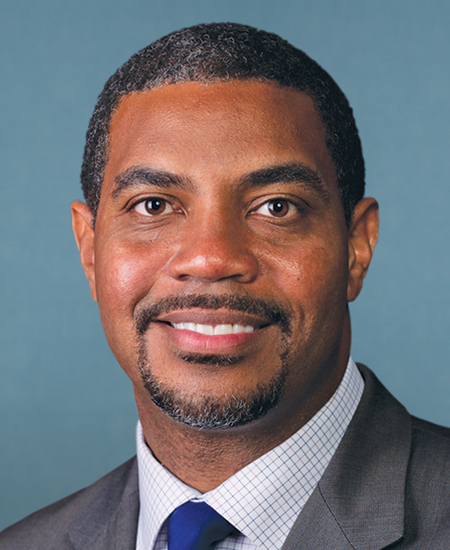
Rep. Steven Horsford
Sponsored bills
Maddy summaryThe GRACE for Military Survivors Act extends the deadline for contributing military death benefits to Roth IRAs and Coverdell education savings accounts from one year to three years. This change directly benefits families of service members who receive these death benefits, giving them more time to save for retirement or education. The law applies to benefits received after the bill is enacted and includes a special rule allowing contributions made within a specific window for benefits received between 2001 and the enactment date. By amending the Internal Revenue Code, the bill ensures that eligible funds can be deposited into these tax-advantaged accounts without losing their value due to time limits.
Maddy summaryThis bill authorizes Congress to award a Congressional Gold Medal to individuals who fought for or with the United States in the Pacific theater during World War II and subsequently became prisoners of war. The legislation specifically recognizes the service and sacrifice of those who defended locations such as Bataan and Corregidor, including Filipino soldiers and civilians who served alongside U.S. forces. To implement this award, the Speaker of the House and the President pro tempore of the Senate will arrange for the creation of a gold medal by the Secretary of the Treasury, which will be presented to the Smithsonian Institution for display. The act also allows for the production of duplicate bronze medals to cover the costs of the original gold medals, with any proceeds from these sales deposited into the United States Mint Public Enterprise Fund.
Maddy summaryThe Latonya Reeves Freedom Act of 2026 strengthens the Americans with Disabilities Act to ensure individuals with long-term service and support needs have a federally protected right to live in their communities rather than institutions. It requires states and insurance providers to offer community-based services that allow people to maintain independence, control their own care, and access affordable, integrated housing. The bill mandates that public entities and insurers create enforceable transition plans to move people out of institutions, conduct self-evaluations to identify barriers, and establish clear grievance procedures for resolving complaints. Enforcement is handled by the Department of Justice, which can investigate violations, while individuals may also file civil lawsuits to seek damages or court orders preventing institutionalization.
Maddy summaryThe Small Business and Consumer Credit Act of 2026 changes how certain financial institutions can use tax losses to offset future profits. It allows these banks to carry forward net operating losses for up to 20 years, with additional rules allowing them to carry losses back to previous years starting in 2028. The law specifically applies to independent banks and certain affiliated groups, requiring them to make an irrevocable election on their tax returns to use these new provisions.
Maddy summaryThis bill requires publicly traded companies and certain government agencies to report quarterly data on how artificial intelligence affects their U.S. workforce. Specifically, these organizations must disclose the number of employees laid off due to AI automation, new hires resulting from AI integration, unfilled positions caused by AI, and individuals receiving AI-related retraining. The Department of Labor will collect this information, analyze the net impact of these changes, and publish the reports on its website while also submitting them to Congress. Additionally, the bill establishes a process for the Department of Labor to determine which non-publicly traded companies should be included in these reporting requirements based on factors like company size and industry.
Maddy summaryThis bill creates a new process to identify military veterans who served at specific Nevada test sites and other facilities linked to toxic exposure, removing the requirement for them to provide proof of contact with harmful substances. It officially classifies service in these areas as involving radiation risks and establishes a legal presumption that veterans who worked there are eligible for disability benefits related to certain diseases without needing to prove a direct link between their illness and the environment. To support these changes, the legislation mandates the creation of a registry to track affected service members and funds a scientific study to better understand the health impacts of toxic exposures at these locations.
Maddy summaryThis bill, known as the Double the Wage for Overtime Act of 2026, aims to change how overtime pay is calculated for employees covered by the Fair Labor Standards Act. It directly affects workers who currently earn less than $23,660 annually, as it would require employers to pay them two times their regular hourly rate instead of one and a half times for hours worked beyond 40 in a week. The law takes effect 180 days after it is signed, ensuring a transition period before the new pay requirements begin. By raising the overtime multiplier, the legislation seeks to increase earnings for hourly workers who work extra hours.
Maddy summaryThe DOMINANCE Act aims to reduce U.S. reliance on strategic competitors like China for critical minerals by building international partnerships to secure diversified supply chains. It establishes a Minerals Security Partnership to coordinate diplomatic, development, and financial support for critical mineral projects with allies, creates a new Office of Energy Security Compacts to develop multi-year agreements with partner countries, and sets up a new Assistant Secretary position for Energy Security at the State Department. The bill also includes education programs like the Critical Mineral Mining Fellowship Program to build U.S. workforce capacity in mining. These measures are designed to enhance U.S. national security and economic competitiveness by ensuring reliable access to critical minerals needed for defense, technology, and energy systems.
Maddy summaryThis resolution expresses support for designating June 5, 2026, as National Gun Violence Awareness Day and June 2026 as National Gun Violence Awareness Month. The bill calls on the public to wear orange on the designated day to honor victims and promote awareness of gun safety. It highlights statistics on gun-related deaths and injuries to underscore the need for community discussions on making neighborhoods safer.