

Maddy summaryThis bill establishes federal protections and funding to expand access to in vitro fertilization and intrauterine insemination for individuals, military service members, and veterans. It requires most private health plans, Medicaid programs, and Medicare to cover these fertility treatments without imposing higher cost-sharing than other medical services. Additionally, the legislation mandates that the Department of Defense and the Department of Veterans Affairs provide specific fertility preservation and treatment benefits to uniformed service members and eligible veterans. The bill also includes preemption clauses that override state laws restricting these procedures and prohibits discrimination based on marital status, sex, or sexual orientation in the provision of care.
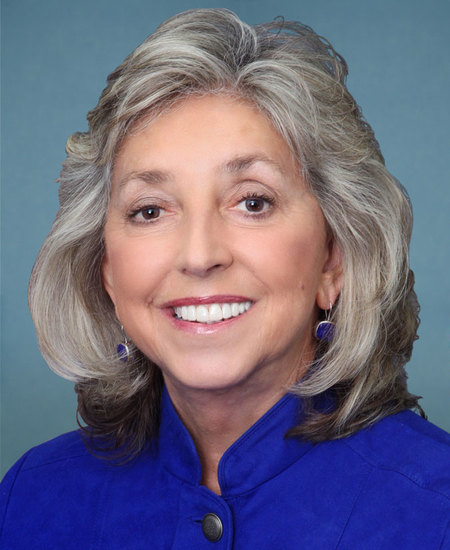
Rep. Dina Titus
Sponsored bills
Maddy summaryThe PATH Act modifies federal funding rules for fixed-guideway transit projects, such as rail lines, to allow grant recipients to use more flexible ridership forecasting methods. Under the new provisions, agencies can choose to base their forecasts on either population density or population growth rate, whichever factor is most beneficial for predicting ridership. The bill also requires these forecasts to consider local development planning activities alongside the chosen population metric. This change directly affects transit agencies applying for capital investment grants by expanding the data they may use to justify project viability.
Maddy summaryThis bill modifies the Federal Credit Union Act to update the rules for privately insured credit unions converting to federal insurance. It requires a higher participation threshold of 20 percent of the membership to vote on such conversions and extends the minimum notice period from seven to ninety days. These changes aim to modernize the conversion process by ensuring broader member involvement and providing more time for preparation. The legislation directly affects privately insured credit unions seeking to transition to federal insurance coverage.
Maddy summaryThis concurrent resolution formally recognizes the persistent wage gap between Black women and white, non-Hispanic men in the United States. It highlights data showing that Black women earn significantly less than their male counterparts and reaffirms Congress's support for existing laws that prohibit pay discrimination based on sex or race. The document does not create new laws or change policy but serves as a symbolic statement to raise awareness about the economic disparities faced by Black women.
Maddy summaryHR 2913, the Ukraine Support Act, provides comprehensive U.S. support for Ukraine in response to Russia's invasion. The bill authorizes security assistance including lend-lease authority for military equipment, establishes a Ukraine Reconstruction Trust Fund for economic recovery, and imposes new sanctions targeting Russian financial institutions, oil companies, and government officials. It also includes provisions to counter Russian disinformation, support Radio Free Europe, and address the kidnapping of Ukrainian children. The legislation directly affects U.S. foreign policy, Ukraine's defense capabilities, and Russia's access to international financial systems. The act aims to strengthen Ukraine's sovereignty while holding Russia accountable for its actions.
Maddy summaryThis bill establishes a legal framework allowing banks and credit unions to provide financial services to businesses operating marijuana or hemp industries under state laws without fear of losing federal protections. It specifically shields these institutions from penalties, insurance termination, or liability if they accept deposits or make loans to state-sanctioned marijuana or hemp companies. The legislation also clarifies that income from these businesses can be used to qualify for federally backed mortgages and requires regulators to update guidance on how to handle suspicious activity reports related to these sectors. Additionally, the bill mandates annual reports and studies to assess access to banking services for minority-owned and small businesses within the industry.
Maddy summaryThe SWIFT Act of 2026 modifies Social Security rules to improve benefits for widows, widowers, and surviving divorced spouses. It allows these individuals to receive full survivor benefits at any age if they have a disability, removing previous age restrictions and ensuring their benefits are not reduced if they remarry. The law also raises the age limit for children receiving benefits based on a parent's work record from 16 to 18, or 19 for full-time students. Additionally, the bill increases the maximum amount survivors can receive by offering financial incentives for delaying their claim until full retirement age. To help people understand these changes, the Social Security Administration will publish and mail a new information booklet to affected families.
Maddy summaryThe Stop CHEATERS Act directs the Internal Revenue Service to increase its enforcement efforts against high-income individuals and large corporations by allocating billions of dollars in additional funding for tax audits, criminal investigations, and taxpayer services through fiscal year 2031. A significant portion of this funding is designated for modernizing the IRS's technology and business systems to improve its ability to detect fraud and noncompliance. The legislation also requires the IRS Commissioner to submit regular reports to Congress detailing plans to shift auditing resources toward wealthy taxpayers and analyzing how much unpaid tax is owed by different income groups.
Maddy summaryThe Foreign Service Test-Free Reentry Act of 2026 allows the State Department to rehire certain former career diplomats without requiring them to take new exams. This provision applies specifically to individuals who were involuntarily separated or retired between January 20, 2025, and January 31, 2030, as part of a reduction in force or similar expedited process. To qualify, these former employees must have been serving in good standing and must not have received low performance rankings in the five years leading up to their separation. The bill aims to streamline the reentry process for these specific groups by waiving standard testing requirements.
Maddy summaryThis concurrent resolution does not create new laws or change existing regulations but serves to formally recognize the ongoing need for better physical access in federally funded facilities, especially for people with disabilities. It highlights statistics on disability prevalence and employment gaps while reaffirming support for the Architectural Barriers Act of 1968 and the Americans with Disabilities Act of 1990. The measure pledges to use universal and inclusive design as a guiding principle for future infrastructure projects and encourages full compliance with current accessibility laws.