

Maddy summaryHR 5964, the Integrated Resource Planning Modernization Act, requires the Secretary of Energy to develop and publish federal guidelines for how electric utilities plan for future electricity needs. These guidelines mandate modern approaches to resource planning, including modeling capacity expansion with diverse options (like storage and distributed energy), integrating transmission planning, using probabilistic analysis for weather and reliability risks, and creating scorecards to weigh costs and benefits. The bill directly affects states, utility commissions, and electric utilities (including cooperatives and municipal systems) by requiring them to align their planning with these federal guidelines. To support implementation, the bill creates a grant program for states to update regulations or coordinate planning efforts, along with technical assistance and a requirement for states to report progress.
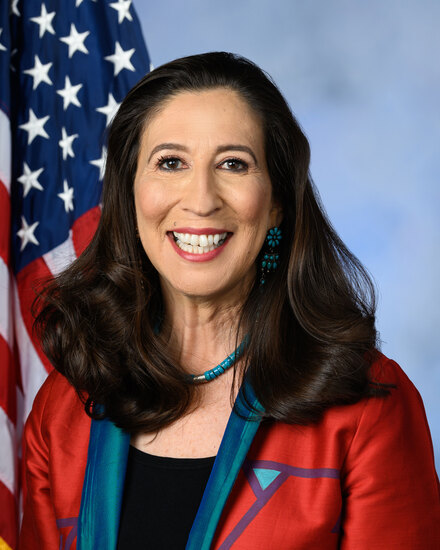
Rep. Teresa Leger Fernandez
Sponsored bills
Maddy summaryThis bill ensures continuous funding for SNAP (food assistance) and WIC (nutrition program for mothers/children) during government funding gaps. It authorizes emergency Treasury funds to cover SNAP/WIC benefits and reimburse states for costs if Congress fails to pass regular appropriations for the Department of Agriculture by September 30, 2025. The funding covers missed payments retroactively from September 30, 2025, through the bill’s enactment date, and continues until either regular appropriations pass or September 30, 2026. It directly affects low-income households relying on these programs and state agencies administering them during funding lapses.
Maddy summaryThis bill increases annual funding for the Historic Preservation Fund from $150 million to $300 million. It mandates that at least 40% of funds go to State Historic Preservation Offices and 20% to Tribal Historic Preservation Offices each year, with tribal allocations adjusted annually based on the number of offices. The bill authorizes funding for specific existing programs, including African American Civil Rights Movement Grants, Equal Rights Grants, Survey Grants for Underrepresented Communities, and Paul Bruhn Historic Revitalization Grants. It requires the President to submit annual allocation plans and reports to Congress detailing how funds are distributed across these programs.
Maddy summaryThis joint resolution designates October 2025 as Head Start Awareness Month to symbolically recognize the program's 60-year impact. It highlights Head Start's service to over 40 million children and families nationwide, emphasizing its role in early childhood development, health screenings, and educational support. The resolution serves as a ceremonial acknowledgment of the program's legacy and achievements, not as a policy change or funding measure. It was introduced by multiple representatives to honor Head Start's contributions to child well-being and educational outcomes.
Head Start Shutdown Protection Act of 2025 This bill requires the Department of Health and Human Services to reimburse a state, local government, or school district that uses its funds to maintain participation in the Head Start program or the Early Head Start program during a government shutdown in which there is a lapse in federal appropriations for the programs. The Head Start programs provide comprehensive early childhood education and development services to low-income children. The programs seek to promote school readiness through the provision of educational, health, nutritional, social, and other services.
Maddy summaryThis bill restores the pre-January 20, 2025, administrative structure of the Head Start program within the Department of Health and Human Services. It establishes a central Office of Head Start with 12 regional offices, requiring the Secretary to maintain all prior staffing levels, organizational structure, and functions. The bill prohibits the Secretary from restructuring the office or reducing staff without providing 60 days' notice to Congress and the public, ensuring continuity in program oversight. It directly affects the Office of Head Start, its regional offices, and HHS staff managing Head Start operations.
Maddy summaryThis bill makes federal funding for the WIC program mandatory by requiring Congress to appropriate necessary funds annually for fiscal year 2026 and each subsequent year. It removes discretionary language from WIC funding requirements and clarifies that eligible participants must be served without participation limits. The bill directly affects low-income pregnant women, new mothers, and young children who rely on WIC for nutrition assistance, ensuring continued access to critical food, health, and education services.
Maddy summaryHCONRES 56 is a symbolic congressional resolution recognizing the persistent wage gap faced by Latina women in the U.S. It specifically highlights that, as of 2024, Latina workers earn just 58 cents for every dollar paid to White, non-Hispanic men working full-time year-round. The resolution designates October 8, 2025, as "Latina Equal Pay Day" to raise awareness about this disparity, which affects over 14 million Hispanic women in the labor force. It does not create new laws or policies but formally acknowledges the economic impact of this gap on Latina families and the broader economy.
Maddy summaryHRES 797 is a non-binding resolution expressing concern about the rising number of book bans in U.S. schools and libraries. It cites PEN America data showing 6,870 book bans affecting 3,751 titles between July 2024 and June 2025, with books about race, LGBTQ+ experiences, and marginalized communities disproportionately targeted (e.g., *The Handmaid’s Tale*, *Maus*, *This Book Is Gay*). The resolution calls on schools to follow best practices for book challenges, protect students’ access to diverse materials, and return books removed from military schools under recent executive orders. It directly addresses students, educators, librarians, and authors impacted by censorship, emphasizing that such bans threaten free expression and democratic values.
Maddy summaryHR 5673, titled "Stop the Trump Electricity Price Hikes Act," would reinstate financial assistance awards terminated by the Department of Energy under a May 15, 2025, secretarial memorandum. It directly affects recipients of these awards - likely energy or infrastructure projects - that had their funding cut, by restoring their financial support as if the terminations never occurred. The key mechanism requires the Department to treat all such terminated awards as valid and continuing, overriding prior termination actions. This bill does not address electricity pricing, consumer rates, or introduce new energy regulations.