

Maddy summaryHR 5652, the Wildfire Recovery Act, increases federal reimbursement for wildfire response by setting a minimum 75% federal cost share under Section 420 of the Stafford Act, directly benefiting states, local governments, and Tribal governments that deploy firefighting resources. It requires FEMA to develop rules within three years to determine when the federal share could exceed 75% based on a state's financial impact from wildfires. The bill also updates FEMA policy to allow reimbursement for predeployment of fire assets (like crews or equipment) before a fire occurs. These changes aim to provide more predictable and timely federal support for wildfire recovery efforts.
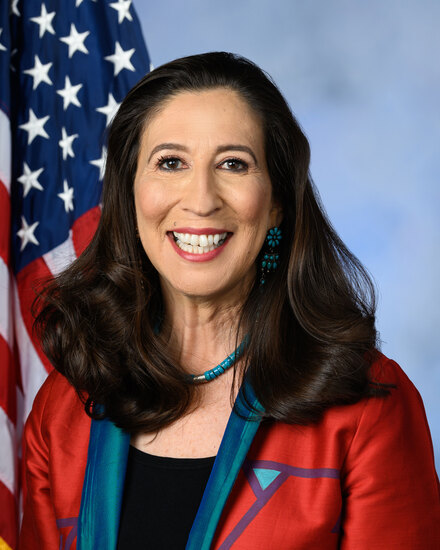
Rep. Teresa Leger Fernandez
Sponsored bills
Maddy summaryHRES 911 is a symbolic resolution recognizing National Native American Heritage Month (November 1-30) and Native American Heritage Day, as established by prior law. It urges the public to observe these occasions through programs that celebrate Native American cultures, heritages, and contributions to U.S. history, including fields like agriculture, medicine, military service, and language. The resolution does not create new legal requirements but formally acknowledges the ongoing significance of Native American communities and their historical impact. It aligns with existing congressional support for Tribal self-governance and honors the contributions of Native Americans as documented in the 2009 Native American Heritage Day Act.
Maddy summaryHRES 899 is a symbolic House resolution recognizing the Transgender Day of Remembrance and memorializing transgender people killed by violence in 2024-2025. It directly affects transgender individuals, particularly transgender women of color, by acknowledging the epidemic of violence against them - citing 27 U.S. victims (including names like Rick Alastor Newman and Kyla Jane Walker) and 241 global cases in 2025. The resolution’s key provisions include formally recognizing the violence epidemic, memorializing specific lives lost, and affirming the need for solutions to protect transgender people. It does not create new laws but expresses congressional support for addressing systemic violence and discrimination faced by transgender communities.
Maddy summaryThis bill amends the Taos Pueblo Indian Water Rights Settlement Act to establish two new trust funds: a $190 million Groundwater Development Supplemental Trust Fund and a $16 million Surface Water Sharing Supplemental Trust Fund. These funds will support water infrastructure projects for the Taos Pueblo tribe and eligible non-Pueblo entities to address water rights and offset surface water depletion effects. The bill sets specific deadlines requiring at least 10-15% of funds to be spent within 3 years, with full construction completion required within 4-8 years depending on project type. It also allows for alternative infrastructure if projects fall behind schedule, with provisions for returning unspent funds to the Treasury.
Maddy summaryHR 6206, the Protect Culturally Sensitive Information Act, protects specific information shared by Indian Tribes, Alaska Native Entities, and Native Hawaiian Organizations with the federal government. It prohibits public disclosure of designated "culturally sensitive information," such as locations of sacred sites, burial sites, cultural items, or religious practices, unless tribes consent in writing or under strict court-ordered circumstances with mitigation steps. Federal agencies must consult with tribal representatives on handling such information and store it securely, with limited exceptions for lawful court orders requiring agencies to notify tribes and seek redaction or sealed review. The bill directly affects tribal governments and their representatives by giving them authority to designate sensitive information and control its disclosure.
Maddy summaryHR 6181, the John Lewis Every Child Deserves a Family Act, prohibits child welfare agencies receiving federal funds from discriminating against children, youth, or prospective foster/adoptive parents based on religion, sex (including sexual orientation and gender identity), or marital status. It directly affects LGBTQ youth in foster care - overrepresented at 30% of the system - who face higher risks of trauma, group home placements, and suicide attempts compared to non-LGBTQ peers. Key provisions require agencies to collect data on sexual orientation and gender identity, establish a National Resource Center for LGBTQ youth support, provide cultural competency training, and eliminate discriminatory practices. The law aims to improve safety, permanency, and placement stability by expanding access to family-based care and ensuring equitable services for all children in the system.
Maddy summaryThe Global Respect Act (HR 6151) requires the U.S. President to publicly list foreign officials responsible for severe human rights violations against LGBTQI individuals, including torture, prolonged detention, or violence based on sexual orientation or gender identity. It mandates denying visas and entry to listed individuals and requires annual reports on the list's updates and impacts. The bill also directs the State Department to track global violence against LGBTQI people and update annual human rights reports to include discrimination based on sexual orientation or gender identity. These provisions directly affect foreign government officials and entities implicated in such abuses, aiming to increase accountability through U.S. visa restrictions.
Maddy summaryThe EXPERTS Act of 2025 requires agencies to disclose funding sources and potential conflicts of interest for studies submitted during rulemaking, including who funded research and any financial relationships that might influence findings. It establishes an Office of the Public Advocate within the Office of Management and Budget to assist public participation in rulemaking, conduct social equity assessments, and improve outreach to underrepresented groups. The bill also mandates that agencies consider social equity impacts when creating rules and requires detailed explanations for withdrawing proposed regulations. These provisions aim to increase transparency, inclusivity, and accountability in the federal regulatory process.
Maddy summaryHRES 891 is a ceremonial House resolution supporting the designation of National Rural Health Day, observed annually on the third Thursday of November (November 20, 2025, this year). It recognizes rural health care providers and the challenges rural communities face in accessing care, citing issues like hospital closures and workforce shortages. The resolution does not create new policies, funding, or requirements; it solely expresses the House's support for the day's goals and commitment to improving rural health accessibility. This is a non-binding acknowledgment, not a legislative action with concrete policy changes.
Maddy summaryHR 6049, the No Payola Act, repeals a requirement that Senate staff notify the Senate when legal process seeks to disclose Senate data. It also requires Senators who received funds from private lawsuits under the repealed provision to repay those funds to the Treasury. The bill directly affects Senators who might have been involved in legal cases related to the repealed notification rules. This is a procedural change eliminating specific reporting obligations and financial penalties for certain Senate-related legal actions.