

Maddy summaryThe High Court Gift Ban Act prohibits federal judicial officers from accepting gifts from sources likely to appear before them, unless the gift is under $50, the total annual value from that source remains $100 or less, or it falls under specific exceptions like gifts from relatives or public events. The law defines a "gift" broadly to include items, services, and reimbursements, while allowing exceptions for personal hospitality within IRS limits and certain professional benefits available to the general public. Enforcement mechanisms include referrals to the Attorney General for violations, which can result in civil or criminal penalties similar to those for other federal ethics breaches. The bill requires the Supreme Court and the Judicial Conference to create implementing regulations within 180 days of enactment to ensure compliance.
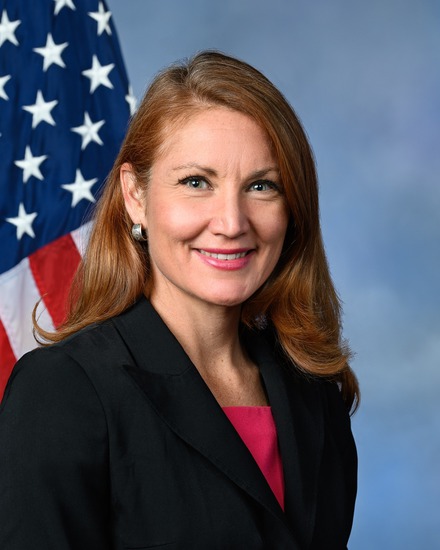
Rep. Melanie A. Stansbury
Sponsored bills
Maddy summaryThis resolution expresses support for designating July 10th as Journeyman Lineworkers Recognition Day to honor the workers who maintain the nation's electrical grid. The bill specifically recognizes the dangerous conditions these employees face, such as working at heights near live power lines and responding to disasters like hurricanes and wildfires. It also commemorates Henry Miller, the first president of the International Brotherhood of Electrical Workers, who died on July 10, 1896, while performing his duties. Ultimately, the measure encourages the public to observe this day with reflection on the contributions of lineworkers.
Maddy summaryThe Find Our Families Act of 2026 requires the Department of Homeland Security to create a public online system that allows families to locate individuals detained by Customs and Border Protection or Immigration and Customs Enforcement. This system must provide search results within eight hours of detention, display information in multiple languages, and include specific details such as names, dates of birth, and facility locations, while excluding data for minors. The bill also mandates that families be notified within five hours if a detainee is transferred for medical care and establishes new reporting requirements for CBP arrests, including details on the circumstances of the arrest and the number of agents involved. Additionally, the legislation creates a process for families to report errors in detainee information and imposes penalties on employees or contractors who fail to comply with these data-sharing and reporting obligations.
Maddy summaryThe Community Housing Act of 2026 aims to increase the supply and affordability of housing by directing significant new federal funding to programs like the Housing Trust Fund and the Capital Magnet Fund. It establishes a new Office of Community Land Use and Zoning within HUD to help states and localities reform restrictive zoning laws that limit housing development. The bill also expands financial support for rural areas, creates a new fund to promote shared equity and community land trusts, and removes a legal cap on the number of public housing units agencies can manage. Additionally, it provides grants to protect tenants from eviction and authorizes low-cost financing options for affordable housing projects.
Maddy summaryThe LIFT the BAR Act aims to restore access to federal benefits for lawfully present noncitizens by repealing several restrictions imposed by the 1996 welfare reform law and a 2024 reconciliation bill. Specifically, it would allow eligible noncitizens to receive SNAP food assistance, Medicaid, CHIP, and child nutrition programs, while also updating legal terminology to refer to "noncitizens" rather than "aliens" in relevant statutes. The legislation includes provisions to ensure these individuals can qualify for premium tax credits and would require federal agencies to issue implementation guidance within 180 days of enactment.
Maddy summaryThis concurrent resolution directs the President to withdraw all U.S. armed forces from hostilities in Lebanon within seven days of the bill's adoption. It uses the War Powers Resolution to mandate this withdrawal while explicitly allowing continued security cooperation with Lebanese forces and the protection of diplomatic facilities. The measure clarifies that it does not authorize the use of military force, serving as a specific instruction to end active combat operations in the region.
Maddy summaryThis bill authorizes Congress to award a Congressional Gold Medal to individuals who fought for or with the United States in the Pacific theater during World War II and subsequently became prisoners of war. The legislation specifically recognizes the service and sacrifice of those who defended locations such as Bataan and Corregidor, including Filipino soldiers and civilians who served alongside U.S. forces. To implement this award, the Speaker of the House and the President pro tempore of the Senate will arrange for the creation of a gold medal by the Secretary of the Treasury, which will be presented to the Smithsonian Institution for display. The act also allows for the production of duplicate bronze medals to cover the costs of the original gold medals, with any proceeds from these sales deposited into the United States Mint Public Enterprise Fund.
Maddy summaryThe Diversity Visa Protection and Modernization Act limits the executive branch's ability to completely stop the Diversity Visa Program, which provides immigration opportunities to applicants from countries with low rates of migration to the United States. Instead of allowing indefinite or broad pauses, the bill permits only targeted restrictions on specific countries, individual security denials, or temporary suspensions lasting no more than 60 days. Any such limitation requires the relevant government officials to notify Congress and publish details about the threat and legal basis at least seven days in advance. Additionally, the law ensures that individuals who have already received a Diversity Visa cannot lose their eligibility due to a temporary program-wide suspension.
Maddy summaryThis resolution celebrates the progress made under Title IX of the Education Amendments of 1972, which prohibits sex discrimination in federally funded education programs. It acknowledges the law's role in increasing graduation rates, expanding access to nontraditional fields, and improving athletic opportunities for women and girls. The document calls on the executive branch to protect students from discrimination based on sex, pregnancy, sexual orientation, and gender identity while condemning efforts to use the law to harm transgender and nonbinary students. Additionally, it urges the transfer of Title IX enforcement authority to remain within the Department of Education rather than the Department of Justice.
Maddy summaryThe SAFE Training for OB-GYNs Act creates a new federal grant program to help medical residents who must leave their home states to receive training in reproductive health care due to local abortion restrictions. Funded with up to $10 million annually from 2027 to 2031, these grants support residency programs that offer specialized training in sexual and reproductive health, including abortion care. The funding can be used to expand existing programs or establish new ones specifically for out-of-state residents and to cover their travel expenses. This legislation directly affects health care professionals seeking specialized training and the medical residency programs that provide it.