

Affordable Pricing for Taxpayer-Funded Prescription Drugs Act of 2021 This bill requires companies that receive federal funding for research (or a license of the rights to a patent or regulatory test data) for a biomedical product or service to agree to set reasonable prices for the resulting biomedical product or service. The Department of Health and Human Services (HHS) must determine a reasonable price based on a formula that ensures the U.S. price for the product or service is not more than the median price for the product or service in Canada and six other reference countries with, based on specified criteria, large economies and high incomes. Companies entering these agreements also must report to HHS certain financial information related to the biomedical product or service involved.
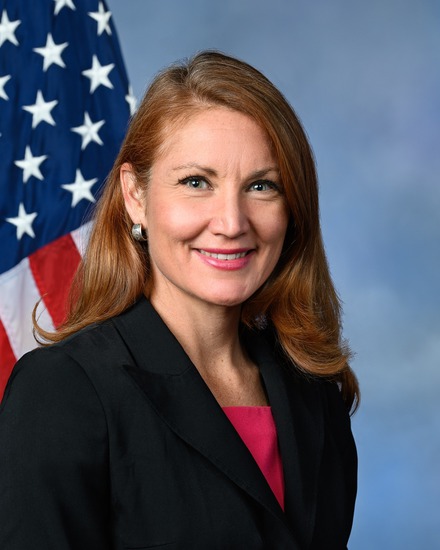
Rep. Melanie A. Stansbury
Sponsored bills
Refuge System Protection Act This bill authorizes the Department of Justice (DOJ), at the request of the Department of the Interior, to bring in a district court a civil action against any individual or entity that destroys, causes the loss of, causes Interior to make risk mitigation efforts with respect to, or injures any resource that is within the boundaries any land or water that is managed by the U.S. Fish and Wildlife Service. The bill also authorizes DOJ, at the request of Interior, to bring in a district court an in rem action against any instrumentality (e.g., a vessel, vehicle, or aircraft) that destroys, causes the loss of, causes Interior to make risk mitigation efforts with respect to, or injures any such system resource. Among others, it shall be an affirmative defense in either type of action that the destruction of, loss of, risk mitigation regarding, or injury to a system resource was caused by an otherwise legal act or omission that occurred outside the boundaries of the resource. In either type of action, the court may award response costs and damages.
Children's Mental Health Infrastructure Act of 2021 This bill provides funding through FY2026 to the Health Resources and Services Administration for grants to improve the capacity of children's hospitals to provide pediatric behavioral health services, including by modernizing sites of care and enhancing telehealth capabilities.
Helping Kids Cope Act of 2021 This bill provides funding through FY2026 to the Health Resources and Services Administration (HRSA) for grants to enhance access to and provider training in pediatric behavioral health care. Specifically, HRSA must award grants to pediatricians, children's hospitals, and other providers to support pediatric behavioral health integration and coordination within communities. Grant-funded activities may include hiring community navigators to assist families in accessing appropriate services, incorporating behavioral health services in pediatric practices, and delivering services via telehealth. In addition, HRSA must award grants to children's hospitals to expand training for providers in the pediatric behavioral health workforce.
Promoting Access to Diabetic Shoes Act This bill allows a nurse practitioner or physician assistant to fulfill documentation requirements for coverage, under Medicare, of special shoes for diabetic individuals. Under current law, such requirements may be satisfied only by a physician.
Partnerships for Energy Security and Innovation Act of 2021 This bill requires the Department of Energy (DOE) to establish the Foundation for Energy Security and Innovation. It also authorizes the establishment of the National Energy Technology Laboratory. The Foundation for Energy Security and Innovation, a nonprofit corporation, must support DOE's mission and increase private and philanthropic sector investments that support efforts concerning the development, deployment, and commercialization of innovative technologies that address crosscutting national energy challenges. The foundation may award fellowships and grants for activities relating to research, development, demonstration, maturation, or commercialization of energy and other technologies supported by DOE. In addition, the National Energy Technology Laboratory may establish a nongovernmental Federal Laboratory-Associated Foundation to advance U.S. energy security as specified by the bill.
Protecting the Information of our Vulnerable Children and Youth Act or the Kids PRIVCY Act This bill expands the requirements for digital services when handling the personal information of children. Specifically, the bill (1) requires digital services to obtain express, affirmative consent that is specific, informed, and unambiguous before processing the personal information of a child or teenager under the age of 18; (2) prohibits certain targeted advertising; and (3) allows individuals to access, correct, or delete their personal information. The bill increases the civil penalty for violations of the children's online privacy protections and provides for enforcement by the Federal Trade Commission and a private right of action.
Honoring Family-Friendly Workplaces Act This bill establishes the family-friendly certification program that requires the Department of Labor to award certifications and recognize employers that implement certain policies such as (1) assisting employees with paying for adoption services, (2) providing paid family and sick leave, and (3) providing subsidies for child care and other employee support.
Domestic Workers Bill of Rights Act This bill provides rights and protections for domestic workers (e.g., housekeepers, nannies, caretakers, personal assistants, and chauffeurs), including pay and leave rights, and health and safety protections. Specifically, the bill repeals the exemption of domestic live-in employees from certain minimum wage and maximum hour requirements. Employers must provide written notice of termination and provide at least 30 days of lodging and two weeks of severance pay to terminated live-in employees. Live-in employees also must be provided with reasonable access to telephone and internet service during their employment. The bill requires employers to provide domestic workers with a written agreement covering wages, sick leave, benefits, and other matters. Further, domestic workers may request and be granted changes to work schedules due to personal events. The bill also provides domestic workers with certain privacy rights, extends to domestic workers protections against discrimination in employment, and increases the federal medical assistance percentage (FMAP) for certain Medicaid-funded medical services provided by domestic workers. The Department of Labor must (1) award grants for a domestic worker national hotline for reporting emergencies, training on hazards facing domestic workers, and workforce investment activities for domestic workers; and (2) establish a Domestic Worker Wage and Standards Board to investigate standards in the domestic workers industry. Labor must publish online a document that describes the rights and protections for domestic workers under this bill.
Protecting Renters from Evictions Act of 2021 This bill extends through December 31, 2021, the order issued by the Centers for Disease Control and Prevention titled Temporary Halt in Residential Evictions To Prevent the Further Spread of COVID–19 and published on September 4, 2020.