

John R. Lewis Voting Rights Advancement Act of 2021 This bill establishes new criteria for determining which states and political subdivisions must obtain preclearance before changes to voting practices may take effect. Preclearance is the process of receiving preapproval from the Department of Justice (DOJ) or the U.S. District Court for the District of Columbia before making legal changes that would affect voting rights. A state and all of its political subdivisions shall be subject to preclearance of voting practice changes for a 10-year period if 15 or more voting rights violations occurred in the state during the previous 25 years; 10 or more violations occurred during the previous 25 years, at least 1 of which was committed by the state itself; or 3 or more violations occurred during the previous 25 years and the state administers the elections. A political subdivision as a separate unit shall also be subject to preclearance for a 10-year period if three or more voting rights violations occurred there during the previous 25 years. States and political subdivisions that meet certain thresholds regarding minority groups must preclear covered practices before implementation, such as changes to methods of election and redistricting. Further, states and political subdivisions must notify the public of changes to voting practices. Next, the bill authorizes DOJ to require states or political subdivisions to provide certain documents or answers to questions for enforcing voting rights. The bill also outlines factors courts must consider when hearing challenges to voting practices, such as the extent of any history of official voting discrimination in the state or political subdivision.
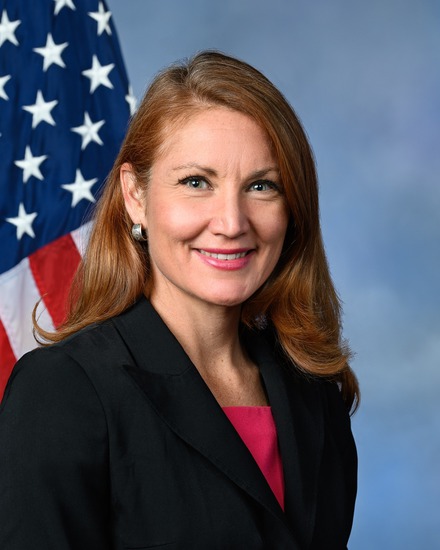
Rep. Melanie A. Stansbury
Sponsored bills
This resolution expresses the sense of the House of Representatives that the United States shall recognize kind actions in our country, encourage kindness, spread love, and foster a culture of being kind to one another.
Closing the College Hunger Gap Act of 2021 This bill requires the Department of Education (ED) to collect data on the food and housing insecurity of college students. Specifically, ED must add questions that measure rates of food and housing insecurity to the National Postsecondary Student Aid Study. In addition, ED must collect data on student eligibility under the Supplemental Nutrition Assistance Program (SNAP). ED must also provide students with contact information for the state agency that administers SNAP in their state.
Protecting Access to Lifesaving Screenings Act of 2021 or the PALS Act This bill makes a series of changes relating to health insurance coverage of screening mammography. Specifically, the bill requires that any provision of law referring to current recommendations of the U.S. Preventive Services Task Force (USPSTF) with respect to breast cancer screening mammography be administered as if (1) the provision referred to USPSTF recommendations last issued before 2009; and (2) those recommendations applied to any screening mammography modality, including any digital modality of such a procedure. This requirement shall also apply to the Veterans Health Administration's policy on mammography screening for veterans. In addition, the bill preserves Medicare coverage for screening mammography, without a requirement for coinsurance, and expands the definition of screening mammography to include any digital modality of such a procedure. Further, the Centers for Medicare & Medicaid Services may not decrease the frequency with which screening mammography may be paid by Medicare for a woman over 39 years of age. In 2009, the USPSTF updated its guidelines to recommend against routine screening mammography for women between 40 to 49 years of age and to recommend biennial, instead of annual, screening mammography for most women between 50 to 74 years of age. In 2015, through the appropriations process, a three-year moratorium was placed on implementing the guidelines; the moratorium was subsequently renewed until January 1, 2023.
Schools Preventing Hunger in At-Risk Kids Act or the SPARK Act This bill expands automatic eligibility for free school lunches and breakfasts to include children who have been placed in kinship care with a relative or family friend with the involvement of the state child welfare agency. To enroll in the program, a family must document the child's status to the appropriate local educational agency.
Prohibition of Medicaid Funding for Conversion Therapy Act This bill prohibits state Medicaid programs from covering conversion therapy. The bill defines conversion therapy as any practice or treatment that seeks to change a person's sexual orientation or gender identity in exchange for monetary compensation.
Tribal Wildlife Corridors Act of 2021 This bill authorizes tribal wildlife corridors. Specifically, the bill permits an Indian tribe to nominate a corridor within the land of such tribe as a tribal wildlife corridor. The Department of the Interior must establish criteria for determining whether such a corridor qualifies as a tribal wildlife corridor, including criteria for restoring historical habitat. Interior must provide tribes with technical assistance to establish, manage, or expand a tribal wildlife corridor. Such assistance must include support with accessing wildlife data and working with voluntary private landowners to access programs for facilitating connectivity on nonfederal land. Additionally, Interior must (1) establish a program to award grants to tribes to increase connectivity through tribal wildlife corridors, and (2) consult with tribes to determine whether a tribal wildlife corridor may be expanded into public lands or otherwise benefit connectivity between public lands and such corridor.
Keep Physicians Serving Patients Act of 2021 This bill requires the Centers for Medicare & Medicaid Services to use specified data regarding physician wages and office rent when determining certain geographic adjustment factors for the payment of physician services under Medicare. With respect to such payment, the bill also makes permanent certain minimum adjustments to the work geographic index and extends to all localities certain minimum adjustments to the practice expense index.
Migratory Bird Protection Act of 2021 This bill prohibits the incidental taking (e.g., capturing or killing) of migratory birds by commercial activities unless the activity is authorized under a permit or is identified as posing de minimis risk to migratory birds. The U.S. Fish and Wildlife Service (USFWS) must regulate such incidental taking, including by (1) issuing general permits for certain industries, (2) creating a mitigation fee for any incidental taking of migratory birds, and (3) identifying categories of de minimis risk activities that are exempt from liability for the taking of migratory birds. In addition, the USFWS must establish and maintain a research program (1) to evaluate the impacts of commercial activities on birds, (2) to evaluate the effectiveness of best management practices and technologies to avoid or minimize such impacts, and (3) to develop new or improved best management practices and technologies.
Creative Economy Revitalization Act This bill requires the Department of Labor to award grants to government and nonprofit agencies to provide programs that employ individuals and provide public access to art or arts programming.