

No Shame at School Act of 20 22 This bill establishes requirements for the treatment of a child who is participating in the National School Lunch Program or the School Breakfast Program and owes unpaid school meal fees. It also requires local educational agencies to certify certain children (e.g., homeless children) as categorically eligible for free lunches or breakfasts without an application.
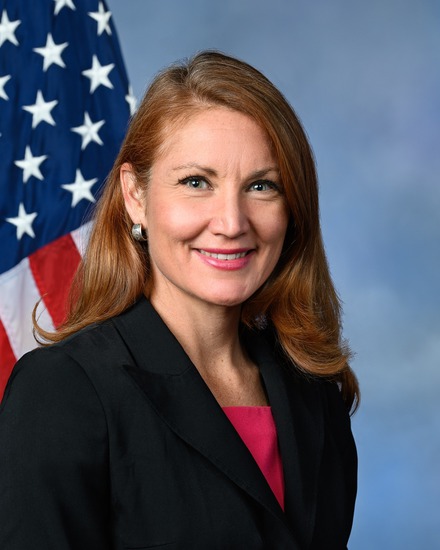
Rep. Melanie A. Stansbury
Sponsored bills
Right to Contraception Act This bill sets out statutory protections for an individual's right to access and a health care provider's right to provide contraception and related information. Contraception refers to an action taken to prevent pregnancy, including the use of contraceptives (i.e., a device or medication used to prevent pregnancy), fertility-awareness based methods, and sterilization procedures. Generally, the bill prohibits measures that single out and impede access to contraception and related information. However, a party may defend against a claim that a measure violates the bill's prohibitions by demonstrating, through clear and convincing evidence, that the measure significantly advances access to contraception and cannot be achieved through less restrictive means. The Department of Justice, individuals, or health care providers may bring a lawsuit to enforce this bill, and states are not immune from suits for violations.
This bill reauthorizes through FY2033 the Bureau of Reclamation's water cycle, drought, and climate change program, which Reclamation implements through the WaterSMART Basin Study Program. This program is authorized to coordinate with other appropriate agencies to assess global climate change with respect to water resources in the eight major reclamation river basins in the western United States. The program must also ensure watershed and aquifer system strategies are developed to address potential water shortages, conflicts, and other impacts to water.
LGBTQI+ and Women's History Education Act of 2022 This bill directs the National Museum of American History of the Smithsonian Institution to carry out, among other things (1) the development and national dissemination of accurate, relevant, and accessible national resources for classrooms to administer LGBTQI+ and women's history education in an inclusive and intersectional approach; (2) the development, national dissemination, and implementation of principles of sound pedagogy for administering LGBTQI+ and women's history education; and (3) the development, operation, and expansion of a teacher fellowship program to cultivate and support leaders in LGBTQI+ and women's history education. In addition to the activities described in this bill, the museum shall develop and maintain on its website content designated for educators, students, and families to improve their awareness and understanding of LGBTQI+ and women's history education.
No Tax Breaks for Union Busting (NTBUB) Act This bill denies employers a tax deduction for any expenditures incurred for attempting to influence their employees with respect to labor organizations or labor organization activities, such as elections, labor disputes, and collective actions. The bill requires employers to report on their attempts to influence their employees with respect to labor organizations and their activities.
Maddy summaryThe National Park Foundation Reauthorization Act of 2022 extends and increases funding for the National Park Foundation. It amends federal law to authorize $15 million annually (up from $5 million) for the Foundation through 2030 (extending from 2023). This bill directly affects the National Park Foundation by providing a longer-term, higher level of federal appropriations for its operations. The key change is a specific funding authorization adjustment in Title 54 of the U.S. Code, with no new program requirements or policy changes.
Biking on Long-Distance Trails Act This bill establishes requirements related to long-distance bike trails. The Department of the Interior and the Department of Agriculture (USDA) shall identify not fewer than 10 long-distance bike trails that make use of existing trails and roads, and not fewer than 10 areas in which there is an opportunity to develop or complete a trail that would qualify as a long-distance bike trail. Interior and USDA shall develop a process to allow members of the public to comment regarding the identification of trails and areas; and consider the identification, development, and completion of long-distance bike trails in a geographically equitable manner. The Department concerned shall ensure that each identified long-distance bike trail or area does not conflict with the uses of any trail or road that is part of that long-distance bike trail; multiple-use areas where biking, hiking, horseback riding, or use by pack and saddle stock are existing uses; the purposes for which any trail was or is established under the National Trails System Act; and any area managed under the Wilderness Act. The Department concerned shall also ensure that each identified long-distance trail or area complies with land use and management plans of the federal recreational lands that are part of that long-distance bike trail.
Urban Indian Health Confer Act This bill requires the Department of Health and Human Services (HHS) to confer with urban Indian organizations regarding health care for American Indians and Alaska Natives living in urban areas. Currently, only the Indian Health Service (IHS) is required to confer with urban Indian organizations on matters relating to the Indian Health Care Improvement Act. The bill requires HHS to ensure that the IHS and other agencies and offices within HHS confer with urban Indian organizations on (1) matters relating to the Indian Health Care Improvement Act, and (2) other provisions of law relating to health care for American Indians and Alaska Natives.
Elizabeth Dole Home and Community Based Services for Veterans and Caregivers Act of 2022 or the Elizabeth Dole Home Care Act This bill addresses home care and caregiver programs for veterans.
Buffalo Tract Protection Act This bill withdraws specified Bureau of Land Management lands in Placitas, New Mexico, from (1) location, entry, and patent under the mining laws; and (2) disposition under the mineral leasing, mineral materials, and geothermal leasing laws. Any conveyance of the surface estate of such federal land shall require a reservation of the mineral estate to the United States.