Tribal Cultural Areas Protection Act This bill provides for the preservation of tribal cultural sites on public land, including by establishing the Tribal Cultural Areas System, setting forth requirements related to land management, and authorizing certain actions by tribes.
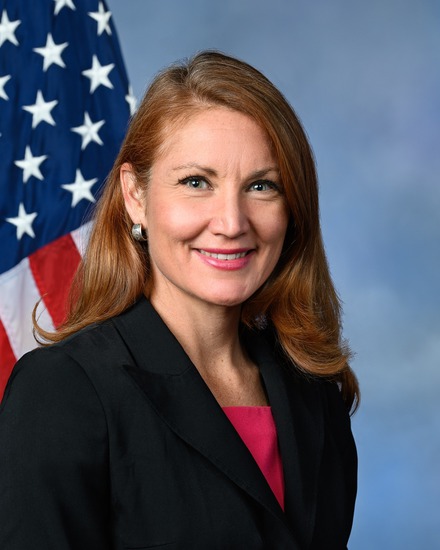
Rep. Melanie A. Stansbury
Sponsored bills
Wildfire Recovery Act This bill makes changes with respect to the federal cost share for Fire Management Assistance Grants and provides that the federal share shall be not less than 75% of the eligible cost. Specifically, the bill directs the Federal Emergency Management Agency (FEMA) to conduct and complete a rulemaking to provide criteria for the circumstances under which FEMA may recommend that the President increase the federal cost share. Such criteria shall include a threshold metric that assesses the financial impact to a state or local government from responding to a fire for which fire management assistance is being provided.
Harriet Tubman Bicentennial Commemorative Coin Act This bill directs the Department of the Treasury to mint and issue 50,000 $5 gold coins, 400,000 $1 silver coins, and 750,000 half-dollar clad coins emblematic of the legacy of Harriet Tubman as an abolitionist. The Secretary may issue coins under this bill only during the period of January 1, 2024, through December 31, 2024. All surcharges received by Treasury from the sale of such coins must be paid equally to the National Underground Railroad Freedom Center in Cincinnati, Ohio, and The Harriet Tubman Home, Inc. in Auburn, New York, for the purpose of accomplishing and advancing their missions.
Wildfire Response and Drought Resiliency Act This bill provides for measures to mitigate wildfires, drought, and other natural and human disasters. Among the bill's other provisions, it sets a minimum rate of pay for federal wildland firefighters and provides parity in pay, benefits, and bonuses for federal structural firefighters; requires implementation of a 10-year National Wildfire Plan; establishes the Saline Lake Ecosystems in the Great Basin States Assessment and Monitoring Program; requires a plan to sustain the survival of critically important fisheries within certain states during periods of extended drought; establishes the Open Access Evapotranspiration (OpenET) Data Program for the delivery of satellite-based evapotranspiration data to certain data users; authorizes the Colorado River Indian Tribes to enter into agreements for conserved water under specified conditions; authorizes, ratifies, and confirms, the Hualapai Tribe water rights settlement agreement; adds specified land to the Hualapai Reservation; establishes a Natural Disaster Grid Mitigation Map that identifies critical electric grid infrastructure in each state that is vulnerable to natural disasters; establishes a grant program to award grants to remove nonnative plant species in riparian areas that contribute to drought conditions; establishes four Centers of Excellence for Wildfire Smoke to carry out research on the effects on public health of smoke emissions from wildland fires; establishes a National Disaster Safety Board; establishes a National Wildland Fire Risk Reduction Program; establishes a basic training program to increase the capacity of environmental justice communities to address disproportionately adverse human health or environmental effects in their communities.
Assault Weapons Ban of 2022 This bill makes it a crime to knowingly import, sell, manufacture, transfer, or possess a semiautomatic assault weapon (SAW) or large capacity ammunition feeding device (LCAFD). The prohibition does not apply to a firearm that is (1) manually operated by bolt, pump, lever, or slide action, except for certain shotguns; (2) permanently inoperable; (3) an antique; (4) only capable of firing rimfire ammunition; or (5) a rifle or shotgun specifically identified by make and model. The bill also exempts from the prohibition the following, with respect to a SAW or LCAFD: importation, sale, manufacture, transfer, or possession related to certain law enforcement efforts, or authorized tests or experiments; importation, sale, transfer, or possession related to securing nuclear materials; and possession by a retired law enforcement officer. The bill permits continued possession, sale, or transfer of a grandfathered SAW, which must be securely stored. A licensed gun dealer must conduct a background check prior to the sale or transfer of a grandfathered SAW between private parties. The bill permits continued possession of, but prohibits sale or transfer of, a grandfathered LCAFD. Newly manufactured LCAFDs must display serial number identification. Newly manufactured SAWs and LCAFDs must display the date of manufacture. The bill also allows a state or local government to use Edward Byrne Memorial Justice Assistance Grant Program funds to compensate individuals who surrender a SAW or LCAFD under a buy-back program.

Preserving Access to Home Health Act of 2022 This bill restricts the Centers for Medicare & Medicaid Services (CMS) from decreasing payments for Medicare home health services based on certain adjustments until 2026. Current law requires the CMS to make certain permanent and temporary payment adjustments under the Medicare prospective payment system for home health services based on behavioral assumptions for 2020 through 2026. The bill restricts the CMS from making adjustments that decrease payments until 2026; the CMS must also ensure that any such necessary decreases are made before 2032.
Gabriella Miller Kids First Research Act 2.0 This bill reauthorizes through FY2027 a pediatric disease research initiative within the National Institutes of Health (NIH) and requires the NIH to coordinate pediatric research activities to avoid duplicative efforts. Additionally, the Department of Health and Human Services must report, within five years, to Congress about research funded through the initiative.
Shirley Chisholm Congressional Gold Medal Act This bill provides for the posthumous presentation of a Congressional Gold Medal in commemoration of Shirley Chisholm, in recognition of her activism, independence, and groundbreaking achievements in politics, election as the first African American woman in Congress, and campaign to be the first African American to gain the nomination of a major political party for President of the United States. Following its award, the gold medal shall be given to the Smithsonian Institution where it shall be available for display and research.
Overdraft Protection Act of 2021 This bill prohibits a financial institution from engaging in unfair or deceptive acts in connection with overdraft coverage. Each financial institution that offers overdraft coverage for accounts must disclose overdraft coverage fees. It must also disclose that the consumer's transaction may be declined if there are insufficient funds in the related account, and the consumer will not be charged a fee if such transaction is declined. A financial institution must provide certain other disclosures regarding its overdraft protection program, including prompt notification of the account's overdraft status. The bill limits the number of overdraft fees a consumer may be charged each month and year, and provides that such fees must be reasonable. The bill prohibits an overdraft coverage fee if the overdraft results solely from a debit hold amount that exceeds the actual dollar amount of the transaction. The bill also prohibits a financial institution from charging a non-sufficient fund fee for any automated teller machine or debit card transaction, or reporting negative information regarding consumer use of overdraft coverage to any consumer reporting agency when the overdraft amounts and coverage fees are paid under the terms of an overdraft coverage program.
Tribal Nutrition Improvement Act of 2022 This bill expands access to free and reduced school meals in tribal areas. Specifically, the bill makes a child who is an enrolled member (or who has one or more parents who are enrolled members) of an Indian tribe categorically eligible for free school breakfasts or lunches. Additionally, the bill allows the Department of Agriculture (USDA) to adjust reimbursement rates for breakfasts, lunches, suppers, and supplements served in Bureau-funded schools and elementary and secondary schools on or near an Indian reservation. The bill also directs USDA to establish a pilot program to award grants to 10 tribal entities for operating and implementing the National School Lunch Program, the School Breakfast Program, the Summer Food Service Program, and the Child and Adult Care Food Program in Bureau-funded schools and elementary and secondary schools on or near an Indian reservation.