

Targeting Resources for Equitable Access to Treatment for Long COVID Act or the TREAT Long COVID Act This bill requires the Department of Health and Human Services to award competitive grants to create or expand the capacity of clinics that treat patients with persistent, long-term symptoms following recovery from acute COVID-19 (i.e., Long COVID) and associated conditions. Eligible recipients include federally qualified health centers, rural health clinics, urban Indian health centers, and state and local health departments.
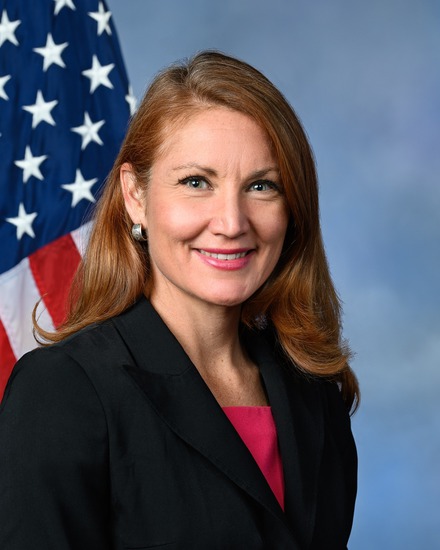
Rep. Melanie A. Stansbury
Sponsored bills
Maddy summaryThe PAST Act of 2023 amends the Horse Protection Act to ban specific devices used to cause pain (soring) in horses at shows, particularly affecting Tennessee Walking Horses, Racking Horses, and Spotted Saddle Horses. It defines prohibited "action devices" (like boots or chains causing friction) and requires licensed, conflict-free inspectors at events to enforce rules. The bill increases penalties for violations to up to $5,000 fines or 3 years in jail, and mandates longer disqualifications for repeat offenses (180 days → 1 year → 3 years). Horse show organizers, exhibitors, and participants must comply with these new inspection and penalty requirements.
Affordable Pricing for Taxpayer-Funded Prescription Drugs Act of 202 3 This bill requires companies that receive federal funding for research (or a license of the rights to a patent or regulatory test data) for a biomedical product or service to agree to set reasonable prices for the resulting biomedical product or service. The Department of Health and Human Services (HHS) must determine a reasonable price based on a formula that ensures the U.S. price for the product or service is not more than the median price for the product or service in Canada and six other reference countries with, based on specified criteria, large economies and high incomes. Companies entering these agreements also must report to HHS certain financial information related to the biomedical product or service involved.
Maddy summaryHR 3235 grants a federal charter to the National American Indian Veterans, Incorporated, a nonprofit organization. This bill creates a new chapter (1504) in the U.S. Code governing the organization's structure, purposes, and restrictions. The charter allows the group to operate as a federally chartered entity with specific requirements, including maintaining tax-exempt status, prohibiting stock or dividends, and submitting annual reports to Congress. The organization will advocate for American Indian veterans' needs, promote their welfare, and provide technical assistance to tribal veterans services, without receiving federal funding or endorsement.
Maddy summaryThe RETAIN Act creates a refundable tax credit for early childhood educators, teachers, school leaders, and mental health providers who work in high-poverty schools for multiple years. It provides cash payments (ranging from $5,800 to $11,600 annually) based on continuous service, with higher amounts for longer tenure (e.g., $11,600 after 10 years). The credit directly affects educators in qualifying schools - those serving high-poverty students, as defined by Title I funding eligibility - and is designed to reduce turnover by rewarding retention. Schools cannot reduce other compensation for staff receiving this credit, and the credit applies to all eligible roles in public elementary/secondary schools or qualifying early childhood programs.
Maddy summaryHR 3238, the Affordable Housing Credit Improvement Act of 2023, updates the Low-Income Housing Tax Credit (LIHTC) program to increase the availability of affordable housing across the United States. The bill makes several key changes including increasing state funding formulas, modifying tenant eligibility rules to better serve vulnerable populations (such as domestic violence victims and students), and expanding credit eligibility for projects in rural and Native American communities. Specific provisions raise the credit for properties serving extremely low-income households, clarify rules around tenant income increases, and require housing providers to protect victims of domestic violence. The bill also updates terminology from "low-income" to "affordable" throughout the tax code and enhances program transparency through data sharing requirements. These changes aim to make the LIHTC program more effective at creating and preserving affordable housing units for low-income households nationwide.
Maddy summaryThe Teachers LEAD Act of 2023 establishes a federal grant program to support teacher leadership development in public schools. The bill provides $400 million annually to fund structured leadership programs that allow experienced teachers to take on leadership roles while maintaining classroom teaching responsibilities. These programs must include shared decision-making, distributed leadership, and professional development opportunities, with specific requirements for teacher selection, compensation for leadership duties, and data collection on teacher retention. The program prioritizes high-need schools and aims to improve teacher retention, particularly for teachers from underrepresented populations. The Department of Education will track program effectiveness through annual reporting on teacher retention rates and other metrics.
Maddy summaryThe Transit to Trails Act establishes a federal grant program to fund transportation projects connecting critically underserved communities - defined as areas lacking adequate park access, low-income, communities of color, or environmental justice areas - to public lands and recreational spaces. Eligible entities, including states, local governments, tribal organizations, and park districts, can apply for grants to develop transportation connectors (like bus routes) and culturally appropriate education materials, with priority for projects using low-emission vehicles and offering discounted fares for low-income riders. Grants range from $25,000 to $500,000, with federal funding covering up to 80% of costs, and recipients must report on demographics served and project outcomes. The program is funded at $40 million annually in its fifth year, aiming to improve mobility to parks and recreation in communities historically excluded from such access.
Maddy summaryHR 2757, the Puerto Rico Status Act, establishes a process for Puerto Rico to determine its political status through a plebiscite on November 2, 2025, offering three options: independence, sovereignty in free association with the United States, or statehood. If no option receives a majority in the initial vote, a runoff plebiscite would be held on March 8, 2026. The bill outlines transition processes for each option, including constitutional conventions, implementation steps, and provisions for citizenship, immigration, and economic benefits. It mandates bilingual voter education materials and requires oversight by the Elections Commission and the Attorney General to ensure fair representation of all options. This legislation directly affects Puerto Rico's residents by providing a structured process to choose their permanent political relationship with the United States.
Stronger Engagement for Indian Health Needs Act of 2023 This bill elevates the current position of the Director of the Indian Health Service within the Department of Health and Human Services (HHS) to Assistant Secretary for Indian Health within HHS.