

Maddy summaryThis bill (HR 249) renames two specific facilities at Paterson Great Falls National Historical Park in honor of the late Congressman Bill Pascrell, Jr. The Great Falls Scenic Overlook Trail Bridge will be called "Bill Pascrell, Jr. Scenic Overlook Trail Bridge," and Overlook Park will be called "Bill Pascrell, Jr. Overlook Park." All federal references in laws, maps, documents, or records will automatically update to reflect these new names. As a procedural naming bill, it has no policy or funding impact beyond the official renaming of park features.
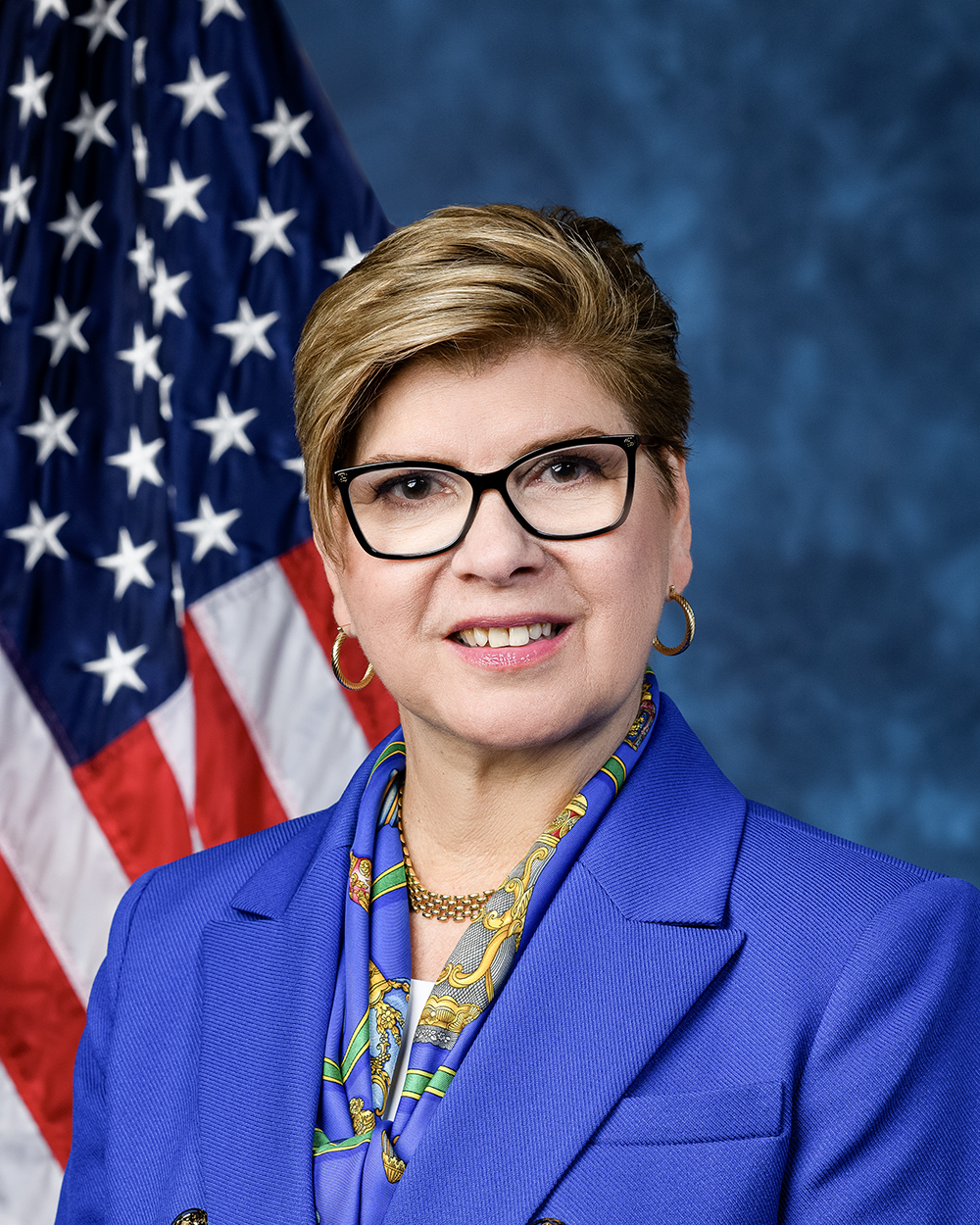
Rep. Nellie Pou
Sponsored bills
Maddy summaryThis bill creates federal grants to support STEM education programs for girls and underrepresented minorities in K-12 schools. It directs $250,000 annually per grant to school districts serving high-poverty communities (with at least 40% students eligible for free/reduced lunch) to fund specific activities like after-school STEM programs, teacher training on reducing bias, mentorship, parental engagement, and summer camps. The grants require schools to track student participation and academic progress in STEM through annual evaluations. The program aims to increase opportunities for these students to develop skills and pursue STEM careers, while ensuring funds supplement - rather than replace - existing resources.
Maddy summaryThis bill renames a U.S. Postal Service facility at 514 Frelinghuysen Avenue in Newark, New Jersey, as the "Mildred Joyce Coleman Crump Post Office Building." All official references in federal documents, maps, or records to this specific post office location will now use the new name. The bill directly affects the Newark postal facility and its official documentation. (Procedural naming resolution; no policy changes.)
Give Kids a Chance Act of 2025 This bill expands the Food and Drug Administration’s (FDA’s) authority with respect to research on rare pediatric diseases, including by permitting the FDA to take enforcement action against drug sponsors that fail to satisfy pediatric study requirements and by reauthorizing programs that support pediatric research. Specifically, the bill modifies requirements relating to molecularly targeted pediatric cancer investigations to permit research on new drugs in combination with active ingredients that have already been approved, provided certain conditions are met; permits the FDA to take enforcement action against drug sponsors that fail to comply with pediatric study requirements, if such sponsors demonstrated a lack of due diligence in satisfying the requirement; renews the FDA’s authority to award priority review vouchers to sponsors of new products intended to treat rare pediatric diseases through September 30, 2029; and reauthorizes through FY2027 certain funding for the National Institutes of Health to support priority pediatric research. The bill also provides statutory authority for the FDA’s interpretation of the orphan drug exclusivity period. The bill specifies, consistent with FDA regulations, that the seven-year market exclusivity period for drugs for rare diseases or conditions (i.e., orphan drugs) prohibits the approval of the same drug for the same approved use or indication with respect to the disease or condition. (In Catalyst Pharmaceuticals, Inc. v. Becerra , a court rejected the FDA’s interpretation and held that orphan drug exclusivity extends to all uses or indications for the disease or condition.)
Maddy summaryThe Water Preservation and Affordability Act of 2025 amends the Clean Water Act to require federal water infrastructure funding recipients to prioritize "resource preservation techniques," defined as water efficiency (reuse, conservation), energy efficiency, stormwater mitigation, sustainable design, and environmental innovation. It mandates that projects receiving loans for treatment works repairs or expansions must evaluate and use these techniques to the maximum extent practicable. The bill increases annual funding for the Clean Water Infrastructure Resiliency Program from $25 million to $50 million (2026-2031) and authorizes $40 million yearly for a wastewater efficiency pilot program (2026-2031). These changes directly affect municipal water systems and wastewater treatment facilities receiving federal grants or loans under the Clean Water Act.
Maddy summaryThis bill requires the Bureau of Alcohol, Tobacco, Firearms and Explosives (ATF) to create electronic, searchable databases for firearm transaction records held by licensed dealers. It directly affects licensed firearms dealers (who must provide electronic access to their records) and law enforcement agencies (which can query the databases for investigations or foreign intelligence purposes). Key provisions mandate that databases be searchable by firearm details (like serial number or model) but not by personal identifiers, and allow dealers to permanently relinquish paper records after 10 years. The ATF must establish these systems within three years, with annual audits to ensure compliance.
Maddy summaryHR 6181, the John Lewis Every Child Deserves a Family Act, prohibits child welfare agencies receiving federal funds from discriminating against children, youth, or prospective foster/adoptive parents based on religion, sex (including sexual orientation and gender identity), or marital status. It directly affects LGBTQ youth in foster care - overrepresented at 30% of the system - who face higher risks of trauma, group home placements, and suicide attempts compared to non-LGBTQ peers. Key provisions require agencies to collect data on sexual orientation and gender identity, establish a National Resource Center for LGBTQ youth support, provide cultural competency training, and eliminate discriminatory practices. The law aims to improve safety, permanency, and placement stability by expanding access to family-based care and ensuring equitable services for all children in the system.
Maddy summaryThis bill amends a section of U.S. law governing national park air tours to explicitly require federal officials to consider the "well-being of communities overflown by aircraft" when making decisions about commercial air tour operations in national parks. It directly affects commercial air tour operators and park management officials by adding community impact as a mandatory factor alongside air traffic control needs. The key mechanism inserts this community well-being consideration into existing decision criteria, ensuring it is formally weighed in regulatory choices. The bill does not create new restrictions but changes how existing rules are applied to prioritize community concerns.
Maddy summaryThis bill amends U.S. Customs and Border Protection (CBP) authority to allow CBP officers to conduct joint operations with foreign governments to monitor and disrupt international drug trafficking, human smuggling, and other threats (like terrorism) entering the U.S. It directly affects CBP personnel operating abroad and partner governments. Key provisions include authorizing CBP to provide support like threat monitoring, emergency humanitarian aid (e.g., search and rescue), and law enforcement training in foreign countries, while establishing a claims process for incidents involving CBP operations overseas. Claims must be filed within two years of an incident, and the authority to pay such claims expires five years after the bill’s enactment.
Maddy summaryThe Water Infrastructure Modernization Act of 2025 amends federal water law to define and support "intelligent water infrastructure technology," including real-time monitoring systems, AI-driven wastewater optimization tools, leak detection sensors, and advanced metering for conservation. It directly affects municipal water systems and utilities by expanding eligible uses for federal grants - allowing funds for implementing these technologies (like predictive aquifer recharge systems) while prohibiting grants for planning or maintenance. The bill increases annual grant funding from $25 million to $50 million (starting in 2028) and requires annual reports to Congress on funded projects and their resiliency improvements. This creates a clear pathway for communities, especially disadvantaged ones, to access federal support for modernizing aging water infrastructure through data-driven solutions.