

Maddy summary# Summary of National Flood Insurance Program Reform Bill This comprehensive legislation proposes significant reforms to the National Flood Insurance Program (NFIP) with a focus on policyholder protections, program transparency, and program solvency. ## Key Provisions: ### Policyholder Protections (Sections 401-416) - **Enhanced Appeals Process**: Creates an Independent Office for Policyholder Appeals with a 90-day deadline for final decisions - **Foundation Damage Presumption**: Establishes a rebuttable presumption that foundation/structural damage was caused by flood, not earth movement - **Mold Remediation Guidance**: Requires FEMA to provide policyholders with guidance on mold prevention after floods - **Transparency in Claims**: Mandates disclosure of all claim documents to policyholders upon request - **Training Requirements**: Requires continuing education for insurance agents every 2 years - **Prohibition on Report Manipulation**: Prevents alteration of engineer reports before providing them to policyholders - **Agent Advisory Council**: Establishes a council with diverse representation to advise FEMA on policyholder experience ### Solvency Measures (Sections 301-306) - **Interest Forbearance**: Forbids interest on NFIP debt for 5 years - **Write Your Own Company Compensation Cap**: Limits reimbursement to 22.46% of premiums - **Third-Party Cost Transparency**: Requires public disclosure of vendor costs - **Mitigation Assistance**: Requires policyholders to accept mitigation offers or face 25% premium increases ### Flood Risk Disclosure (Section 416) - Requires property flood hazard disclosure before property transfer, including flood risk information and insurance cost estimates - Sets a deadline of October 1, 2024 for adoption of disclosure requirements ### Additional Key Provisions - **Appeals Process**: Creates formal appeals for map changes and levee protection assessments - **Levee Protection**: Requires proper assessment of levee systems and mandates flood insurance purchase only in unprotected areas - **Premium Calculator**: Requires public tool to estimate flood insurance rates and show impact of mitigation - **Grace Period**: Allows policyholders to renew within 90 days of lapse at the original renewal rate This legislation aims to balance program solvency with improved consumer protections, increased transparency, and better risk management for flood insurance policyholders.
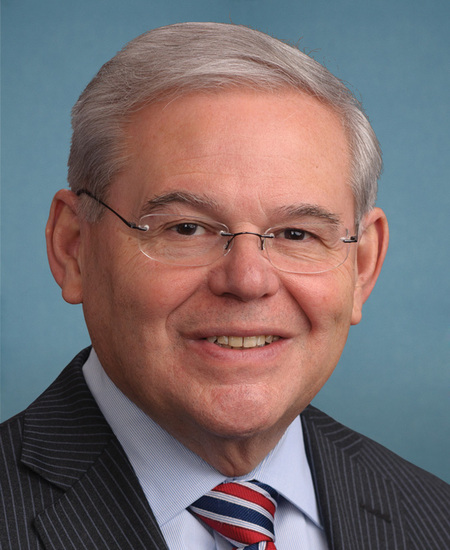
Rep. Robert Menendez
Sponsored bills
Maddy summaryThe Equal Dignity for Married Taxpayers Act of 2023 updates the Internal Revenue Code to use gender-neutral language regarding married couples. It replaces terms like "husband and wife" with "married couple" and "his spouse" with "the individual's spouse" throughout tax code provisions. The bill makes these language changes to ensure the tax code applies equally to all married couples regardless of gender, without altering tax rates, deductions, or other substantive tax policies. This affects all married taxpayers and tax professionals who apply the tax code. The bill is a language update rather than a policy change, making the tax code more inclusive while maintaining existing tax treatment.
Maddy summaryThe PRIDE Act of 2023 amends the Internal Revenue Code to replace gender-specific terms like "husband and wife" with gender-neutral language such as "married couple" or "spouses" across numerous tax code sections. This bill affects all legally married couples who file federal tax returns by updating language in over 30 sections of the tax code related to filing status, deductions, credits, and other tax matters. The bill is a language update that makes the tax code more inclusive without changing existing tax treatment for married couples. It does not alter tax rates, benefits, or policies, but ensures all provisions apply equally regardless of gender.
Maddy summaryThe HERO Act establishes a national data system to track suicides among public safety officers, including firefighters, EMTs, police, and telecommunicators, collecting detailed statistics by age, gender, occupation, and employment status (career, volunteer, or retired). It mandates annual reports to Congress and public availability of findings to identify suicide trends and effective interventions. The bill also funds peer-support wellness programs for fire/EMS departments, behavioral health programs for healthcare providers, and resources to train mental health professionals on treating public safety personnel. All data collection and program provisions include strict privacy safeguards to protect confidentiality and prohibit using suicide data to deny survivor benefits.
Maddy summaryThe SAFE Act of 2023 extends a 2018 law that prohibits slaughtering animals for human consumption to include horses, donkeys, and other equine animals, such as ponies. It amends Section 12515 of the Agriculture Improvement Act of 2018 by updating the language to replace "dog or cat" with "dog, cat, or equine" in both the section title and the main prohibition. This change directly affects the livestock industry and slaughter facilities by banning the processing of equines for food. The bill modifies existing law without adding new enforcement mechanisms, closing a gap in animal protection.
Maddy summaryHR 4289 prohibits "buy now, pay later" financing for firearms classified as "assault weapons" under the bill. It bans such loans for consumers purchasing these weapons and makes it illegal for dealers, manufacturers, or importers to accept funds from these loans for assault weapon sales. The law defines assault weapons to include rifles with features like folding stocks, detachable magazines, or pistol grips, and pistols with specific attachments or capacity limits. Violations carry $100,000 civil penalties assessed by the Attorney General. This directly affects consumers seeking to finance these weapons and the businesses selling them.
Maddy summaryHJRES 76 proposes renaming the Robert E. Lee Memorial in Arlington National Cemetery to the "Arlington House National Historic Site." This procedural bill would replace all official references to the memorial with the new name and repeal two prior resolutions (1955 and 1972) that established the memorial. The change affects how the site is identified in federal laws, documents, and records but does not alter its management or historical significance. The bill focuses solely on the official designation, not on policy changes or historical interpretation.
Maddy summaryThe Ending Homelessness Act of 2023 would expand housing assistance for low-income families by creating a new entitlement program for housing choice vouchers starting in 2028, with 500,000 new vouchers in 2024 and 1,000,000 annually through 2027. It would provide $1 billion annually for emergency relief grants to address unmet needs of homeless populations, prioritizing jurisdictions with the highest need and local policies that decriminalize homelessness. The bill prohibits housing discrimination based on source of income, including rental vouchers and Social Security benefits, and repeals current ineligibility criteria for housing programs. It also permanently authorizes funding for McKinney-Vento Homeless Assistance Act grants and expands eligibility for private nonprofit and faith-based organizations to receive housing assistance. The bill directly affects extremely low-income families, homeless individuals, and housing providers by increasing access to affordable housing and reducing barriers to housing stability.
Maddy summaryThe Housing Crisis Response Act of 2023 authorizes over $100 billion in funding for housing programs, including $10 billion for public housing capital improvements, $9.9 billion for the HOME Investment Partnerships Program, and $1.77 billion for energy efficiency improvements in affordable housing. It creates new down payment assistance programs for first-time and first-generation homebuyers, expands housing vouchers for vulnerable populations including those experiencing homelessness, and establishes new requirements for accessible housing units. The bill mandates that many housing projects maintain affordability for at least 20 years and includes specific provisions for rural housing, Native American communities, and lead-based paint hazard control. It also creates a new Housing Investment Fund to support affordable housing development and preservation, primarily for low-, very-low, and extremely low-income renters.
Maddy summaryThe Equality Act (HR 15) would amend federal civil rights laws to explicitly prohibit discrimination based on sexual orientation and gender identity in public accommodations, housing, employment, credit, and jury service. It amends the Civil Rights Act of 1964 to include sexual orientation and gender identity as protected characteristics under existing sex discrimination provisions. The bill would require businesses, housing providers, employers, and government entities to provide equal access and services without regard to a person's sexual orientation or gender identity. It includes specific definitions for gender identity and sexual orientation to clarify protections across all covered areas. The law would apply to all entities covered by the Civil Rights Act of 1964, including those receiving federal funding.