

Maddy summaryThis bill establishes a federal grant program to support accredited zoos, aquariums, and wildlife facilities caring for threatened and endangered species. It creates a "Wildlife Confiscations Network" to coordinate federal law enforcement with qualified facilities handling seized animals (like those from illegal trade), and authorizes a new permit under the Endangered Species Act to streamline rescue, rehabilitation, and reintroduction efforts. Facilities must meet standards for animal care, comply with the Animal Welfare Act, and use grants for specific costs like veterinary care, transportation, and reintroduction - capping federal funding at $1 million per facility annually (except during emergencies). The program directly affects accredited wildlife facilities, federal agencies (like USFWS), and law enforcement, aiming to standardize and fund conservation efforts for species under the Endangered Species Act.
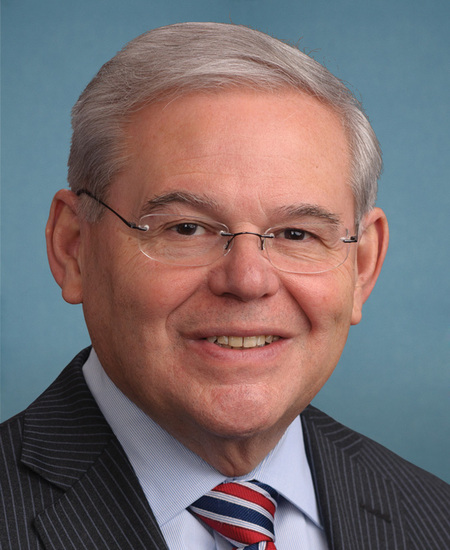
Rep. Robert Menendez
Sponsored bills
Maddy summaryHRES 1127 is a symbolic House resolution commemorating the 45th anniversary of the Taiwan Relations Act (TRA) and reaffirming U.S. policy toward Taiwan. It does not create new law but formally reiterates the U.S. commitment to Taiwan under the TRA framework, including regular defense transfers to support Taiwan's self-defense and advocacy for Taiwan's meaningful participation in international organizations. The resolution highlights longstanding U.S.-Taiwan cooperation on trade, security, education, and global challenges like public health and cybersecurity. It specifically calls on the Secretary of State to advance Taiwan's international engagement and supports existing programs like the Taiwan Fellowship Program and the American Institute in Taiwan. As a procedural resolution, it expresses congressional support for current policy without altering legal obligations.
Maddy summaryThe AADAPT Act reauthorizes and expands the Project ECHO grant program to specifically address Alzheimer's disease and dementia care. It provides $1 million annually (2026-2031) for grants to eligible health care entities - such as rural clinics, tribal organizations, or community health centers - to develop online training programs for primary care providers working in underserved areas (including rural, frontier, or medically underserved communities). These programs aim to improve provider retention, increase early diagnosis of dementia, and enhance quality care. The bill requires grantees to report on outcomes and ensures funding supplements, rather than replaces, existing resources.
Maddy summaryHR 7753, the "Protecting Communities from Helicopter Noise Act," requires the Federal Aviation Administration (FAA) to study helicopter noise impacts near the Statue of Liberty National Monument. The study will analyze noise volume, health and environmental effects, compliance with existing agreements, and potential solutions like flight path changes or altitude limits within a 15-mile radius of the monument. It directly affects communities living in residential and recreational areas near the monument and the FAA, which must complete the study and submit a report to Congress within 180 days of the bill's enactment. The bill does not impose new regulations but mandates a data-driven assessment to inform future decisions on helicopter operations.
Maddy summaryThe PTO Act establishes a standard for paid annual leave, requiring most employers to provide employees with 1 hour of paid leave for every 25 hours worked, up to a maximum of 80 hours per 12-month period. It directly affects private sector employees and certain government workers, including those at the Government Accountability Office, Library of Congress, and federal agencies covered under the Congressional Accountability Act. The bill prohibits employers from interfering with employees' use of leave for any reason, requires clear notice of leave policies, and protects employees from retaliation for taking leave. It includes enforcement mechanisms through the Department of Labor, allowing employees to file complaints or lawsuits for violations of their leave rights. The Act takes effect 180 days after enactment, with specific provisions for collective bargaining agreements.
Maddy summaryThis bill requires the Government Accountability Office (GAO) to produce a report within 180 days of enactment on boat fires near U.S. shorelines (up to 3 nautical miles from shore). The report must examine how federal and local agencies collaborate to prevent fires, analyze fire frequency, and recommend improvements for fire response and training. It directly affects the GAO, which must deliver these findings to relevant congressional committees. The bill creates no new laws but mandates a review to inform future safety policies.
Maddy summaryThis concurrent resolution (HCONRES 97) recognizes the gender wage gap, noting that women working full-time earn 84 cents for every dollar earned by men. It highlights racial disparities (e.g., Latinas earn 57 cents, Black women 69 cents) and the economic impact of the gap, including $965 billion in annual lost wages for women. As a symbolic resolution, it does not create new laws or policies but formally acknowledges the issue and reaffirms Congress’s commitment to addressing wage inequality.
Maddy summaryHR 7629, the Protect Our Letter Carriers Act of 2024, allocates $1.4 billion annually (2025-2029) to the U.S. Postal Service for high-security collection boxes and replacing physical universal mailbox keys with electronic versions, directly affecting USPS operations and letter carriers. It requires the Attorney General to appoint specialized prosecutors in each district to coordinate investigations and prosecutions of postal-related crimes, such as assaults on carriers or mail theft. The bill also mandates the U.S. Sentencing Commission to adjust guidelines so that assaults or robberies against postal employees are treated with the same severity as assaults against law enforcement officers. These provisions aim to enhance safety through infrastructure upgrades, improved prosecution, and stricter sentencing for crimes targeting postal workers.
Maddy summaryHR 7518, the SUN Act, streamlines the approval process for placing specific infrastructure in highway rights-of-way. It directs that electric vehicle charging stations, renewable energy facilities, electrical transmission lines, and broadband infrastructure be treated as "covered facilities" under existing federal regulations for highway accommodation. This means states can approve these projects under current rules (Section 109(l) of Title 23 U.S. Code) without needing separate federal permits. The bill directly affects infrastructure developers and state transportation departments by simplifying deployment along federal-aid highways.
Maddy summaryThe Increasing Access to Mental Health in Schools Act creates a federal grant program to increase mental health staff in low-income schools. It provides funding for partnerships between low-income schools (where at least 20% of students are from families below the poverty line) and graduate programs in school counseling, psychology, and social work. Grant funds can cover training costs, salary support for new mental health providers, recruitment of underrepresented students, and student loan repayment for mental health staff working in qualifying schools. The bill sets target ratios for staff-to-student ratios (like 1 counselor per 250 students) and requires annual reporting on program outcomes. The program is authorized for $200 million annually to address mental health staffing shortages in schools serving high-poverty communities.