

Maddy summaryThis bill would amend federal law to strengthen penalties for organized retail crime by expanding definitions of theft to include digital goods, gift cards, and setting a $5,000 aggregate value threshold for charges over a 12-month period. It would establish a new "Organized Retail and Supply Chain Crime Coordination Center" under Homeland Security to coordinate Federal, State, local, and Tribal law enforcement efforts against cross-jurisdictional theft groups. The Center would share information with retailers, transportation companies, and law enforcement agencies, track crime trends, and produce annual reports on organized retail crime. This legislation directly affects retailers, supply chain businesses, and law enforcement agencies, while targeting organized crime groups responsible for a 93% increase in larceny incidents and rising safety concerns for retail employees. The bill aims to address significant financial losses and supply chain disruptions noted in the National Retail Federation's 2023 data.
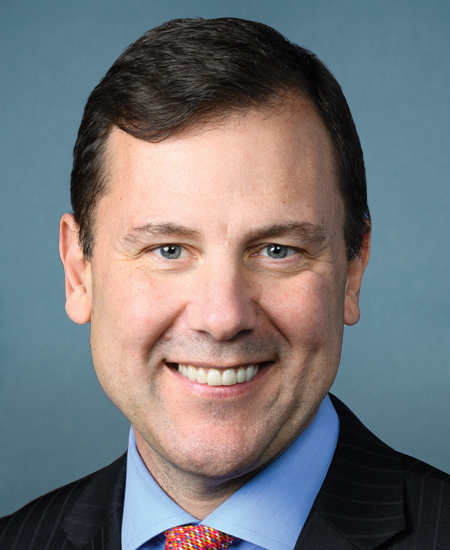
Rep. Thomas H. Kean, Jr.
Sponsored bills
Maddy summaryThe Connected Vehicle Security Act of 2026 restricts the importation, sale, and manufacture of vehicles and related technology from specific countries, including China, Russia, Iran, and North Korea, to address national security concerns. The law defines prohibited items as connected vehicles, their software, and hardware components and sets different effective dates, with vehicle bans starting in 2027 and hardware restrictions beginning in 2030. A government official can grant exceptions for specific items after reviewing security risks and notifying Congress, while the agency must publish annual reports on enforcement actions and compliance.
Maddy summaryThis resolution expresses the sense of the House of Representatives that antisemitic rhetoric from specific online personalities, including Hasan Piker and Candace Owens, is dangerous and contributes to hatred. It urges social media platforms to enforce their policies against hate speech and calls on public officials to condemn such conduct without exception. The bill does not impose new laws or penalties but instead highlights specific instances of alleged hate speech to emphasize the need for responsibility among influencers and technology companies.
Maddy summaryHR 2424, the Modern, Clean, and Safe Trucks Act of 2025, repeals a 12% federal excise tax on new heavy trucks, tractors, and trailers. This tax currently adds significant costs - $7,000+ for trailers, $20,000+ for clean diesel trucks, and up to $50,000 for advanced technology trucks - discouraging replacement of older, less efficient vehicles. The bill directly affects truck manufacturers, dealers, and fleet operators by removing this cost barrier, making newer, cleaner models more affordable. It aims to accelerate the adoption of modern trucks with improved safety and environmental features, particularly benefiting electric and alternative-fuel vehicles that face higher upfront costs.
Maddy summaryThis resolution expresses support for designating April as Sikh History Month to honor the history, culture, and contributions of the Sikh community. The measure highlights key Sikh principles such as equality, honest labor, and community service, noting that April often coincides with the significant festival of Vaisakhi. By encouraging schools and public institutions to host educational events, the bill aims to increase awareness of Sikh heritage and reduce misunderstandings about the faith. Ultimately, this non-binding resolution serves as a formal recognition of the Sikh community's role in American society rather than creating new legal requirements.
Maddy summaryThe VA Home Loan Affordability Act updates the Department of Veterans Affairs' home loan program to make it easier and more affordable for veterans to buy or refinance homes. Key changes include removing the requirement for third-party verification of lender fees, allowing refinancing without an appraisal in certain cases, and lowering the minimum interest rate cap for adjustable-rate mortgages from 200 to 75 basis points. The bill also expands loan guarantees for condominiums, caps closing costs and seller fees at 1.5% and 6% of the loan amount respectively, and mandates regular reviews of debt-to-income ratios. Additionally, it requires appraisers to hold state licenses, directs the VA to update property suitability regulations, and sets a deadline for submitting a plan to modernize the agency's loan administration technology.
Maddy summaryThe Medicare Advantage Improvement Act of 2026 aims to speed up care decisions and increase transparency for Medicare Advantage enrollees and providers. Starting in 2028, the bill requires insurance plans to respond to most prior authorization requests within 72 hours and to provide real-time decisions for low-risk services, while also banning requirements for re-authorization when a treatment plan is clinically modified. The legislation introduces a new compliance scoring system that will publicly rank plans and reduce payments to those with poor performance, alongside stricter rules ensuring medical necessity standards match those of traditional Medicare.
Maddy summaryThe Ensuring Excellence in Mental Health Act expands federal support for certified community behavioral health clinics (CCBHCs) by modifying how these facilities are funded under Medicaid and Medicare. Under the new rules, states and the federal government will use a prospective payment system to pay CCBHCs based on the cost of providing care rather than per-visit fees, while also extending coverage to additional services like primary health care. The legislation establishes a new grant program to help clinics operate and expand, creates a national data system to track clinic performance, and introduces an accreditation requirement to ensure quality standards are met. Additionally, the bill extends liability protections to clinicians working in these clinics and removes certain financial barriers for Medicare patients seeking care at CCBHCs.
Maddy summaryThe Countering Russia's War on Faith Act requires the U.S. government to produce annual reports detailing how Russian forces in occupied Ukrainian territories are persecuting religious groups such as Christians, Jews, and Muslims. These reports must document specific actions like the destruction of religious sites, the detention of clergy, and efforts to force local faith communities to align with the Russian Orthodox Church. If the President certifies that specific individuals or entities are responsible for these violations, the law mandates imposing sanctions on them under existing U.S. regulations. The bill focuses on gathering factual information and enforcing penalties against those directly involved in religious persecution, without speculating on the broader geopolitical outcomes of these actions.
Stop Stealing our Chips Act This bill creates a whistleblower incentive program and establishes whistleblower protections for individuals who provide information to the Department of Commerce's Bureau of Industry and Security (BIS) related to violations of U.S. export control laws. Currently, BIS administers and enforces controls on the export of dual-use goods (e.g., items with both civilian and military uses) and certain military parts and components. These export controls are implemented primarily under the Export Control Reform Act of 2018 (ECRA) through the Export Administration Regulations. Under the bill, BIS must establish a whistleblower incentive program to reward individuals who voluntarily report original information that results in BIS (1) imposing fines under ECRA on persons that violate, attempt to violate, conspire to violate, or cause a violation of ECRA or any related regulation, order, license, or authorization; or (2) requiring the forfeiture of property that results in net proceeds. Additionally, BIS must establish a secure online portal for whistleblowers to report violations of ECRA. The bill outlines requirements for BIS to review, investigate, and provide status updates related to these reports. The bill requires BIS to pay an award to certain whistleblowers who voluntarily reported original information that led to the imposition of a fine under ECRA. The bill establishes the Export Compliance Accountability Fund for paying these awards and funding related activities. The bill also sets forth whistleblower protections by (1) prohibiting employers from impeding communication or retaliating against individuals who act as whistleblowers, and (2) establishing confidentiality requirements.