

Maddy summaryHRES 793 is a resolution passed by the U.S. House of Representatives calling on Hamas to immediately release all 199 hostages taken during Hamas' October 7, 2023 attack on Israel. The resolution condemns Hamas for the attack, the taking of hostages, and threats against hostages, while stating that holding hostages violates international humanitarian law under the Geneva Conventions. It demands the immediate release of all hostages and expresses sympathy for victims and their families. As a symbolic resolution, it does not create legal obligations but formally expresses the House's position.
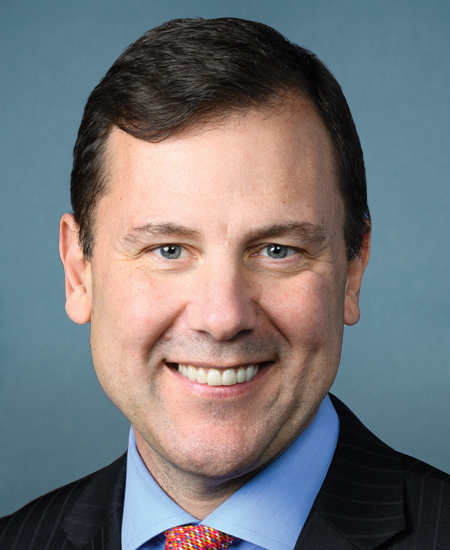
Rep. Thomas H. Kean, Jr.
Sponsored bills
Maddy summaryHR 6466, the AI Labeling Act of 2023, requires developers of AI tools that create images, video, audio, multimedia, or text content to add clear, permanent labels identifying the content as AI-generated. It mandates that labels include metadata (like the AI tool used and creation time) and prevents removal through contractual requirements for platforms and users. The bill directly affects AI developers, social media platforms, and content-sharing services by imposing labeling obligations and enabling FTC enforcement for violations. A working group will develop technical standards for detecting AI content within one year, but the core requirement is the mandatory labeling of AI-generated material to help users recognize it.
Maddy summaryThis bill requires major social media platforms (with at least 25 million U.S. monthly users) to publicly post their terms of service regarding foreign terrorist organizations and designated terrorists, including how users can flag violations and what actions (like removal or banning) may be taken. Platforms must submit detailed quarterly reports to the Attorney General tracking flagged content, enforcement actions, and how content was reviewed or removed - disaggregated by content type, media, and reporting method. Non-compliance triggers daily civil penalties of up to $5 million per violation. The law expires five years after enactment.
Maddy summaryHRES 875 is a symbolic House resolution expressing support for National Adoption Day (November 18, 2023) and National Adoption Month (November). It does not create new laws or policies but formally encourages the public to consider adoption and recognizes the importance of permanent families for children in foster care. The resolution highlights that approximately 114,000 children in the U.S. foster system await adoption and emphasizes the goal of securing safety and permanency for all children. It urges Americans to support adoption efforts during November and throughout the year. This resolution has no direct legal effect on adoption processes or funding.
Maddy summaryThe Veteran Improvement Commercial Driver License Act of 2023 modifies rules for veterans' educational benefits to streamline approval of commercial driver education programs at branch locations. It allows a branch of an educational institution to be exempt from full approval requirements if it is appropriately licensed and uses the same curriculum as an approved main location. Schools must submit an annual report to the Department of Veterans Affairs verifying curriculum consistency, and the VA may withhold this exemption if needed. The changes will take effect 180 days after the VA establishes reporting rules, which must be finalized within 180 days of the bill's enactment.
Maddy summaryThe BUILD Act of 2023 creates two federal grant programs to fund infrastructure improvements for small local emergency services. It provides up to $4 million per grant to law enforcement agencies (serving communities under 50,000 people) and fire departments (career, combination, or volunteer) for facility upgrades, training, recruitment, or community safety projects directly related to emergency services. The bill authorizes $250 million annually from 2024-2026 for these grants, requiring grantees to demonstrate financial need and use funds only for specified purposes. It also mandates reports on grant distribution, infrastructure needs, and funding impacts over six years. The program targets jurisdictions often overlooked in larger federal infrastructure initiatives.
Maddy summaryThis bill appropriates $14.3 billion in supplemental security funding to Israel following the October 7, 2023 attacks. The funding includes $4 billion for Iron Dome and David's Sling defense systems, $1.35 billion for the Iron Beam defense system development, and $3.5 billion for foreign military financing. The bill requires regular reporting to Congress on security assistance provided to Israel and designates all funds as "emergency requirements" under federal budget law. It also modifies existing laws to facilitate the transfer of defense articles and services to Israel, aiming to strengthen Israel's defense capabilities against rocket threats.
Maddy summaryThe SAFE Orbit Act of 2023 establishes the Office of Space Commerce within the Department of Commerce, creating an Assistant Secretary for Space Commerce to manage space traffic coordination. It requires the Commerce Department to provide satellite operators with free basic space situational awareness services - including location tracking, orbit data, and collision alerts - and maintain a public database of unclassified space object information. The bill also grants legal immunity to government entities and commercial providers for sharing this data, while prohibiting the government from competing with private sector advanced services. This directly affects satellite operators, commercial space companies, and U.S. agencies like the Department of Defense and NASA, which must now coordinate under standardized data-sharing protocols.
Maddy summaryHR 6384, the Expand QISET Act, provides competitive grants to universities and nonprofit organizations that are not among the top 100 federal R&D spenders to expand quantum information science, engineering, and technology (QIST) research and education. It funds curriculum development, faculty training, student pipeline programs (including bridge programs for post-baccalaureate students), and infrastructure building at eligible institutions. Institutions must submit plans for sustainability, workforce development across K-12 to postgraduate levels, and diversity in participation, with grants designed to complement rather than duplicate existing federal programs. The bill directly supports these institutions and their students in building QIST capacity for industry, government, and academic workforce needs.
Maddy summaryThe TREES Act of 2023 establishes a federal grant program to fund tree planting projects that reduce residential energy use. It provides 90% federal funding (up to $50 million annually) for projects in neighborhoods with high energy burdens, low tree canopy, or vulnerable populations like seniors and low-income households. Eligible applicants - including state/local governments, tribes, nonprofits, and power companies - must demonstrate how planting specific tree species will cut cooling and heating costs through shade and wind protection. The program aims to plant at least 300,000 trees yearly, prioritizing projects that maximize energy savings for households spending a high percentage of income on energy bills.