

Maddy summaryHRES 955 is a resolution commending Taiwan for its democratic election history and supporting Taiwan's democratic institutions. It recognizes Taiwan's transition to democracy since the late 1980s, including 7 presidential and 9 legislative elections held since then, all deemed free and fair. The resolution specifically expresses support for Taiwan's upcoming January 13, 2024, elections and condemns interference by the Chinese Communist Party. It affirms U.S. commitment to a strong partnership with Taiwan across multiple domains and supports Taiwan's self-defense and liberty. As a procedural resolution, it does not create new law but formally expresses congressional support for Taiwan's democratic development.
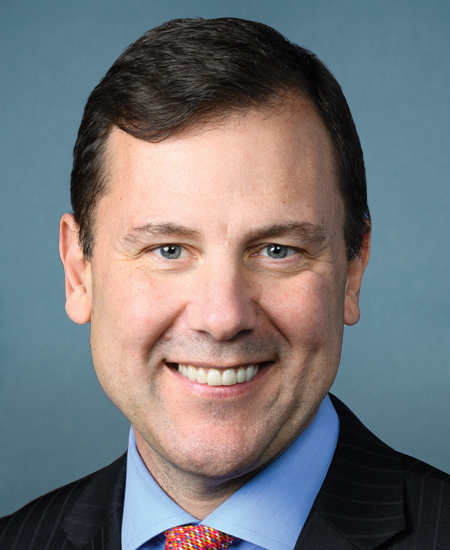
Rep. Thomas H. Kean, Jr.
Sponsored bills
Maddy summaryThe Affordable Connectivity Program Extension Act of 2024 allocates $7 billion in funding for the Affordable Connectivity Program (ACP) during fiscal year 2024. The ACP provides subsidies to low-income households to help cover the cost of internet service and connected devices like laptops or tablets. This funding ensures the program can continue supporting eligible households throughout the year, with the money remaining available until fully spent. The bill extends existing program funding without changing eligibility criteria or service requirements.
Maddy summaryThe TRANQ Research Act of 2023 requires the National Institute of Standards and Technology (NIST) to coordinate research on illicit drugs containing xylazine, novel synthetic opioids, and other concerning substances. The bill mandates NIST to develop faster detection methods, create data tools for identifying these substances, and consult with agencies like the DEA, CDC, and National Institute on Drug Abuse to establish safe handling practices. NIST must also form partnerships with universities, federal labs, and the private sector to improve detection capabilities. Within one year, NIST must report to Congress on its implementation, and the Comptroller General must conduct a study on federal capabilities to respond to new psychoactive substances, reporting within two years.
Maddy summaryThis bill requires U.S. federal agencies to prioritize native plants over non-native plants in landscape projects at federal facilities (like government buildings, military bases, and national parks). It mandates agencies to consider environmental benefits - such as supporting pollinators, reducing water use, and preventing soil erosion - when making planting decisions. Agencies must update design standards within 270 days and include these requirements in all relevant contracts. The Council on Environmental Quality will provide implementation guidance and publish biennial reports on native plant usage across federal projects.
Maddy summaryThis bill corrects a technical error affecting certain 9/11 victims' families who settled claims through the 2014 court case *In re 650 Fifth Avenue*. It ensures these families - designated as "Havlish Settling Judgment Creditors" - receive withheld funds from the Victims of State Sponsored Terrorism Fund and can participate in future payments like other eligible claimants. The bill amends existing law to exempt these families from specific distribution rules and requires released funds to be paid directly to them. It does not create new payments but fixes a bureaucratic oversight preventing these families from accessing funds they were previously owed.
Maddy summaryHR 1547, the One Seat Ride Act, requires the U.S. Department of Transportation to study whether commuter rail services without transfers (like direct rides) are more cost-effective and beneficial than services requiring transfers. The study must analyze economic, logistical, and quality-of-life factors, with a specific focus on New Jersey Transit's Raritan Valley line during peak hours. It mandates a report to Congress within nine months of the bill's enactment. This bill does not change current transit services but aims to inform future decisions about commuter rail investments. The study directly affects commuters using transfer-heavy routes, particularly in New Jersey.
Maddy summaryThe Saving Vet Halls Act of 2023 authorizes the Department of Veterans Affairs to provide grants to eligible veterans service organizations (like local VFW or American Legion chapters) for repairing or upgrading existing facilities or technology at their locations. Organizations must submit a detailed plan for their proposed improvements and cannot use funds for new construction. Grants are capped at $75,000 per organization annually, and recipients cannot receive another grant for five consecutive fiscal years. The bill allocates $10 million in funding to support these facility and technology upgrades for veterans service organizations nationwide.
Maddy summaryHR 6578 establishes a 9-member bipartisan commission to study antisemitism in the United States. The commission will investigate current manifestations of antisemitism, evaluate government efforts to combat it, and report findings and recommendations to Congress within one year. It directly affects Jewish communities by examining incidents like the 300% surge in antisemitic activity reported by the Anti-Defamation League, and impacts federal, state, and local governments through its evaluation of existing policies. The commission terminates 120 days after submitting its report, with no predetermined conclusions or interference in ongoing law enforcement.
Maddy summaryThis bill requires the President to block transactions involving "covered Iranian funds" processed by foreign or international financial institutions. These funds refer specifically to money transferred from South Korea to Qatar under certain Iran sanctions waivers. The law imposes sanctions under existing U.S. authorities to block all U.S.-related transactions with institutions handling these funds. Sanctions can be lifted if Iran stops supporting terrorism and dismantles its weapons programs, as certified by the President. The bill directly affects global financial institutions processing these specific Iranian-linked transfers.
Maddy summaryThe Immigration Visa Efficiency and Security Act of 2023 caps family-based immigrant visas for any single country at 15% (2% for dependent areas) of total visas annually, addressing longstanding visa backlogs for certain nations. It establishes new requirements for H-1B employers, including posting job openings on a Department of Labor website, meeting specific wage requirements (minimum $90,000 or prevailing wage), and preventing discrimination against workers. The bill also creates enhanced procedures for investigating H-1B violations, increases penalties for noncompliance, prohibits certain visas for nationals of "foreign adversary countries," and establishes a new pathway for employment-based immigrants to adjust their status with specific job requirements during the process.