

Maddy summaryThis bill imposes sanctions on individuals and entities within the Palestinian Authority (PA) and Palestine Liberation Organization (PLO) that administer or support a system paying terrorists and their families. It targets PA/PLO officials, specific entities like the Commission of Prisoners, and financial institutions processing these payments, requiring property blocking, visa bans, and restrictions on U.S. financial transactions. The sanctions apply if the PA/PLO continues payments described in the Taylor Force Act (2018), which previously mandated ending such payments. The bill terminates if the Secretary of State certifies the PA/PLO has ceased these payments.
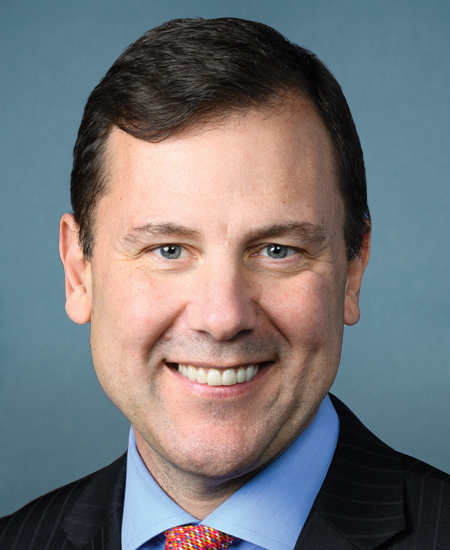
Rep. Thomas H. Kean, Jr.
Sponsored bills
Maddy summaryThe National Quantum Initiative Reauthorization Act (HR 6213) reauthorizes and expands federal efforts to advance quantum information science, engineering, and technology in the United States. It establishes new programs including National Quantum Centers, Quantum Testbeds, and a Quantum Reskilling and Workforce Coordination Hub to develop domestic talent and infrastructure. The bill creates an International Quantum Cooperation Strategy to build partnerships with allies while restricting collaboration with "foreign countries of concern" as defined in the legislation. It provides funding for research, workforce development, and commercialization of quantum technologies across government agencies, universities, and industry. The act aims to strengthen U.S. leadership in quantum technology through coordinated federal investment and international collaboration.
Maddy summaryThe 9/11 Responder and Survivor Health Funding Correction Act of 2024 makes several key changes to the World Trade Center Health Program that serves 9/11 responders and survivors. It allows licensed mental health providers (not just physicians) to conduct mental health evaluations for program participants and extends the time period for adding new health conditions from 90 to 180 days. The bill also adjusts enrollment calculations by removing deceased individuals from program counts and provides $2.97 billion in new funding for fiscal year 2024 with a minimum annual funding level of $20 million for 2025. These changes aim to improve access to care while ensuring stable, long-term funding for the program that provides medical services to those affected by the 9/11 attacks.
Maddy summaryThis is a commemorative resolution (HRES 1369) honoring Corey Comperatore, a volunteer firefighter, U.S. Army Reserves veteran, and community leader from Sarver, Pennsylvania, who died on July 13, 2024. The resolution formally mourns his passing and celebrates his life, noting he left behind his wife, Helen, and two daughters, Allyson and Kaylee. It recognizes his service to the Buffalo Township Volunteer Fire Department, his military service, and his role as a devoted member of Cabot Methodist Church. As a ceremonial resolution, it has no policy impact or direct effect on legislation or constituents beyond this formal acknowledgment.
Maddy summaryHR 9060 extends tax credits for biodiesel and renewable diesel producers and users through 2025, replacing the previous 2024 expiration date. It amends the Internal Revenue Code to extend the biodiesel credit (Section 40A) and biodiesel mixture credit (Section 6426) for fuels sold or used after December 31, 2024. The bill also adds a provision preventing double benefits by requiring the credit amount to be zero for fuels already claiming another credit under Section 45Z(a). This directly affects biodiesel producers, refiners, and businesses using these fuels for tax purposes.
Maddy summaryThe Revitalizing Downtowns and Main Streets Act creates a 20% tax credit for converting non-residential buildings into affordable housing. To qualify, buildings must be at least 20 years old and nonresidential, with conversion costs exceeding 50% of the building's adjusted basis or $100,000. The converted housing must be rent-restricted for 30 years for residents earning 80% or less of area median income (60% in certain designated areas), with a $12 billion national credit limit. Special provisions apply for economically distressed areas and rural historic preservation projects, primarily affecting developers who convert vacant commercial buildings in downtown or main street areas into affordable housing.
Maddy summaryThe DFC Modernization and Reauthorization Act of 2024 updates the United States International Development Finance Corporation (DFC) framework by redefining country classifications (including "less developed country" and "wealthy country"), prioritizing support for less developed countries, and increasing the DFC's maximum contingent liability from $60 billion to $120 billion. The bill allows the DFC to accept subordinate creditor status (meaning it would be a lower priority for repayment than other creditors), reduces the board size from 5 to 3 members, and creates a new Vice President for Foreign Policy and National Security position. It also repeals the European Energy Security and Diversification Act of 2019. These changes aim to modernize the DFC's operations to better align development financing with U.S. foreign policy goals. The bill directly affects how the DFC operates and where it provides financing for development projects.
Maddy summaryHR 3042 updates the eligibility rules for countries seeking to become "candidate countries" under the Millennium Challenge Corporation (MCC) program. It revises the income threshold to align with World Bank graduation standards and clarifies that U.S. waivers or suspensions of foreign aid restrictions no longer disqualify countries. The bill specifies that the MCC Board will make the final determination on candidate country status. This directly affects countries aiming to qualify for U.S. economic aid through the MCC program.
Maddy summaryHRES 1355 is a non-binding resolution supporting the designation of July 10 as Journeyman Lineworkers Recognition Day. It honors lineworkers who maintain electrical infrastructure under hazardous conditions, including during disasters, and commemorates Henry Miller, the first president of the International Brotherhood of Electrical Workers, who died on July 10, 1896, while troubleshooting an electrical outage. The resolution encourages public recognition of these workers' contributions but does not create new laws or policies.
Maddy summaryHRES 1350 is a non-binding resolution expressing concern about lead exposure affecting approximately one-third of the world’s children (up to 800 million globally), per WHO and UNICEF data. It calls on the U.S. Agency for International Development (USAID) and relevant agencies to integrate lead exposure prevention into global health, education, and environmental programs, particularly targeting vulnerable communities in low- and middle-income countries. The resolution highlights lead’s irreversible neurological harm to children, its economic costs ($6 trillion globally), and the need for cost-effective interventions like preventing lead in consumer goods and recycling. It does not create new laws but urges existing U.S. international programs to prioritize lead prevention as part of global health and environmental efforts.