

Maddy summaryThe Stand with Ukraine Act of 2024 establishes a framework for sustained U.S. security assistance to Ukraine in response to Russia's invasion. It endorses a 10-year bilateral security agreement and directs the U.S. government to provide military equipment, training, and security assistance to strengthen Ukraine's defense capabilities against Russian aggression. Key provisions include treating Ukraine as a major non-NATO ally for defense transfers, fast-tracking military sales through the Foreign Military Sales program, and creating mechanisms to prioritize defense article transfers. The bill also includes specific support for Ukraine's recovery, reconstruction, and demining efforts following the conflict. This legislation directly affects U.S. foreign policy implementation, military assistance programs, and Ukraine's ability to build a credible defense against Russian threats.
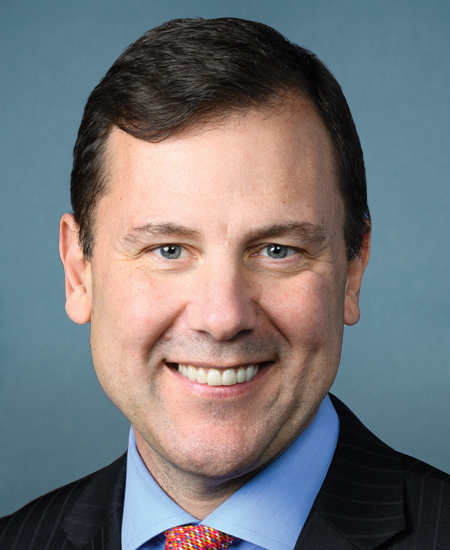
Rep. Thomas H. Kean, Jr.
Sponsored bills
This resolution supports the designation of National FFA Week. It also (1) recognizes the important role of the National FFA Organization (Future Farmers of America) in developing the next generation of globally conscious leaders who will change the world; and (2) celebrates the 10th anniversary of the Give the Gift of Blue program, which has donated more than 17,000 FFA blue jackets to FFA members in need.
Maddy summaryThis bill allows the Department of Veterans Affairs to provide extended care services to spouses of veterans under specific conditions. It directly affects spouses of veterans aged 75 or older, if the VA Secretary determines such care is in the best interests of both the spouse and veteran. The key provision amends existing law to permit these services for spouses in the same manner as they are provided to veterans themselves. The bill does not create new benefits but expands access to existing care programs under defined circumstances. It focuses on practical eligibility criteria rather than broader policy changes.
Maddy summaryHR 9405, the Foreign Adversary Investment Prohibition Act, prohibits current Members of Congress (Senators and Representatives) from engaging in certain financial transactions with entities tied to specific foreign adversaries, including China, Russia, Iran, North Korea, Cuba, and Venezuela under Maduro. It defines prohibited transactions broadly to include gifts, loans, investments in securities or commodities, and similar financial dealings. Violations can result in civil penalties of up to $15,000 per offense, enforced by the Attorney General through civil action. The law directly affects Members of Congress by restricting their financial interactions with entities linked to designated countries during their service.
Maddy summaryHR 9374, the Stand with Israel Act, prohibits U.S. federal funds from being used to support the United Nations or its entities if they restrict Israel's full participation as a member state. The bill specifically blocks funding for any UN body that expels, downgrades, or suspends Israel's membership or limits its ability to participate equally with other nations. This affects U.S. government contributions to the UN, requiring the Department of State and other agencies to halt funding for such UN actions. The key mechanism is a new provision in the UN Participation Act that mandates this funding restriction whenever Israel's UN participation is impaired.
Maddy summaryThe IVF for Families Act creates a new federal tax credit for individuals who pay for covered fertility treatments, up to $15,000 annually. It directly affects people undergoing fertility procedures like in vitro fertilization (IVF), egg/sperm donation, genetic screening, or intrauterine insemination, but requires married couples to file joint tax returns to claim the credit. The credit covers qualified expenses paid during the tax year, excluding amounts already reimbursed by insurance or claimed elsewhere on the tax return. This policy change would reduce the out-of-pocket cost of fertility care for eligible individuals by allowing a direct tax reduction.
Maddy summaryThis bill creates a formal process for reimbursing state and local governments when they provide security resources for presidential events. It directly affects state and local governments that contribute personnel, equipment, or facilities during presidential security operations. The key provision authorizes the Secretary of Homeland Security to pay these entities back for their services, with the governments' consent, using existing funds. This changes current practice by establishing a clear, written reimbursement mechanism rather than relying on ad-hoc arrangements.
Maddy summaryThis bill ensures that Khalid Shaikh Mohammad, Walid Muhammad Salih Mubarak Bin ‘Attash, and Mustafa Ahmed Adam al Hawsawi - detainees held at Guantanamo Bay for their alleged roles in the September 11, 2001, attacks - remain subject to military trial under Chapter 47A of Title 10, United States Code, regardless of any plea agreements they may have entered. It explicitly allows the death penalty as a sentencing option in their trials and mandates strict confinement conditions: solitary confinement at Guantanamo Bay, no contact with foreign nationals, no unauthorized psychological treatment, and no transfer to the U.S. mainland or any other country. The bill directly affects only these three individuals and modifies procedural and sentencing rules for their specific cases.
Maddy summaryHR 9247, the BIS IT Modernization Act, requires the Bureau of Industry and Security (BIS) to replace outdated information technology systems with a unified environment by 2029. The bill mandates adopting advanced data tools to streamline export license reviews, improve tracking of military end uses in countries of concern, and enhance data sharing with industry and partners. It specifically directs BIS to reduce manual processing, strengthen cybersecurity, and facilitate easier access for U.S. exporters using its systems. The act authorizes $25 million annually (2025-2028) to fund these modernization efforts.
Maddy summaryThe Safer Skies Act of 2024 requires certain smaller airlines to adopt the federal security screening program currently used by larger carriers. Specifically, it mandates that airlines operating passenger planes with more than 9 seats (that do not use TSA checkpoints, offer individual seats in advance with public schedules) must comply with the Aircraft Operator Standard Security Program within 360 days of enactment. The Transportation Security Administration must revise its rules to enforce this new requirement. This directly affects regional carriers that currently skip standard airport security screenings but serve passengers under these specific operational conditions. The bill extends existing security standards to cover these previously exempt airlines without creating new security protocols.