

Maddy summaryHR 4606, the Ally’s Act, requires private health insurance plans (including employer-sponsored plans and individual coverage) to cover hearing implants and related services. It directly affects people with hearing loss who need cochlear implants, bone conduction devices, or external sound processors, as determined by a physician or audiologist. The bill mandates coverage for devices, maintenance, repairs, upgrades every 5 years, hearing assessments, surgery, and rehabilitation - without separate cost-sharing or stricter limits than other medical services. Insurers cannot deny coverage if a provider deems the service medically necessary. The law applies to all applicable health plans and takes effect for plan years beginning January 1, 2026.
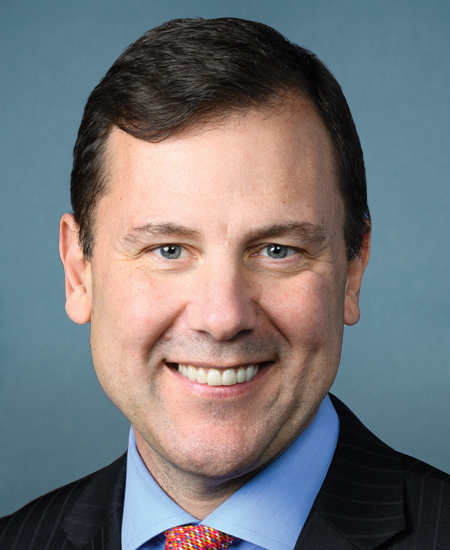
Rep. Thomas H. Kean, Jr.
Sponsored bills
Maddy summaryThis bill prohibits life, disability, and long-term care insurers from denying coverage, canceling policies, or increasing premiums based solely on a person's status as a living organ donor. It directly protects living organ donors by preventing insurance discrimination unrelated to actual health risks. The bill also requires the Health and Human Services Secretary to update public educational materials about organ donation benefits, risks, and insurance impacts within six months of enactment. These materials will include information on the new insurance protections established by the bill. The law relies on state insurance regulators for enforcement of the insurance provisions.
Maddy summaryThis bill establishes state-level judicial threat intelligence centers to improve safety for judges and court staff. It defines "eligible organizations" (nonprofits with judicial security expertise) and requires the State Justice Institute to fund these centers to provide security training, threat monitoring, coordinate with law enforcement, and develop standardized reporting systems. The centers will create resources for judicial officer safety, conduct security assessments, and track threats through a national database. State Justice Institute must submit annual reports detailing threat types and severity to congressional committees. The bill directly affects state and local judges, court staff, and the nonprofit organizations operating these centers.
Maddy summaryThis bill establishes two grant programs to support construction and manufacturing apprenticeship colleges. It provides up to $500,000 per college for community outreach (e.g., connecting with high schools, rural businesses, and workforce boards) and student support services (e.g., academic advising, mental health resources, childcare). The grants target increasing enrollment and completion rates for underrepresented groups, including rural students, first-generation college students, and minorities. Funding of $5 million annually (2026-2030) requires colleges to report on program outcomes like retention rates and diversity metrics. The law directly affects apprenticeship colleges offering work-based training in construction and manufacturing fields.
Maddy summaryThis bill amends the Family and Medical Leave Act (FMLA) and federal employee leave rules to clarify that recovery from organ donation surgery qualifies as a "serious health condition." It directly affects private-sector workers covered by the FMLA and federal civil service employees. The key change adds "including recovery from surgery related to organ donation" to the definitions of serious health conditions in both the FMLA and federal leave statutes. This ensures eligible employees can use their existing family and medical leave benefits to recover after donating an organ, without requiring new leave entitlements.
Maddy summaryHR 1522, the Federal Retirement Fairness Act, changes federal retirement rules to include temporary employees' service after January 1, 1988, in retirement benefit calculations. It directly affects temporary federal employees (including U.S. Postal Service workers) and Members of Congress who served after that date. The bill removes a previous cutoff date in retirement law, allowing their temporary service to count toward retirement eligibility. This means eligible temporary workers can now have their full service period considered when calculating retirement benefits.
Maddy summaryThe Defending American Property Abroad Act of 2025 protects U.S. property interests in Western Hemisphere countries with U.S. free trade agreements. It requires the Secretary of Homeland Security to identify and list ports, harbors, or marine terminals where a foreign government has nationalized, expropriated, or seized U.S.-owned land (since January 2024) through actions like contract repudiation or forced control. Once listed, the President must prohibit vessels using these sites from importing goods, docking passenger vessels, or conducting maintenance in the United States. This directly affects U.S. persons (citizens or businesses) with property in designated locations.
Maddy summaryHRES 588 is a non-binding House resolution condemning the slogan "Globalize the Intifada" as a call to violence against Israeli and Jewish people worldwide. It urges U.S. national, state, and local leaders to publicly denounce the slogan, which the resolution characterizes as undermining safety and security. The resolution cites historical context of violence during past intifadas and recent antisemitic incidents to support its position. As a symbolic measure, it has no legal effect but aims to encourage leaders to reject the slogan.
Maddy summaryHR 1919, the "Anti-CBDC Surveillance State Act," prohibits the Federal Reserve from developing, testing, or issuing any central bank digital currency (CBDC) or similar digital assets. It specifically bans the Fed from offering direct financial products to individuals, maintaining individual accounts, or issuing CBDCs directly or indirectly through intermediaries like banks. The bill also blocks the Fed from using any digital asset for monetary policy and clarifies that physical currency's privacy protections remain intact. This policy directly affects the Federal Reserve System's ability to create or manage digital monetary tools.
Maddy summaryHR 1765, the Promoting United States Wireless Leadership Act of 2025, requires the Assistant Secretary of Commerce for Communications and Information to enhance U.S. representation and leadership in international wireless standards bodies (like 3GPP, IEEE, and ISO) that set rules for 5G and future wireless networks. It mandates encouraging participation and offering technical expertise to U.S. companies and stakeholders in these bodies, while excluding entities deemed "not trusted" due to national security concerns (based on existing government determinations). The bill also requires the Assistant Secretary to brief relevant congressional committees within 60 days of enactment on implementation strategy. This directly affects U.S. technology companies and experts participating in global wireless standard-setting, aiming to strengthen U.S. influence in developing next-generation network standards.