

Maddy summaryThis bill extends dependency and indemnity compensation to surviving spouses of veterans who die from amyotrophic lateral sclerosis (ALS), treating ALS-related deaths as qualifying for benefits regardless of how long the veteran had the disease before death. It requires surviving spouses to have been married to the veteran for at least eight continuous years prior to death to qualify for compensation. The changes apply to veterans dying from ALS on or after October 1, 2025. Additionally, the bill requires the Veterans Affairs Secretary to submit a report within 180 days of enactment identifying other service-connected disabilities with high mortality rates that might warrant similar treatment.
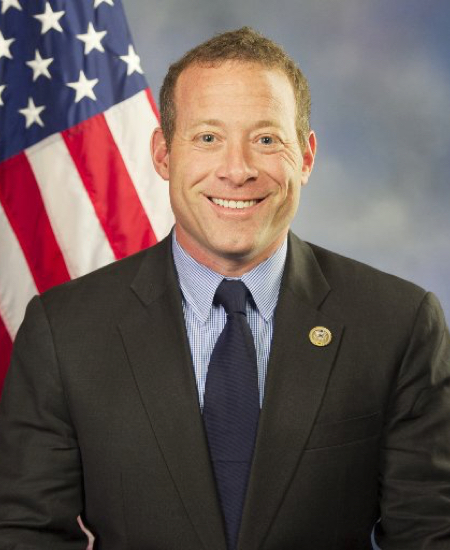
Rep. Josh Gottheimer
Sponsored bills
Maddy summaryThis bill (HR 6803) is a commemorative resolution that renames Newark Penn Station in Newark, New Jersey, as the "Donald M. Payne, Jr. Transit Center at Newark Penn Station." It does not create new policies or affect funding; it solely changes the official name of the transit station and all federal references to it. The designation honors Congressman Donald M. Payne, Jr., who represented New Jersey's 10th District and advocated for transit infrastructure during his service. The bill has no direct impact on transportation operations, riders, or policy - it is purely a ceremonial renaming.
Maddy summaryHR 6635, the Bus Operator Safety and Security Act, requires new fixed-route buses over 30 feet long (with a 10+ year lifespan) purchased using federal transit funds to have physical barriers at the driver's workstation. These barriers must extend from floor to ceiling, fully enclose the workstation to block entry of people or objects, and not obstruct the driver's view. Transit agencies must install these barriers within two years of the law's enactment, unless the labor union representing bus drivers agrees to waive the requirement. The rule applies only to new buses bought with federal funds (excluding those from rural transportation programs) and directly affects transit agencies and bus drivers operating large fixed-route vehicles.
Maddy summaryThe CARE for First Responders Act (HR 6601) provides mental health support specifically for first responders, including emergency personnel and 911 operators (defined as "qualified emergency response providers"). It requires the creation of a 24/7 confidential hotline via the 988 Suicide Lifeline, peer support programs staffed by trained responders, and mobile crisis units that offer on-site mental health services during major disasters. The bill mandates trauma-informed, culturally appropriate care and education to reduce stigma around mental health, with a focus on helping responders and their families adjust after disaster work. It authorizes $5 million annually (2026-2030) for these services through grants to state/local health entities.
Maddy summaryThis bill requires the Federal Reserve, Comptroller of the Currency, and FDIC to study how to improve growth, capital, and profitability for rural banks. The study will identify regulatory barriers in current federal laws or rules that may limit rural bank expansion or new bank openings in rural areas. The agencies must submit a report to Congress within six months of the bill's enactment. The bill itself does not change regulations or provide funding - only mandates the study.
Maddy summaryThe Bridges not Bumpers Act of 2025 creates a working group to improve data sharing about bridge clearances for commercial vehicles, requiring better GPS navigation tools, clearer height labeling on rental vehicles (over 5,700 lbs), and warnings to renters. It mandates that rental companies provide height information and warnings about bridge clearance, while also addressing liability for inaccurate GPS data. The bill establishes a national clearinghouse for bridge strike data and funds research grants to identify high-risk locations and improve infrastructure. It directly affects commercial truck drivers, GPS navigation providers, and rental car companies with fleets of 5+ vehicles, aiming to reduce bridge strikes through better information and infrastructure planning.
Maddy summaryHR 7291 establishes a review board to assess the safety of pre-2000 "Generally Recognized As Safe" (GRAS) designations used by food manufacturers for additives. The bill requires manufacturers to report their specific GRAS designations within 90 days, with the board categorizing them into priority tiers (1-3) for review. If the board finds a substance unsafe, it recommends revocation, giving manufacturers 180 days to provide safety evidence before the FDA can revoke the designation. The board must report results to Congress by specific deadlines (2-10 years after enactment) and terminates 10 years after the bill passes.
Maddy summaryHJRES 144 is a congressional disapproval resolution targeting a specific rule issued by the Department of Veterans Affairs (VA) on December 31, 2025, which addressed "Reproductive Health Services" (90 Fed. Reg. 61310). This resolution directs Congress to disapprove the VA rule under Chapter 8 of Title 5, U.S. Code, meaning the rule would have no legal effect if passed. The bill directly affects the VA's implementation of reproductive health services for veterans, as it seeks to nullify the agency's existing policy. This is a procedural measure, not a substantive policy change, aimed solely at blocking the VA's rule through congressional action.
Maddy summaryThis bill requires the Social Security Administration to regularly inform disabled beneficiaries about the Ticket to Work program. Specifically, the Commissioner must send program information to each disabled beneficiary within one year of the law's enactment, and then every six months thereafter. The program helps disabled individuals access employment services while retaining benefits. This change directly affects Social Security disability beneficiaries by mandating ongoing outreach about work support options, without altering the program's existing rules or benefits.
Maddy summaryThe AI-WISE Act requires the Small Business Administration (SBA) to create and maintain free, publicly available online educational resources about artificial intelligence specifically for small business owners. These resources must cover practical topics like understanding AI limitations, identifying AI-generated outputs, managing risks, protecting user privacy, and determining when AI tools are suitable for business use - without favoring any specific AI product or company. The SBA must develop these materials within 180 days of the bill’s enactment, consulting with an Advisory Working Group of AI experts and small business outreach professionals. This initiative directly affects small business owners by providing accessible, neutral guidance to help them navigate AI adoption safely and effectively.