

Domain Reform for Unlawful Drug Sellers Act or the DRUGS Act This bill requires a website domain name registrar (or registry operator) to take down a domain name under the registrar's control upon receiving an eligible notification that the domain name is facilitating illegal online drug sales. Upon receiving an eligible notification, the registrar must lock the domain name within 24 hours and suspend the domain name within seven days. An eligible notification must come from a trusted notifier and include certain information, such as a summary of the alleged illegal activities and a statement that the evidence supporting the allegations is available to be shared with the registrar. The bill defines trusted notifiers as (1) certain government agencies, such as the Food and Drug Administration or the office of a state attorney general; and (2) qualifying private or nonprofit entities given such status by specified government agencies. The registrant of the affected domain name may appeal a lock or suspension by providing the trusted notifier with information to establish that the registrant's drug sales are legal, such as pharmacy licenses and the licensing information of the prescribing medical practitioners, if applicable. The trusted notifier must conduct a reasonable investigation and consider the information provided by the registrant. If the appeal is successful, the registrar must reverse the lock and suspension within 15 days. The domain name must remain locked and suspended while the appeal is pending.
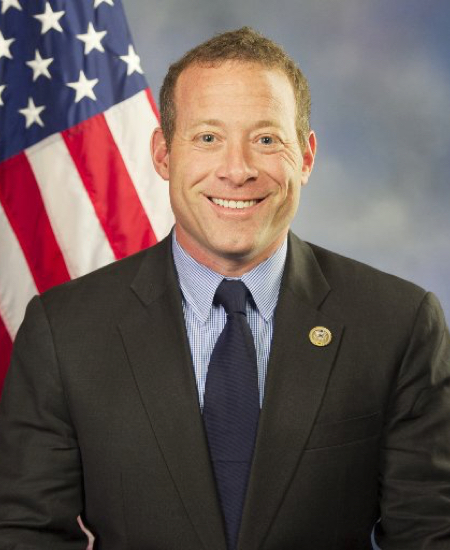
Rep. Josh Gottheimer
Sponsored bills
Knock Out Cancer Act or the KO Cancer Act This bill provides additional funding through FY2027 to the National Institutes of Health (NIH) for cancer research. The amount of additional funding each fiscal year is equal to 25% of the total amount allocated to the NIH for cancer research in FY2021.
Accelerating Access to Critical Therapies for ALS Act This bill establishes grant programs to address neurodegenerative diseases, such as amyotrophic lateral sclerosis (also known as ALS or Lou Gehrig's disease), and contains other related provisions. The Department of Health and Human Services (HHS) shall award grants to eligible entities for scientific research utilizing data from expanded access to investigational ALS treatments for individuals who are not otherwise eligible for clinical trials. The Food and Drug Administration (FDA) shall award grants to public and private entities to cover the costs of research and development of drugs that diagnose or treat ALS and other rare neurodegenerative diseases. HHS shall also establish the Public-Private Partnership for Neurodegenerative Diseases between the National Institutes of Health, the FDA, and at least one eligible entity (generally, an institution of higher education or a nonprofit organization). The partnership shall support the development and regulatory review of drugs that address ALS and other rare neurodegenerative diseases. The FDA shall publish on its website a five-year action plan for fostering the development of drugs that improve or extend the lives of people living with rare neurodegenerative diseases. The Government Accountability Office must report to Congress about the grants provided under this bill, including an analysis of the impact of such grants on research and development of treatments for ALS.
Wildlife Conservation and Anti-Trafficking Act of 2021 This bill sets forth provisions relating to wildlife conservation, anti-trafficking and poaching, and illegal fishing. Specifically, the bill directs the Departments of Justice, the Interior, Commerce, State, and the Treasury to develop a plan of action for awards to whistleblowers of violations of laws applicable to wildlife trafficking; directs Interior to carry out the International Wildlife Conservation Program to, among other things, address global conservation threats and combat wildlife trafficking and poaching; provides funding for the conservation of certain endangered species; authorizes Interior, in consultation with the State Department, to station not less than one U.S. Fish and Wildlife Service officer in the primary diplomatic or consular post of the United States in a focus country or country of concern (i.e., countries engaging in wildlife trafficking); and directs Commerce to make amounts available for illegal, unreported, and unregulated fishing enforcement. The bill also modifies the federal criminal code to make wildlife trafficking and illegal fishing predicates with respect to the enforcement of certain criminal offenses, including racketeering and money laundering.
Maddy summaryThe Health Coverage Tax Credit Reauthorization Act of 2021 extends the expiration date of the Health Coverage Tax Credit from January 1, 2022, to January 1, 2026. This tax credit helps individuals purchasing health insurance through the Marketplace reduce their premium costs. The extension applies to months beginning after December 31, 2021, ensuring continued support for eligible individuals through 2025.
This concurrent resolution expresses the sense of Congress that tax-exempt fraternal benefit societies provide critical benefits to the people and communities of the United States and their work should continue to be promoted.
This bill posthumously provides for the award of a Congressional Gold Medal in commemoration of the 13 service members who died on August 26, 2021, while stationed at Hamid Karzai International Airport in Afghanistan.
Food Donation Improvement Act of 2021 This bill expands liability protections for the donation of food and grocery products. Specifically, the bill expands the liability protections to include donations of an apparently fit grocery product or apparently wholesome food for which the recipient is charged a good Samaritan reduced price that is no greater than the cost of handling, administering, and distributing the food or product; or that is donated directly to a needy individual by a retail grocer, wholesaler, agricultural producer, restaurant, caterer, school food authority, or institution of higher education. The Department of Agriculture must issue regulations that clarify the quality and labeling standards that food products donated under the Bill Emerson Good Samaritan Food Donation Act must meet to be eligible for liability protection.
Humane Cosmetics Act of 2021 This bill generally prohibits animal testing in the evaluation of cosmetic products, and it prohibits the sale or transport of cosmetics developed using animal testing, subject to civil penalties. These prohibitions begin one year after enactment. The bill specifies exceptions to these prohibitions, including if such animal testing (1) is conducted outside the United States to comply with a foreign regulatory authority; (2) is pursuant to a specified finding that there are no nonanimal alternatives to test the safety of a potentially dangerous cosmetic product or ingredient; (3) is of a product or ingredient for a drug or device subject to regulation by the Food and Drug Administration (FDA); or (4) is required for a noncosmetic purpose pursuant to a state, federal, or foreign regulatory authority. Further, no animal-testing evidence may be used to establish the safety of a cosmetic product or ingredient that is regulated by the FDA after the effective date of this bill, subject to limited exceptions.
Taiwan Preclearance Act This bill requires the Department of Homeland Security to report to Congress on various issues, including (1) a plan for establishing a U.S. Customs and Border Protection preclearance facility in the Indo-Pacific region; (2) an analysis of the feasibility and advisability of establishing a preclearance facility in Taiwan; and (3) an assessment of the impact that a preclearance facility will have on trade, tourism, and the security partnership between Taiwan and the United States. (Preclearance facilities are stations in designated foreign airports that inspect travelers prior to boarding U.S.-bound flights.)