Maddy summaryHRES 952 is a resolution expressing the U.S. House of Representatives' support for designating February 28, 2022, as "Rare Disease Day." It recognizes that rare diseases affect fewer than 200,000 people in the U.S. and that over 7,000 such conditions impact approximately 1 in 10 Americans. The resolution calls for improved awareness, earlier diagnosis, and support for developing treatments, diagnostics, and cures for rare diseases. As a symbolic gesture, it does not create new laws, funding, or direct policy changes but aims to highlight challenges faced by individuals with rare diseases and their families.
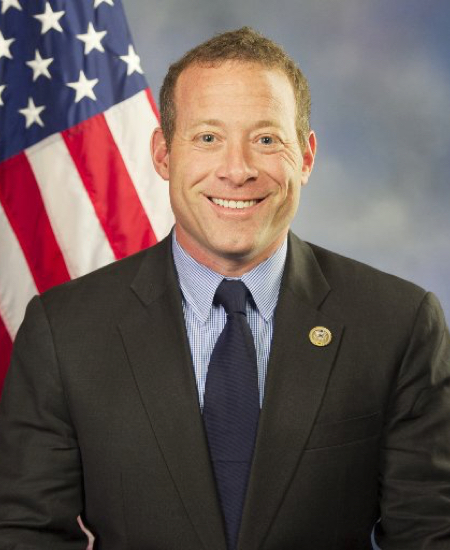
Rep. Josh Gottheimer
Sponsored bills
Women's Health Protection Act of 2021 This bill prohibits governmental restrictions on the provision of, and access to, abortion services. Specifically, governments may not limit a provider's ability to prescribe certain drugs, offer abortion services via telemedicine, or immediately provide abortion services when the provider determines a delay risks the patient's health. Furthermore, governments may not require a provider to perform unnecessary medical procedures, provide medically inaccurate information, comply with credentialing or other conditions that do not apply to providers whose services are medically comparable to abortions, or carry out all services connected to an abortion. In addition, governments may not (1) require patients to make medically unnecessary in-person visits before receiving abortion services or disclose their reasons for obtaining such services, or (2) prohibit abortion services before fetal viability or after fetal viability when a provider determines the pregnancy risks the patient's life or health. The bill also prohibits other governmental measures that are similar to the bill's specified restrictions or that otherwise single out and impede access to abortion services, unless a government demonstrates that the measure significantly advances the safety of abortion services or health of patients and cannot be achieved through less restrictive means. The Department of Justice, individuals, or providers may bring a lawsuit to enforce this bill, and states are not immune from suits for violations. The bill applies to restrictions imposed both prior and subsequent to the bill's enactment.

This resolution extends warm congratulations and best wishes to the people of Bahrain as they celebrate the 50th anniversary of the independence of Bahrain. The resolution also expresses support for the principles and freedoms upon which the nation of Bahrain is founded, as protected by its Constitution. Finally, the resolution recognizes the importance of the alliance between the United States and Bahrain to the stability of the region and the prosperity of both countries.
Small Business Cybersecurity Assistance Pilot Program Act This bill reauthorizes through FY2025 the Cybersecurity Assistance Pilot Program that provides grants to states to assist small businesses in developing their cybersecurity infrastructure.
Integrating New Technologies to Empower Law Enforcement at Our Borders Act This bill requires the Department of Homeland Security to report to Congress a plan to identify and deploy emerging and advanced technologies (e.g., artificial intelligence, automation, and optical radar) to achieve greater situational awareness along the northern and southern U.S. borders between ports of entry. The report shall contain information including assessments of (1) how Customs and Border Protection is currently using such technologies, (2) how such technologies can address border security capability gaps, and (3) the cost of acquiring such technologies.
Transparency for Malign Chinese Investments in Global Port Infrastructure Act This bill requires the Office of the Director of National Intelligence to submit a report to Congress documenting all Chinese investment in port infrastructure globally since January 1, 2012, and the commercial and economic implications of such investments.
Bridging the Gap for New Americans Act This bill requires the Department of Labor to submit to Congress a study on the factors affecting employment opportunities for certain individuals with professional credentials obtained in a non-U.S. country, specifically individuals who are lawfully present noncitizens or naturalized U.S. citizens. The study shall include policy recommendations for better enabling such individuals to obtain skill-appropriate employment in the United States.
This resolution supports the designation of Career and Technical Education Month to celebrate career and technical education across the United States.
Health Care for Burn Pit Veterans Act This bill updates policies and procedures related to Department of Veterans Affairs (VA) health care and benefits for veterans who have been exposed to toxic substances. Specifically, the bill extends the eligibility period for VA hospital care, medical services, and nursing home care for combat veterans who served after September 11, 2001, and were exposed to toxic substances, radiation, or other conditions, including those who did not enroll to receive VA care during the eligibility period. The VA must incorporate into its existing health care screening a screening to help determine potential exposures to toxic substances during military service. Among other requirements, the VA must also provide annual training to health care and benefits personnel with respect to veterans who were exposed to toxic substances; analyze total and respiratory disease mortality in veterans who served in specified locations on specified dates; conduct an epidemiological study on the health trends of veterans who served in the Armed Forces after September 11, 2001; conduct a study to determine trends in the rates of the incidence of cancer in veterans; publish a list of VA resources for veterans who were exposed to toxic substances, families and caregivers of such veterans, and survivors of such veterans who are receiving death benefits; and report on the data quality of the Individual Longitudinal Exposure Record and its usefulness in supporting veterans in receiving VA health care and benefits.
Global Respect Act This bill imposes visa-blocking sanctions on foreign persons responsible for or complicit in violating the human rights of individuals due to actual or perceived sexual orientation, gender identity, or sex characteristics. The President must report and periodically update a list of foreign persons responsible for such human rights violations and apply sanctions accordingly. The Department of State must designate at least one senior officer who shall be responsible for tracking violence and discrimination against individuals based on actual or perceived sexual orientation, gender identity, or sex characteristics in foreign countries.