

Maddy summaryThe Protect our Pets Act strengthens federal laws against animal cruelty by increasing penalties for animal crushing and prohibiting the abandonment or endangerment of domesticated animals on federal land. Under this bill, individuals convicted of these offenses face up to 10 years in prison for a first offense and up to 15 years for subsequent offenses, in addition to fines. The legislation defines domesticated animals to include mammals, birds, reptiles, and amphibians but includes specific exceptions for veterinary care, hunting, farming, and euthanasia. These changes directly affect people who commit these acts on federal property or in interstate commerce, aiming to provide clearer legal consequences for harming or neglecting animals.
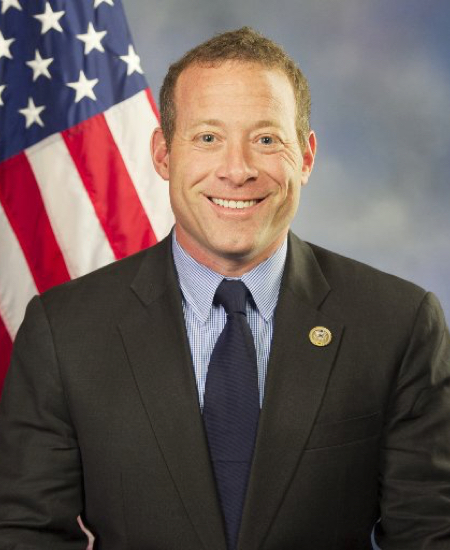
Rep. Josh Gottheimer
Sponsored bills
Maddy summaryThis bill establishes an Office of Energy Affordability within the Department of Energy, directly affecting the Department's policy-making process and indirectly aiming to influence energy costs for consumers. The Office's primary duty is to review proposed Department regulations or policies related to energy transitions, analyzing their effects on energy affordability, economic costs, and reliable energy access. It must also identify strategies to mitigate negative impacts and promote cost-effective solutions. The Office provides advice and guidance based on its reviews, which must be completed within 30 days, but it cannot prevent the issuance of any regulation. Finally, the Office is mandated to submit annual reports to Congress detailing its findings and recommendations.
Maddy summaryThis bill, the Federal and State Food Safety Information Sharing Act of 2026, authorizes the Food and Drug Administration (FDA) to share unredacted food safety information with State, local, Tribal, and Territorial public health authorities. This directly affects the FDA and these various state and local entities involved in protecting public health from foodborne hazards. The shared information can include details like foodborne illness surveillance data, laboratory testing results, inspection findings, recall distribution lists, and consumer complaints, to be shared as soon as reasonably practical. While recipient authorities generally need FDA permission for further disclosure, they may do so without permission if necessary to contain an outbreak, carry out a recall, or for other state enforcement activities. Additionally, the bill extends the duration of certain federal grants for enhancing food safety from three to five years and ties subsequent grant funding to successful program evaluations.
Maddy summaryThis bill establishes a framework to protect American-owned closed-source AI models from unauthorized extraction by foreign entities, particularly those from China and Russia. It requires the Secretary of State to conduct assessments identifying which foreign entities are conducting model extraction attacks or facilitating them through fraudulent account networks, then publish a public list of these actors for up to five years. The legislation authorizes the President to impose economic sanctions on identified entities and their affiliates, while also creating mechanisms for industry coordination and sharing information about threats. Importantly, the bill distinguishes between legitimate AI research conducted under contractual terms and unauthorized extraction attempts that bypass access controls or violate usage agreements.
Stop Stealing our Chips Act This bill creates a whistleblower incentive program and establishes whistleblower protections for individuals who provide information to the Department of Commerce's Bureau of Industry and Security (BIS) related to violations of U.S. export control laws. Currently, BIS administers and enforces controls on the export of dual-use goods (e.g., items with both civilian and military uses) and certain military parts and components. These export controls are implemented primarily under the Export Control Reform Act of 2018 (ECRA) through the Export Administration Regulations. Under the bill, BIS must establish a whistleblower incentive program to reward individuals who voluntarily report original information that results in BIS (1) imposing fines under ECRA on persons that violate, attempt to violate, conspire to violate, or cause a violation of ECRA or any related regulation, order, license, or authorization; or (2) requiring the forfeiture of property that results in net proceeds. Additionally, BIS must establish a secure online portal for whistleblowers to report violations of ECRA. The bill outlines requirements for BIS to review, investigate, and provide status updates related to these reports. The bill requires BIS to pay an award to certain whistleblowers who voluntarily reported original information that led to the imposition of a fine under ECRA. The bill establishes the Export Compliance Accountability Fund for paying these awards and funding related activities. The bill also sets forth whistleblower protections by (1) prohibiting employers from impeding communication or retaliating against individuals who act as whistleblowers, and (2) establishing confidentiality requirements.
Maddy summaryHR 5543, the Baltic Security Assessment Act of 2025, requires the U.S. State and Defense Departments to submit a report within 180 days of enactment. The report will assess emerging military, cyber, hybrid, and political threats to Estonia, Latvia, and Lithuania, including the roles of Russia, Belarus, China, Iran, and other actors. It will also evaluate U.S. and NATO military presence in the region, opportunities for defense cooperation, and recommendations to strengthen deterrence, cybersecurity, and democratic resilience in the Baltic countries. This bill directly affects U.S. foreign policy and defense planning regarding the Baltics, but does not create new programs or funding.
Maddy summaryThe SERVE Act extends various Veterans Affairs benefits to former military members who were discharged specifically due to their sexual orientation or gender identity. This legislation amends existing laws to include these individuals in access to hospital care, mental health counseling, burial in national cemeteries, post-9/11 education assistance, and VA housing loans. The bill also requires the Department of Veterans Affairs to notify affected service members about available benefits and mandates a report within 15 months detailing how many individuals have received these services.
Maddy summaryThe Keeping China Off the Rails Act requires railroad freight cars placed into service in the United States to meet specific production age requirements that gradually increase over time. The bill directly affects railroad companies and freight car manufacturers by establishing a timeline where cars must be produced within progressively longer lookback periods, starting with cars made in the two years before enactment and eventually requiring all cars to meet the standard after four years. This phased approach aims to reduce the use of older freight cars that may have been manufactured in China by ensuring newer, domestically produced alternatives are used. The legislation does not ban Chinese-made cars outright but instead creates a schedule that limits their use as the required production window expands.
Maddy summaryThe Civics Learning Act of 2026 amends the Elementary and Secondary Education Act to expand federal funding and support for civics education in K-12 schools. The bill directs the Department of Education to distribute $70 million in grants to schools, with at least 60 percent reserved for elementary and middle schools and a preference for programs that include hands-on civic engagement, constitutional history, and civil rights education. It also requires grant recipients to submit annual reports detailing how they meet civics education goals and ensures geographic diversity in funding distribution across urban, suburban, and rural areas.
Maddy summaryThis resolution expresses the House of Representatives' strong support for designating April 19 through April 25, 2026, as "National Crime Victims' Rights Week." It recognizes the impact of crime on victims and survivors, appreciates organizations that assist them, and encourages continued efforts to support victims' rights and services.