

Tax-Free Pell Grant Act This bill excludes from gross income, for income tax purposes, any amount received as a federal Pell Grant. It also expands the definition of qualified tuition and related expenses under the American Opportunity and Lifetime Learning tax credit to include computer or peripheral equipment (up to a maximum of $1,000), child and dependent care expenses, and course materials.
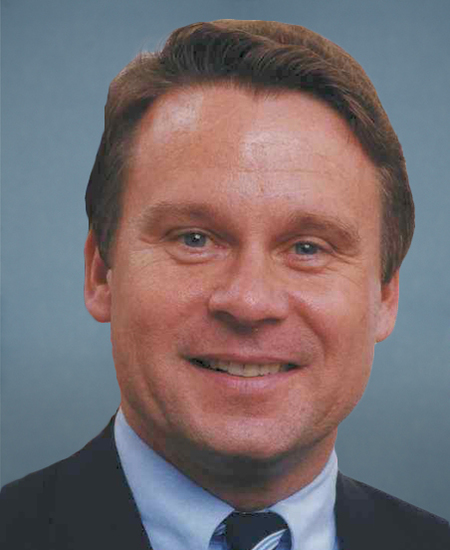
Rep. Christopher H. Smith
Sponsored bills
Maddy summaryThe Postal Police Reform Act of 2023 updates federal law to explicitly include "Postal Service police officers" alongside Postal Inspectors as authorized personnel for enforcing regulations on U.S. Postal Service property. It clarifies that the Postmaster General can establish and post rules for protecting postal property, with violations punishable by fines or up to 30 days in jail. This change directly affects USPS police officers (by formalizing their role), the Postmaster General (by expanding regulatory authority), and anyone on postal property who must follow posted rules. The bill makes existing enforcement procedures more explicit without altering penalties or creating new requirements.
Maddy summaryHR 3024, the Life Saving Leave Act, amends the Family and Medical Leave Act to provide eligible employees with up to 40 hours of additional unpaid leave per year for bone marrow or blood stem cell donation activities. This leave covers predonation, donation, and postdonation medical care, and can be taken intermittently. Employees may substitute accrued paid leave (like vacation or sick days) for this time, but employers cannot require it. The bill requires employees to give employers at least 30 days' notice (or as soon as practicable if urgent) and to schedule the leave to minimize disruption.
Maddy summaryThis bill directs the President to determine within 90 days whether to apply sanctions under existing law against the Iran Airports Company, a state-owned entity that facilitates Mahan Air's operations. Mahan Air, already sanctioned by the Treasury for supporting Iran's Revolutionary Guards and regional destabilization, uses Iran Airports Company's infrastructure for flights. The bill does not create new sanctions but requires a formal presidential assessment of whether the airport company should face penalties under Executive Order 13224, which targets entities aiding terrorism. It directly affects Iran Airports Company as the specific entity under review.
Maddy summaryThis bill protects living organ donors from insurance discrimination by prohibiting life, disability, and long-term care insurers from denying coverage, raising premiums, or altering policy terms solely because someone donated an organ while alive. It also updates the Family and Medical Leave Act to include recovery from organ donation surgery as a qualifying health condition, allowing donors to take protected leave for this purpose. Additionally, the bill requires the Health and Human Services Secretary to update public educational materials about living donation benefits, risks, and insurance protections within six months of enactment. These changes directly affect living organ donors, insurers, employers, and healthcare systems by ensuring fair access to insurance and workplace leave.
Maddy summaryThis bill creates a federally chartered National Center for the Advancement of Aviation to develop the U.S. aviation and aerospace workforce. The Center will provide grants for education and training programs, including scholarships, internships, and curriculum development for middle schools, high schools, and colleges focused on aviation careers. It will specifically support underrepresented groups and veterans transitioning to aviation careers while coordinating with government agencies to avoid duplicating existing programs. The Center must operate as a non-profit entity, maintain tax-exempt status, and submit annual reports to Congress on its activities.
Maddy summaryThe Apprenticeship Hubs Across America Act of 2023 creates a federal grant program to fund organizations (called "workforce intermediaries") that help employers establish registered apprenticeship programs in high-growth industries like health care, technology, and advanced manufacturing. These intermediaries receive competitive grants of up to $6 million each (with a 20% non-federal matching requirement) to provide employer outreach, program design support, and apprentice services, prioritizing sectors with low current apprenticeship participation. The program requires grantees to focus on expanding opportunities for underrepresented groups (such as women, minorities, and veterans) and tracks outcomes like program completion rates and post-apprenticeship earnings. Authorized at $25 million annually from 2024-2028, the bill mandates performance evaluations to determine future funding based on results in creating accessible, high-quality apprenticeships.
Performing Artist Tax Parity Act of 2023 This bill modifies the above-the-line tax deduction for the expenses of performing artists (including commissions paid to managers or agents) to provide for a phaseout of such deduction for taxpayers whose adjusted gross income exceeds $100,000 ($200,000 for joint return filers). The $100,000 phaseout threshold is adjusted for inflation annually for taxable years beginning after 2023.
Maddy summaryHR 2906, the "Reject Latinx Act," prohibits U.S. federal executive agencies from using the terms "latinx" or "latin-x" (or variations) in any official public document. This applies to all documents produced on or after a 30-day effective date following the bill's enactment. The bill directly affects federal agencies responsible for creating public-facing communications, such as reports, forms, or websites. It does not restrict the terms in private or non-governmental contexts. The law mandates this language change for all new agency documents but does not require altering existing documents.
Maddy summaryHRES 90 is a resolution demanding the Chinese government immediately release Mark Swidan, a U.S. citizen from Texas who has been detained since 2012 on drug trafficking charges. The resolution cites the UN Human Rights Council Working Group finding his detention arbitrary, with no evidence of drug offenses, passport records showing he wasn’t in China during the alleged crimes, and China denying his family contact and medical care. It specifically condemns China for blocking U.S. diplomatic access and calls on the U.S. government to prioritize Swidan’s release through diplomatic channels. The resolution focuses on the case’s documented legal and humanitarian issues, not broader policy implications.