

Maddy summaryHR 162, the First Amendment Accountability Act, creates a legal right for individuals to sue federal employees who violate their First Amendment rights (such as free speech or assembly) while acting under government authority. It directly affects citizens whose rights are infringed and federal employees (excluding the President/Vice President) who may face lawsuits. The bill allows victims to seek redress through court action, with courts having discretion to award attorney fees to the winning party. It explicitly excludes lawsuits against the federal government or employer for conduct within the scope of employment.
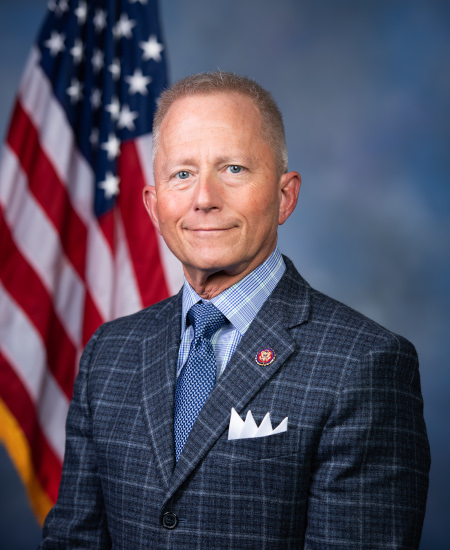
Rep. Jefferson Van Drew
Sponsored bills
Maddy summaryThis bill prohibits the federal government from awarding new contracts under the SmartPay Program (used for government payment systems) to payment processors that handle transactions for gun retailers. It specifically bans contracts for systems using processors that have designated merchant codes for gun retailers, affecting federal agencies and payment processors participating in the SmartPay Program. The restriction applies only to new contracts awarded after the bill's enactment, leaving existing contracts unaffected.
Maddy summaryHR 137, the TCJA Permanency Act, makes permanent many tax provisions from the 2017 Tax Cuts and Jobs Act. It permanently increases the standard deduction for individual taxpayers, modifies income tax brackets, and makes permanent the child tax credit increase. The bill also permanently limits deductions for state and local taxes, mortgage interest, and miscellaneous itemized deductions. These changes affect most individual taxpayers who file federal income tax returns.
Maddy summaryThis bill requires Congress to approve major federal regulations before they take effect. It would mandate that agencies submit detailed reports including cost-benefit analyses, economic impact assessments, and other information to Congress before implementing significant regulations. Major rules - defined as those with at least $100 million annual economic impact or significant effects on costs, competition, or employment - would need a joint resolution of approval from Congress within 70 session days. Nonmajor rules would follow a less stringent disapproval process. The bill aims to increase legislative oversight of the regulatory process, requiring Congress to formally review and approve rules that significantly impact the economy or public regulations.
Maddy summaryHR 138, the Lowering Costs for Caregivers Act of 2025, expands tax-advantaged health savings by allowing taxpayers to use funds in Health Savings Accounts (HSAs), Flexible Spending Accounts (FSAs), and Health Reimbursement Arrangements (HRAs) to cover medical expenses for their parents, not just their spouse. The bill amends the Internal Revenue Code to explicitly include parents as eligible dependents under these accounts, removing prior restrictions. This change directly affects caregivers - primarily adult children supporting aging parents - who will now have greater flexibility to use pre-tax funds for their parents' medical care. The provisions apply to expenses incurred after December 31, 2024, and aim to reduce out-of-pocket costs for family caregivers.
Maddy summaryThe Autism CARES Act of 2024 reauthorizes and enhances federal programs supporting individuals with autism spectrum disorder. It requires the National Institutes of Health to expand research to include more fields like gerontology and psychiatry, and to ensure research reflects the full range of needs of people with autism, including those with co-occurring conditions. The bill mandates regular reports to Congress on progress, mental health needs, and transition services for young adults with autism, while increasing funding for autism-related programs from fiscal year 2025 through 2029. This legislation directly affects individuals with autism, their families, caregivers, and healthcare providers by improving access to evidence-based services and research.
Maddy summaryThis bill, HR 1097 (Everett Alvarez, Jr. Congressional Gold Medal Act of 2023), authorizes the award of a Congressional Gold Medal to Everett Alvarez, Jr., in recognition of his service as a U.S. Navy pilot and Vietnam War prisoner of war. It directly honors Alvarez, who was the first U.S. pilot shot down in the Vietnam War, spent over 8.5 years in captivity, and later served in the Peace Corps and Veterans Administration. The bill’s key mechanism is directing the U.S. Mint to strike a gold medal bearing his name and image, with bronze duplicates available for sale to cover costs. It does not create new policies or affect any group beyond the honoree.
Maddy summaryHR 10555, the LANDED Act, authorizes state law enforcement agencies to use approved counter-drone systems to address threats from unauthorized unmanned aircraft systems (drones) that could harm people, disrupt infrastructure, or cause economic damage. It establishes a federal approval process requiring state agencies to apply for authorization, enter agreements outlining permitted use, and comply with safety protocols before deploying counter-UAS technology. The bill also mandates a reporting system for non-emergency drone operations and creates a grant program to fund state agencies' acquisition of approved counter-drone equipment. These provisions directly affect state law enforcement agencies seeking to mitigate drone-related security risks.
Maddy summaryThis bill allows Medicaid programs to enter into value-based purchasing (VBP) arrangements with drug manufacturers for innovative treatments like gene therapies. It codifies these arrangements by requiring states to report pricing structures based on patient outcomes and best prices for drugs sold under these agreements. The bill enables payments to be tied to treatment effectiveness, potentially reducing long-term healthcare costs by decreasing hospitalizations and other medical expenses. It also creates a requirement for a GAO study to evaluate how these arrangements impact patient access, outcomes, and healthcare system costs. The bill will sunset after 5 years, though existing VBP arrangements will continue beyond that date.
Maddy summaryThis bill extends Medicare payment adjustments for physicians and other practitioners through 2025 instead of ending in 2024. It specifically adds a 4.73% payment increase for services provided between January 1, 2025, and January 1, 2026. The legislation modifies existing Medicare payment rules to stabilize practice revenues during transition periods. It directly affects doctors and healthcare providers who bill Medicare for patient services. The key change is the extended timeframe and the defined 4.73% rate for the 2025-2026 period.