

Maddy summaryHRES 25 is a resolution to erase the January 13, 2021, impeachment of President Donald Trump from the U.S. House of Representatives' official records, as if it never occurred. It argues the impeachment process was flawed due to lack of due process, omission of context about the 2020 election, and constitutional concerns like ignoring the Senate trial timeline. The resolution does not change the Senate's prior acquittal of Trump but seeks to remove the House's vote from its internal documentation. As a procedural resolution, it would only affect the House's records and has no legal impact on the impeachment's outcome.
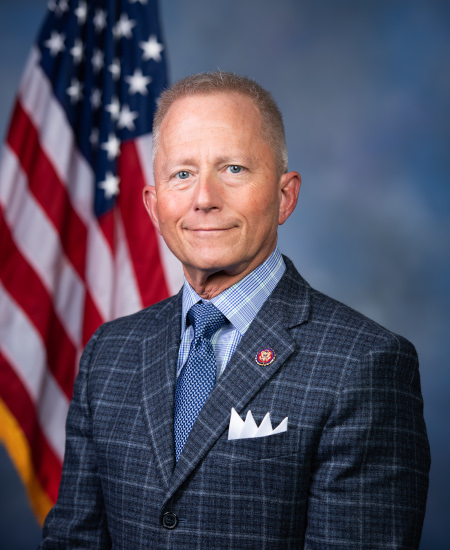
Rep. Jefferson Van Drew
Sponsored bills
Maddy summaryThe Proxy Voting for New Parents Resolution (HRES 23) would allow U.S. House Members who have given birth or whose spouse has given birth to appoint another Member as a proxy to cast their vote or record their presence in the House and committees for up to 12 weeks after childbirth. To use this, the new parent must submit a signed letter to the Clerk detailing the birth or medical condition and naming the proxy; the proxy must vote exactly as instructed and announce the vote as "by proxy." The proxy vote does not count toward quorum, and the new parent can revoke the proxy at any time by submitting a new letter or casting their own vote. This resolution applies to all House Members, including Delegates and the Resident Commissioner, though they cannot cast votes for the House itself.
Maddy summaryHRES 24 is a resolution seeking to remove the December 18, 2019, impeachment of President Donald Trump from the House of Representatives' official records. It claims the impeachment was based on insufficient evidence that did not meet the constitutional standard for impeachment under Article II, Section 4. If passed, the resolution would treat the impeachment as if it never occurred, erasing it from the House's historical record. This is a procedural measure affecting only the House's internal documentation, not legal outcomes or the Senate trial.
Maddy summaryHR 253, the Bipartisan Restoring Faith in Government Act, prohibits members of Congress, their spouses, and dependents from owning or trading most stocks, bonds, commodities, and derivatives. Covered individuals must divest such investments within 90 days of the bill’s enactment or when becoming covered, with exceptions for U.S. Treasury securities, state/local government bonds, and Thrift Savings Plan investments. The law requires divestment through sale or placement in a qualified blind trust (approved by the ethics office), mandates annual compliance certificates, and imposes civil penalties up to $50,000 for violations. It directly affects congressional staff and family members with financial holdings, aiming to prevent conflicts of interest in legislative decision-making.
Maddy summaryThis bill grants the Secretary of Homeland Security authority to temporarily suspend entry of certain individuals at U.S. borders to achieve "operational control" (defined as effective border management). It specifically applies to people seeking entry without proper documentation who would be denied entry under current law (e.g., lacking visas or asylum eligibility). The Secretary must block entry if they cannot detain or process these individuals as required by existing immigration law. States may also sue the government if they believe border security rules are violated.
Maddy summaryThe ESCRA Act (HR 306) targets fraudulent credit repair practices by prohibiting credit repair organizations from charging upfront fees before delivering results, requiring them to provide consumers with a credit report showing successful changes at least six months after service. It bans misleading claims about services and mandates clear disclosures (e.g., "credit repair organizations don’t provide services you can’t do yourself for free") while requiring written contracts detailing all communications. The bill also sets strict rules for submitting disputes to credit bureaus, including labeling communications as "submitted by a credit repair organization" and preventing "jamming" (repeated disputes without justification). These changes directly affect credit repair companies and consumers, aiming to reduce scams in the credit repair industry.
Maddy summaryHR 82, the Social Security Fairness Act of 2023, repeals two provisions that reduce Social Security benefits for certain government workers. It eliminates the Government Pension Offset (GPO), which cuts spousal or survivor benefits for people with pensions from jobs not covered by Social Security (like federal or state government roles), and the Windfall Elimination Provision (WEP), which lowers retirement benefits for those with similar pensions. The law takes effect for benefits paid after December 2023, requiring the Social Security Administration to adjust benefit calculations to remove these reductions. This change directly affects public-sector employees who previously had their Social Security benefits reduced due to their government pensions.
Maddy summaryThis bill (HR 7607) renames a specific U.S. Postal Service facility in Cape May County, New Jersey, to honor George Henry White. The building at Block 1025, Lots 18 & 19, at the northeast corner of US Route 9 South and Main Street in Middle Township will officially be called the "George Henry White Post Office Building." All official U.S. government references to this location - such as in laws, maps, or documents - will be updated to reflect the new name. This is a procedural designation with no policy changes, solely updating the building's official title.
Maddy summaryThis bill (HR 7606) designates the U.S. Postal Service facility at 1087 Route 47 South in Rio Grande, New Jersey, as the "Carlton H. Hand Post Office Building." It directly affects the physical postal facility and all official references to it (such as maps, documents, or regulations). The bill updates all federal records to use the new name, with no substantive policy changes or impact on services or residents. It is a ceremonial naming resolution with no fiscal or operational provisions.
Maddy summaryHR 7365, the VETS Safe Travel Act, provides free TSA PreCheck access to veterans with specific service-connected disabilities. It applies to veterans enrolled in VA healthcare who have lost or lost use of an extremity, experience paralysis, or have permanent blindness, requiring mobility aids like wheelchairs or prosthetics. The bill requires TSA and the VA to coordinate implementation within one year, including outreach to veterans about this benefit and reporting to Congress on progress.