

Maddy summaryHR 21, the Born-Alive Abortion Survivors Protection Act, requires medical staff at abortion facilities to provide the same immediate care and hospital admission to any infant born alive during an abortion as they would for any newborn. It mandates reporting failures to provide this care to law enforcement and imposes penalties of up to 5 years in prison for violations, with harsher penalties for intentional killing. The bill also allows women who undergo abortions to sue for civil damages, including triple the abortion cost, and provides for attorney fees. It defines "abortion" to exclude procedures performed after viability to preserve a live birth. This law directly affects healthcare providers at abortion facilities and creates new federal legal obligations for them.
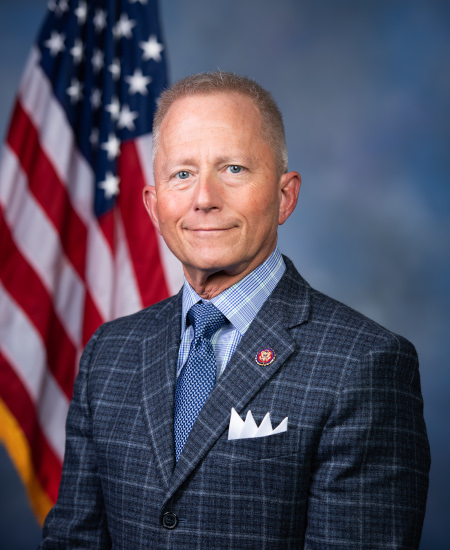
Rep. Jefferson Van Drew
Sponsored bills
Maddy summaryHR 712, the Child and Animal Abuse Detection and Reporting Act, amends federal law to require the national clearinghouse tracking child abuse and neglect data to also collect information on animal abuse incidents connected to child abuse cases. Specifically, it expands the existing data collection framework to include "the incidence of any such cases related to animal abuse," such as when a family's pets are harmed during a child abuse situation. This means state child welfare agencies reporting to the federal clearinghouse must now include animal abuse data tied to child abuse incidents, without requiring separate animal cruelty reports. The bill directly affects the federal agency managing the clearinghouse (within the Department of Health and Human Services) and state child welfare systems that provide this data.
Maddy summaryHR 674 prohibits new commercial offshore wind energy development in Lobster Management Area 1 (a specific fishing zone in the Gulf of Maine critical to the New England lobster and seafood industry). The bill directly affects commercial fishermen, seafood processors, and coastal communities dependent on this area’s fisheries, which support thousands of jobs and generate over $500 million annually in lobster harvest alone. Key provisions include banning new wind energy leases in the area and requiring a federal study within 120 days to evaluate how current environmental reviews for Gulf of Maine wind projects consider impacts on marine life, fishing industries, and coastal communities. The study will assess existing agency processes for reviewing wind projects, not change those processes.
Maddy summaryHR 703, the Main Street Tax Certainty Act, makes a key tax deduction permanent for small business owners. It removes the temporary sunset provision (subsection (i)) from Section 199A of the tax code, ensuring the qualified business income deduction remains available for eligible small businesses. This change directly affects pass-through business owners (like S-corps, partnerships, and sole proprietorships) who currently qualify for this deduction. The permanent change takes effect for tax years starting after December 31, 2025.
Maddy summaryHR 696, the "End Unaccountable Amnesty Act," restricts immigration benefits by making Temporary Protected Status (TPS) more difficult to obtain. The bill requires new legislation for each country's TPS designation, mandates specific findings about armed conflict or disasters, and limits TPS to 12-month periods with possible 12-month extensions. It also limits immigration parole to 1,000 people annually for specific urgent humanitarian reasons or public benefits, and repeals "cancellation of removal" provisions that allowed some individuals to adjust their immigration status. These changes primarily affect immigrants seeking temporary protections or parole in the United States.
Maddy summaryHR 639, the "Doctor Knows Best Act of 2025," prohibits health insurers and federal health programs (like Medicare) from requiring prior authorization, step therapy, or medical necessity reviews for covered medical services. This directly affects patients (who would face fewer delays in care), doctors (who gain more autonomy in treatment decisions), and insurers/federal programs (which must eliminate these review processes). The bill bans these requirements for all covered items/services under private health plans starting January 1, 2026, and for federal programs beginning the same date. It does not change coverage eligibility but removes administrative barriers to accessing approved treatments.
Supporting Accurate Views of Emergency Services Act of 2025 or the 911 SAVES Act This bill requires the Office of Management and Budget to categorize public safety telecommunicators as a protective service occupation under the Standard Occupational Classification system no later than 30 days after the enactment of this bill. (The Standard Occupational Classification system is a federal statistical standard used by federal agencies to classify workers into occupational categories for the purpose of collecting, calculating, or disseminating data.)
Maddy summaryHR 584, the "No Medicaid for Illegal Immigrants Act of 2025," would amend the Social Security Act to prohibit states from providing Medicaid coverage to non-citizens who are not lawfully admitted for permanent residence or permanently residing in the U.S. under legal status. This bill directly affects undocumented immigrants who currently qualify for Medicaid in some states. The key provision inserts a new requirement that states cannot offer Medicaid benefits (except for specific emergency care) to these individuals under any state Medicaid plan or waiver. The change would prevent federal Medicaid funding from being used for this group, effectively eliminating their eligibility.
Maddy summaryThe ALIGN Act (HR 574) allows businesses to immediately deduct the full cost of certain qualifying equipment and property (like machinery or tools) instead of spreading the deduction over several years. This permanent tax change directly affects businesses that invest in eligible property placed in service after September 2017. The key provision eliminates the previous depreciation rules for these assets, providing an immediate tax benefit to encourage capital investment. It does not change tax rates or apply to all business expenses, only specific types of equipment meeting the defined criteria.
Maddy summaryThis bill amends immigration law to require immediate detention and deportation of undocumented immigrants who assault law enforcement officers. It adds specific criteria: the assault must occur while the officer is on duty, because of their duties, or due to their status as a law enforcement officer, firefighter, or first responder. The Secretary of Homeland Security must issue a detainer for such individuals and take custody if not already detained by authorities. The bill directly affects undocumented immigrants charged with or convicted of assaulting officers meeting these defined circumstances. It modifies existing immigration detention procedures without creating new criminal offenses.