Medicare Patient Access and Practice Stabilization Act of 2025 This bill increases certain payment adjustments under the Medicare physician fee schedule for services furnished between April 1, 2025, and January 1, 2026.
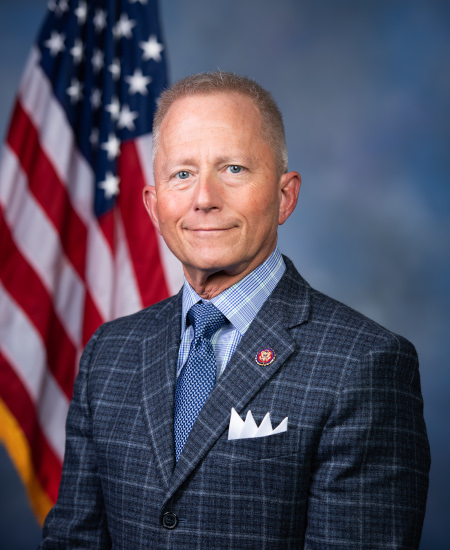
Rep. Jefferson Van Drew
Sponsored bills
Maddy summaryHR 904, titled "No Tax on Social Security," would amend the tax code to exclude Social Security benefits from taxable income for future tax years. This change would directly affect millions of Social Security recipients, including retirees, disabled individuals, and survivors, who currently may pay federal income tax on a portion of their benefits. The bill includes a funding provision to appropriate money to Social Security trust funds, replacing revenue lost from the tax exclusion. The policy would take effect for taxable years beginning after the bill's enactment.
Maddy summaryThis resolution expresses the House of Representatives' position that Congress should take steps to prevent the privatization of the United States Postal Service (USPS), ensuring it remains a federal independent agency. It highlights USPS’s constitutional role, self-sustaining nature (relying on service revenue, not taxpayer funds), and critical functions - serving 168 million addresses daily, supporting rural communities, and underpinning e-commerce. The resolution opposes privatization, noting it would raise prices, reduce services, and harm the $1.9 trillion mailing industry. As a non-binding resolution, it reflects the House’s stance but does not create new law or policy.
Maddy summaryHR 768, the Holocaust Education and Antisemitism Lessons Act, requires the U.S. Holocaust Memorial Museum Director to study how states and school districts currently teach about the Holocaust and antisemitism in K-12 schools. The study will examine curriculum requirements, teacher training, educational materials used, and assessment methods across all states and a representative sample of school districts and schools. It specifically aims to identify gaps, resources needed, and how schools address antisemitism and genocide prevention in their teaching. The Museum must submit a report to Congress within three years of the bill's enactment, detailing findings on current practices and challenges. This bill does not mandate new teaching requirements but seeks to understand existing approaches to Holocaust education.
Maddy summaryThe Build the Wall Act of 2025 creates a new fund called the Southern Border Wall Construction Fund to finance physical barriers along the U.S. southern border. It requires all unspent funds from the Coronavirus State and Local Fiscal Recovery Funds (originally for pandemic relief) to be transferred immediately into this new account. The Secretary of Homeland Security would then use these redirected funds to construct and maintain border barriers. This bill changes how existing federal funds are allocated, shifting resources from pandemic recovery efforts to border security infrastructure.
Maddy summaryThis bill prohibits federal funds from being used to cover gender transition procedures for individuals under 18, including puberty blockers, hormone therapies (at higher-than-normal doses), and surgeries like hysterectomies or mastectomies. It defines "sex" biologically as male or female and exempts certain medical treatments, such as puberty suppression for precocious puberty or care for genetic disorders of sex development. The policy directly affects minors receiving federally funded healthcare (e.g., Medicaid), restricting coverage for most gender-affirming care. Key mechanisms include funding restrictions and specific medical exceptions, though it does not ban private insurance or out-of-pocket payments.
Maddy summaryThe POST IT Act of 2025 amends the Small Business Act to require federal agencies to include hyperlinks on their websites to policy guidance documents. Specifically, it adds a requirement for agencies to provide hyperlinks to guidance interpreting rules for which they produce small entity compliance guides (as defined under the Small Business Regulatory Enforcement Fairness Act). This applies to guidance on statutory, regulatory, or technical issues affecting small businesses. The bill does not create new requirements but mandates hyperlinks for existing guidance documents already produced under current processes.
Maddy summaryHR 823, the Heroes’ Tax Exemption Act of 2025, would exempt active duty members of the U.S. Armed Forces from federal income tax on their military earnings. The bill adds a new section (139J) to the Internal Revenue Code, removing active duty pay from taxable income for service members. This change directly affects current active duty personnel, not veterans or reservists, and applies to income earned after the second October following the bill's enactment. The provision modifies the tax code without altering other tax rules or creating new administrative requirements. The bill focuses solely on removing income tax liability for active duty military compensation.
Maddy summaryHR 778, the Safeguarding American Workers’ Benefits Act, modifies Social Security Number (SSN) requirements for claiming the Child Tax Credit (CTC) and Earned Income Tax Credit (EITC). It requires taxpayers to provide SSNs issued to U.S. citizens or under specific legal provisions (as defined in the bill) before the tax return deadline, replacing previous allowances for certain alternative numbers. This directly affects individuals filing taxes who seek these credits, as they must now use only eligible SSNs to qualify. The changes apply to taxable years beginning after December 31, 2025. The bill does not alter the credit amounts but tightens verification rules for eligibility.
Maddy summaryThis bill requires the Congressional Budget Office (CBO) to publicly publish the models, data, and detailed methodology it uses to estimate the costs and effects of legislation. Specifically, it mandates that the CBO make available all fiscal models, data routines, and the underlying assumptions behind its cost estimates, allowing independent verification. This applies to all CBO analyses of proposed bills, including the specific data and computational details needed for others to replicate the results. The requirement applies to all users of CBO reports - lawmakers, researchers, and the public - except for data legally restricted from disclosure, which would still require a public list of variables and descriptive statistics.