

Maddy summaryHRES 299 is a resolution expressing the U.S. House of Representatives' support for designating July 2025 as Veterans Appreciation Month. This symbolic gesture does not create new law or policy but aims to honor veterans for their service and sacrifices, noting July's connection to American independence as a fitting time for recognition. The resolution emphasizes the importance of recognizing veterans' contributions year-round while highlighting the month of July as a suitable occasion for this appreciation.
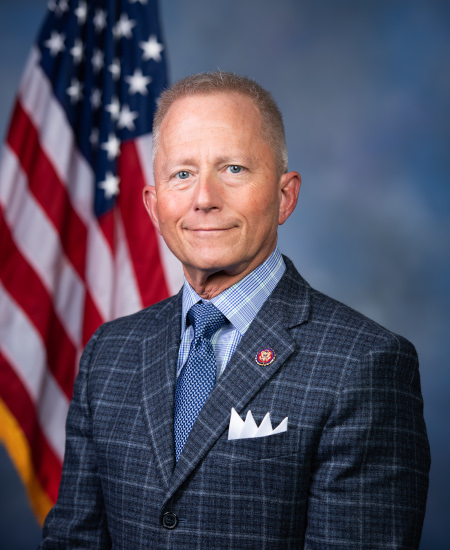
Rep. Jefferson Van Drew
Sponsored bills
Maddy summaryHR 2699, the Veterans’ Telecommunication Protection Act, requires telecom providers to charge veterans’ organizations the same residential rate for cable and landline phone services at their primary operating location, if that rate is lower than the standard business rate. It directly affects veterans’ organizations recognized by the Department of Veterans Affairs under 38 U.S.C. §5902, such as local chapters or service groups. The key provision mandates that providers apply residential pricing for eligible "covered services" (cable and voice services, excluding mobile) delivered to the organization’s main property. This change applies to services provided on or after the bill’s enactment date. The law aims to reduce telecom costs for these organizations by aligning their rates with residential customers.
Maddy summaryHR 2678, "Ellie’s Law," authorizes $20 million annually from fiscal years 2026 through 2030 for the National Institute of Neurological Disorders and Stroke to conduct new research on unruptured brain aneurysms. The funding specifically aims to study diverse patient populations by age, sex, and race, addressing gaps in current research. This bill directly affects the estimated 6.8 million Americans with unruptured brain aneurysms - particularly women and people of color, who face higher rupture risks - by advancing medical understanding of the condition. The law requires the funds to supplement, not replace, existing research budgets.
Maddy summaryHR 2245, the Autonomy for Disabled Veterans Act, increases funding limits for home modifications for disabled veterans using VA home health services. It raises the maximum annual amount for home improvements from $6,800 to $10,000 and for structural alterations from $2,000 to $5,000. The bill also requires annual inflation adjustments to these amounts based on the Consumer Price Index, ensuring the funding keeps pace with rising costs. This directly affects veterans who need home modifications as part of their VA-provided home health services.
Maddy summaryThis bill, HR 2253 (Puppy Protection Act of 2025), sets new federal standards for commercial dog dealers who sell puppies to the public. It requires specific housing sizes based on dog size (e.g., 12-30 square feet per dog), daily exercise in safe outdoor areas, clean water and nutritious food twice daily, and annual veterinary exams including dental checks. The bill also limits breeding frequency (max 2 litters in 25 months), sets age minimums for breeding (18 months for small dogs, 2 years for large dogs), and mandates health screenings to prevent genetic diseases. These requirements apply directly to commercial dealers, with final regulations to be issued within 18 months of enactment.
Maddy summaryThis bill, HR 2102 (Major Richard Star Act), allows veterans with combat-related disabilities to receive both full military retired pay and veterans' disability compensation simultaneously, without the previous offset that reduced retired pay. It directly affects veterans already eligible for both benefits due to combat-related injuries, removing the requirement that their retired pay be reduced by the disability compensation amount. The key provision amends Title 10 and Title 38 to eliminate the offset rule (sections 5304 and 5305 of Title 38) for these veterans. The change applies to payments starting after the bill’s enactment date, effective for all qualifying veterans. This is a policy change to increase financial support for affected veterans, not a new benefit.
Maddy summaryThis bill authorizes $250 million annually for four years to help schools on federally impacted lands (like tribal reservations and military bases) improve aging infrastructure. It creates two grant types: formula grants for schools with no bond capacity and competitive grants prioritizing schools with urgent safety issues like unsafe buildings or lack of clean water. Local schools must contribute 10-25% of project costs based on their "learning opportunity threshold," with the highest-priority schools receiving full federal funding. Funds can be used for construction, renovation, and repair to meet safety standards and improve learning environments. The bill addresses the significant infrastructure challenges reported by 65% of schools with facilities in poor condition.
Maddy summaryHR 2574, the "No Iranian Energy Act," amends existing sanctions law to explicitly prohibit U.S. sanctions on natural gas transactions involving Iran. It expands the Iran Freedom and Counter-Proliferation Act of 2021 by adding natural gas to the list of energy sectors subject to sanctions under Sections 1244 and 1247 of the law. The bill directly affects foreign entities or governments that engage in the sale, supply, or transfer of natural gas to or from Iran. This change modifies existing legal provisions without creating new sanctions, targeting Iran's gas industry as part of broader sanctions policy.
Maddy summaryThis bill raises the asset limits for Supplemental Security Income (SSI) recipients to allow more savings without losing benefits. It increases the individual resource limit from $2,250 to $20,000 (in 2025) and the couple limit from $1,500 to $10,000, with automatic annual inflation adjustments based on the Consumer Price Index. These changes directly affect low-income seniors and people with disabilities who rely on SSI. The bill eliminates the current "savings penalty" that previously forced recipients to spend down savings to qualify. The new limits will adjust each year to maintain their real value against inflation.
Maddy summaryHR 2575 terminates specific financial authorizations related to Iran. It ends a 2023 waiver allowing funds transfer from South Korea to Qatar and all related licenses issued by the Treasury's Office of Foreign Assets Control (OFAC). The bill also prohibits the President from reissuing similar waivers or licenses that would permit the Iranian government or Iranian individuals to access certain financial accounts. This directly affects Iran's ability to access designated funds previously authorized under prior legislation. The law creates a permanent restriction on these financial arrangements without requiring new congressional approval.