

Maddy summaryHCONRES 27 is a concurrent resolution that formally reaffirms Congress's support for open water lifeguards by recognizing them as first responders and emergency response providers under existing U.S. law. It highlights their lifesaving work in protecting people and property during water rescues, medical emergencies, and environmental incidents, noting their cross-training in medical response and water safety. The resolution does not create new laws or benefits but serves as a symbolic acknowledgment of their critical role in community safety. This statement honors lifeguards' service and aligns with international practices that grant similar recognition to lifeguards as emergency responders.
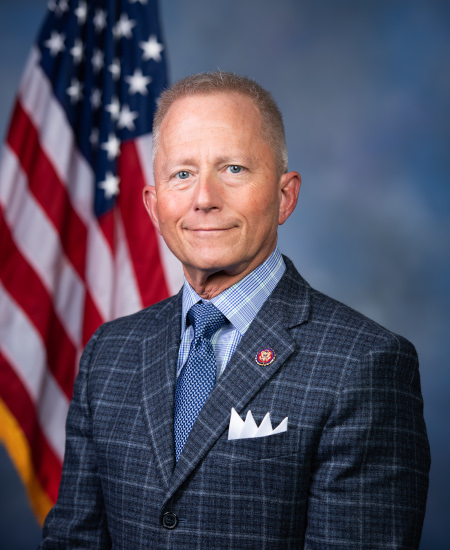
Rep. Jefferson Van Drew
Sponsored bills
Maddy summaryThe Housing Supply Frameworks Act (HR 2840) directs the Department of Housing and Urban Development (HUD) to create federal guidelines and best practices for state and local governments to reform zoning rules that restrict housing supply. It focuses on practical changes like reducing parking minimums, allowing more housing types (e.g., duplexes, accessory dwellings), streamlining approval processes, and increasing density near transit - aiming to address a nationwide housing shortage affecting cost-burdened households. The guidelines, developed with public input from planners, developers, and community groups, are intended to help states and localities voluntarily adopt reforms that increase housing availability across income levels. States and localities that adopt these recommendations must report progress to Congress within five years, though the bill does not mandate specific changes or provide direct housing construction funds.
Maddy summaryHR 2881, the COAST Anti-Drilling Act of 2025, prohibits the federal government from issuing new oil and gas leases in four specific coastal planning areas: the North Atlantic, Mid-Atlantic, South Atlantic, and Straits of Florida. This directly affects the Department of the Interior (specifically the Secretary) and oil and gas companies seeking to explore or develop resources in these regions. The bill amends the Outer Continental Shelf Lands Act to ban all new leasing authorizations in these areas, as defined by the 2024-2029 leasing program notice. It does not affect existing leases or operations but prevents future development in these designated coastal zones.
Transportation Freedom Act This bill reduces taxes on auto companies and repeals specified environmental regulations on cars and trucks. The bill establishes a new tax deduction equal to 200% of eligible wages paid or incurred by domestic producers of automobiles or automobile components, subject to limitations. It also allows an entity to reduce (and adjust) its financial statement income (for purposes of calculating liability for the alternative minimum tax) by the amount of eligible wages it elects to deduct. The bill nullifies the 2024 rules of the Environmental Protection Agency (EPA) regarding (1) the finalization of specified greenhouse gas (GHG) programs and the reduction of emissions from certain light-duty and medium-duty vehicles (e.g., cars and trucks that are under a certain weight) starting with model year 2027, and (2) phase three of GHG emission standards for heavy-duty vehicles (e.g., school buses and tractor-trailer trucks). It also repeals the 2024 rules of the National Highway Traffic Safety Administration (NHTSA) regarding corporate average fuel economy (CAFE) standards for certain cars, trucks, and vans. Additionally, the bill eliminates (1) the option given to California to set standards for car emissions that are more stringent than those set under the Clean Air Act, and (2) the option for other states to adopt California's standards. NHTSA and the EPA must establish new CAFE and GHG standards, respectively, for vehicles that are economically practicable and technologically feasible. The GHG standards may not require the production or sale of electric vehicles.
Safeguard American Voter Eligibility Act or the SAVE Act This bill requires individuals to provide documentary proof of U.S. citizenship when registering to vote in federal elections. Specifically, the bill prohibits states from accepting and processing an application to register to vote in a federal election unless the applicant presents documentary proof of U.S. citizenship. The bill specifies what documents are considered acceptable proof of U.S. citizenship, such as identification that complies with the REAL ID Act of 2005 that indicates U.S. citizenship. Further, the bill (1) prohibits states from registering an individual to vote in a federal election unless, at the time the individual applies to register to vote, the individual provides documentary proof of U.S. citizenship; and (2) requires states to establish an alternative process under which an applicant may submit other evidence to demonstrate U.S. citizenship. Each state must take affirmative steps on an ongoing basis to ensure that only U.S. citizens are registered to vote, which shall include establishing a program to identify individuals who are not U.S. citizens using information supplied by certain sources. Additionally, states must remove noncitizens from their official lists of eligible voters. The bill allows for a private right of action against an election official who registers an applicant to vote in a federal election who fails to present documentary proof of U.S. citizenship. The bill establishes criminal penalties for certain offenses, including registering an applicant to vote in a federal election who fails to present documentary proof of U.S. citizenship.
Maddy summaryThis bill expands Medicare coverage to include audiology services provided by qualified audiologists without requiring a physician referral or supervision. Starting January 1, 2027, Medicare will pay 80% of the standard rate for these services, which include hearing and balance assessments and treatment. It specifically allows audiologists to legally provide these services under state law, as long as they are covered if provided by a physician. The bill does not expand the types of services covered beyond those already payable under Medicare as of December 31, 2026.
Maddy summaryThis bill requires the Department of Homeland Security (DHS) to annually report to Congress on the accreditation status of all its basic training programs for entry-level law enforcement roles. The reports must include details like accreditation dates, reasons for lack of accreditation, assigned accreditation managers, and timelines to achieve it - ending once all programs are accredited. It also mandates immediate notification to Congress if a program loses accreditation, including reasons and plans to regain it. Additionally, the bill directs DHS to research better ways to provide training access to state, local, tribal, and territorial law enforcement, especially in rural areas.
Maddy summaryHR 1423, the Guard and Reserve GI Bill Parity Act of 2025, expands GI Bill benefits to National Guard members who serve on full-time National Guard duty or active duty under Title 32. It removes previous exclusions by counting this service toward eligibility for Post-9/11 educational benefits, just like active-duty service. The change applies retroactively to service performed since September 11, 2001, allowing affected veterans to access benefits they were previously denied. This policy adjustment directly affects National Guard members who completed qualifying full-time duty since 2001.
Maddy summaryHR 2752, the Ensuring Safer Schools Act of 2025, amends federal grant programs to prioritize hiring veterans and retired law enforcement officers as school resource officers (SROs). The bill requires COPS grants to give preferential consideration for applications focused on recruiting these individuals, adds annual mental health screenings and training for SROs, and defines "veteran or retired law enforcement officer" for grant eligibility. It also mandates coordination between the Department of Veterans Affairs and schools to connect veterans with SRO roles. This directly affects schools receiving COPS grants, veterans seeking SRO positions, and local law enforcement agencies partnering with schools. The law changes how federal funds are administered for school safety roles, not school policies.
Maddy summaryThe Invest to Protect Act of 2025 establishes a $50 million annual grant program (2027-2031) for local governments employing fewer than 175 law enforcement officers, including counties, municipalities, and Tribal governments. Grants fund de-escalation training, victim-centered domestic violence response training, evidence-based safety training for scenarios like mental health crises or active shooters, recruitment/retention bonuses (capped at 20% of salary), and mental health resources for officers. Recipients must report on program use, disclose bonus amounts publicly, and comply with audits to prevent misuse of funds. The bill aims to improve officer safety and community relations through targeted support for smaller law enforcement agencies.