

Maddy summaryThe Mental Health Services for Students Act of 2025 would establish a federal grant program to fund school-based mental health services for students in grades K-12, particularly those experiencing trauma, grief, suicide risk, or violence. It directly affects schools (including Bureau of Indian Education schools), students, and community mental health providers through partnerships that must include school districts and local mental health entities. Key provisions require services to be culturally appropriate, trauma-informed, and integrated with positive behavioral supports, with grants capped at $2 million per award for 5 years (renewable) and funded at $300 million annually for 2027-2028. Recipients must report annually on program outcomes, ensure equitable access across urban and rural areas, and comply with privacy laws like HIPAA and FERPA.
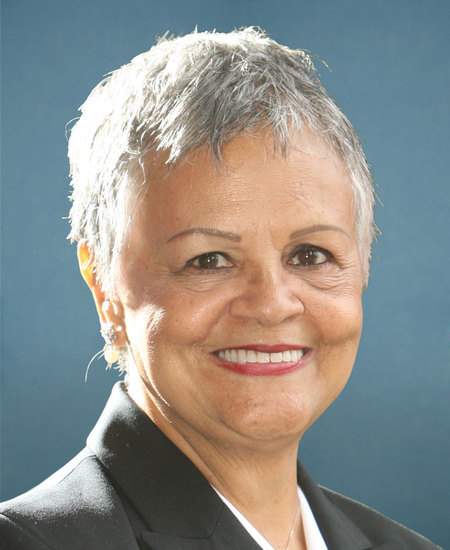
Rep. Bonnie Watson Coleman
Sponsored bills
Maddy summaryThis resolution condemns the use of federal regulatory agencies (like the FCC) or lawsuits to suppress lawful speech critical of political parties or the President, specifically referencing concerns about tactics mirroring authoritarian practices. It does not create new laws but formally warns that such actions undermine First Amendment protections and democratic norms. The resolution directly affects media organizations, journalists, and public discourse by calling on government agencies to avoid using their power for political retaliation. It reaffirms the House’s commitment to protecting free expression and urges officials to refrain from pressuring media to silence criticism.
Maddy summaryHRES 754 is a House resolution recognizing the psychological harm caused by current immigration enforcement practices, specifically affecting undocumented immigrants, their families (including 5.5 million U.S.-citizen children living with undocumented relatives), and communities. It condemns ICE tactics that undermine due process and Fourth Amendment rights, such as expedited deportations and courthouse arrests, and calls for Congress to oversee ICE detention centers and monitor policy implementation. The resolution also requests federal agencies collect data on mental health impacts and collaborate with nonprofits to provide culturally appropriate mental health services to affected communities. As a non-binding resolution, it does not change laws but formally acknowledges documented psychological effects like anxiety, family separation trauma, and disrupted community stability.
Maddy summaryThis resolution designates September 22-28, 2025, as "Asian American and Native American Pacific Islander-Serving Institutions Week" to honor institutions that serve Asian American, Native Hawaiian, and Pacific Islander students. It recognizes these colleges and universities as critical providers of higher education, noting they enroll 46% of AANHPI undergraduates despite comprising only 7% of U.S. institutions. The resolution emphasizes their role in supporting low-income, first-generation students and preserving cultural heritage, while calling for national recognition through community activities during the designated week. It is a symbolic gesture with no funding or policy changes attached.
Maddy summaryThis resolution (HRES 756) is a symbolic House of Representatives measure supporting the designation of September 2025 as "National Voting Rights Month." It directly affects the public by encouraging nationwide awareness campaigns, voter registration drives, and educational efforts about voting rights. Key mechanisms include urging Congress to pass voting rights legislation (like the Freedom to Vote Act), recommending schools teach about voting history and current restrictions, and promoting media campaigns to share election dates and registration deadlines. The resolution does not create new laws or policies but aims to foster civic engagement around voting access.
Maddy summaryThis bill authorizes the posthumous presentation of a Congressional Gold Medal to Welles Remy Crowther, a volunteer firefighter and equities trader who died saving others during the September 11, 2001, attacks. The medal, designed by the Treasury Secretary, will be given to Crowther’s mother, Alison Crowther, following a formal presentation by congressional leaders. The bill also permits the U.S. Mint to sell bronze duplicates of the medal at cost to cover production expenses. It is a purely commemorative measure with no legislative or regulatory impact.
Maddy summaryThe Aviation Funding Stability Act of 2025 ensures continued operation of Federal Aviation Administration (FAA) programs during government funding gaps. It allows the FAA to use unspent funds from the Airport and Airway Trust Fund to maintain critical services - including air traffic control, airport infrastructure, and safety research - at the previous fiscal year's funding level if Congress fails to pass a new budget. This prevents shutdowns for up to 30 days or until a new budget is enacted, with spending limited to prior-year rates and subject to existing program rules. The bill directly affects all FAA operations, keeping airports and air traffic systems running during budget delays.
Maddy summaryHR 5452, the Safe Streets for All Reauthorization and Improvement Act, modifies the existing Safe Streets and Roads for All program under the Infrastructure Investment and Jobs Act. It requires at least 20% of annual program funds starting in fiscal year 2024 to support projects focused on pedestrian and cyclist safety, and extends funding authorization with $5 billion allocated for fiscal years 2027 through 2031. The bill directly affects local governments and communities applying for grants to improve street safety infrastructure. Key changes include mandating specific funding allocations for walkable/bikeable projects and securing long-term financial commitments for the program. This is a procedural funding amendment, not a new policy initiative.
Maddy summary# Summary of National Flood Insurance Program Reform Bill This comprehensive legislation proposes significant reforms to the National Flood Insurance Program (NFIP) with a focus on policyholder protections, program transparency, financial solvency, and flood mitigation. ## Key Themes 1. **Policyholder Protections & Transparency** - Establishes an Independent Office for Policyholder Appeals with clear deadlines (90 days for final decisions) - Requires disclosure of all claim documents to policyholders within one week of request - Prohibits manipulation of engineer reports and requires final engineering reports to be transmitted directly to policyholders - Creates a "grace period" for policyholders renewing lapsed coverage (90 days) 2. **Transparency & Data Access** - Mandates public release of premium calculation formulas - Requires a public tool for estimating premium rates under Risk Rating 2.0 - Requires annual publication of premium rate distributions by state, county, and zip code - Studies feasibility of licensing historical claims data to third parties 3. **Mitigation Focus** - Requires consideration of mitigation projects (including Army Corps of Engineers projects) in premium calculations - Creates incentives for policyholders to accept mitigation offers (refusal increases premiums by 25% annually) - Provides clarification on coverage for pre-FIRM condominium basements - Establishes a "rebuttable presumption" for foundation/structural damage caused by flood 4. **Financial Solvency** - Provides 5-year forbearance on interest payments for NFIP debt - Caps Write Your Own company compensation at 22.46% of premiums - Requires transparency on third-party service provider costs - Creates a "National Flood Mitigation Fund" to use saved interest payments 5. **Claims Process Improvements** - Sets 60-day deadline for initial claim determination (with 30-day extension for extraordinary circumstances) - Requires clear documentation of foundation conditions before flood events - Establishes standards for engineering reports used in claims adjustment - Creates an Agent Advisory Council to provide recommendations on policyholder experience The bill aims to create a more sustainable, transparent, and fair flood insurance program while encouraging flood mitigation and improving the claims experience for policyholders.
Maddy summaryHRES 746 is a non-binding resolution passed by the U.S. House of Representatives condemning all political violence - including attacks on elected officials, candidates, and public figures - and rejecting rhetoric that dehumanizes opponents. It specifically urges law enforcement to investigate and prosecute such violence, calls on public officials and media to avoid inflammatory language, and references recent incidents like the 2025 assassination of activist Charlie Kirk and targeted shootings of Minnesota legislators. The resolution does not create new laws but formally expresses the House’s commitment to protecting public servants and promoting peaceful political discourse. It directly affects the House’s public stance and serves as a call to action for officials, media, and communities to foster civil engagement.