

Maddy summaryThis bill designates the U.S. Postal Service facility at 2407 State Route 71, Suite 1, in Spring Lake, New Jersey, as the "James J. Howard Post Office." All federal references to this location in laws, documents, or records will now use the new name. The bill is purely procedural and does not create new policies or affect any services or individuals.
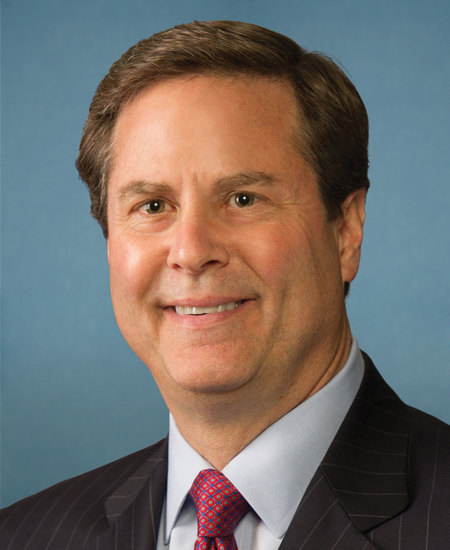
Rep. Donald Norcross
Sponsored bills
Maddy summaryThis House resolution formally recognizes New Jersey's law enforcement officers, firefighters, and emergency medical personnel for their roles in the rescue and recovery efforts following the September 11, 2001 attacks. It highlights specific contributions, such as the large-scale waterborne evacuation across the Hudson River and the deployment of the state's urban search and rescue team to Ground Zero. The measure also honors those who have died from 9/11-related illnesses in the years since the attacks. Finally, it reaffirms the federal commitment to funding the World Trade Center Health Program and the September 11th Victim Compensation Fund.
Maddy summaryThe Peter McGuire Congressional Gold Medal Act directs the U.S. Treasury to strike a gold medal honoring Peter McGuire, a key figure in the American labor movement known for his role in establishing the eight-hour workday and founding major labor unions. The bill authorizes the Speaker of the House and the President pro tempore of the Senate to present this medal on behalf of Congress, with its design determined by the Treasury Secretary in consultation with the Labor Secretary. After the presentation, the original gold medal will be donated to the Smithsonian Institution's National Museum of American History for public display and research. Additionally, the legislation allows the Mint to produce and sell bronze duplicate medals, with the proceeds deposited into the U.S. Mint Public Enterprise Fund to cover production costs.
Maddy summaryThis House resolution marks the 25th anniversary of the September 11, 2001 terrorist attacks by formally honoring the memory of the nearly 3,000 victims and recognizing the sacrifices made by first responders, military personnel, and the passengers of United Airlines Flight 93. The bill acknowledges the ongoing health challenges faced by survivors and responders, highlighting the role of the World Trade Center Health Program in providing long-term medical support. It also credits charitable organizations and community groups that have continued to assist victims' families and veterans over the past two decades. Finally, the resolution urges the American public to observe the anniversary with ceremonies and reaffirms Congress's commitment to remembering the events and lessons of that day.
Maddy summaryThe Fairness for Farm Workers Act amends the Fair Labor Standards Act to end the long-standing exemption that allows agricultural workers to be denied overtime pay. The bill introduces a phased schedule requiring employers to pay farm workers time-and-a-half for hours worked beyond a set threshold, which gradually decreases from 55 hours in 2027 to the standard 40 hours by 2030. Small farms with 25 or fewer employees are given a three-year delay, reaching full compliance by 2033. Additionally, the legislation removes several other exemptions that currently allow agricultural employers to bypass federal wage and hour protections.
Maddy summaryThis House resolution supports the designation of August 17 through August 23, 2026, as Warehouse Worker Recognition Week to honor over 1.8 million employees in the logistics industry. The bill highlights the critical role these workers play in the U.S. economy and supply chain while acknowledging the challenging conditions they face, such as extreme heat and long hours. It encourages increased public awareness of their contributions and commits lawmakers to collaborating on efforts to reduce workplace injuries and better support these front-line employees.
Maddy summaryThe Federal Naming Standards Act prohibits the government from naming or renaming federal buildings, facilities, or programs after elected officials or political appointees while they are in office and for ten years after they leave. This restriction also applies indefinitely to individuals who earn more than $1 million annually from commercial use of their name or likeness, though it does not affect deceased individuals or names already established before the law takes effect. To enforce these rules, agency inspectors general must investigate complaints about violations and report their findings to agency heads and Congress within 90 days. The law allows for the incidental use of names in historical or educational contexts, provided the name is not used as the official title of a federal site or program.
This bill designates the facility of the United States Postal Service located at 16 Rev Dr Martin Luther King Jr Drive in Willingboro, New Jersey, as the "James A. Cotten Post Office".
Maddy summaryThe AADAPT Act reauthorizes and expands Project ECHO grants to improve Alzheimer’s and dementia care through technology-enabled training. It specifically funds grants for healthcare providers in rural, frontier, or medically underserved areas to enhance early diagnosis, quality care, and provider retention for dementia patients. The bill authorizes $1 million annually (2027-2032) for these dementia-focused training programs, requiring funds to supplement - not replace - existing resources. This directly supports primary care providers licensed to serve underserved communities, using collaborative online learning to address care gaps.
Maddy summaryThe Modernizing Opioid Treatment Access Act 2.0 of 2026 allows specific addiction medicine specialists to prescribe methadone for opioid use disorder to be dispensed directly through pharmacies, rather than requiring patients to attend traditional treatment clinics. This change permits these qualified doctors to use telemedicine for patient care and requires that the methadone be in a liquid or dispersible tablet form. While the bill maintains existing clinic-based treatment options, it streamlines access by removing the need for pharmacies to obtain separate registrations to dispense the medication. The law also mandates that patients sign informed consent forms explaining how privacy rules differ between clinic and pharmacy settings, and it requires the Drug Enforcement Administration to report on the program's progress to Congress every year.