

Maddy summaryHR 5145, the Bipartisan Premium Tax Credit Extension Act, extends enhanced federal subsidies for health insurance premiums through 2026. It directly affects individuals purchasing coverage through health insurance marketplaces who qualify for premium tax credits. The bill extends the period for increased credit amounts (through 2026 instead of 2025) and maintains the rule allowing tax credits for households earning above 400% of the federal poverty level. These changes apply to tax years beginning after December 31, 2025.
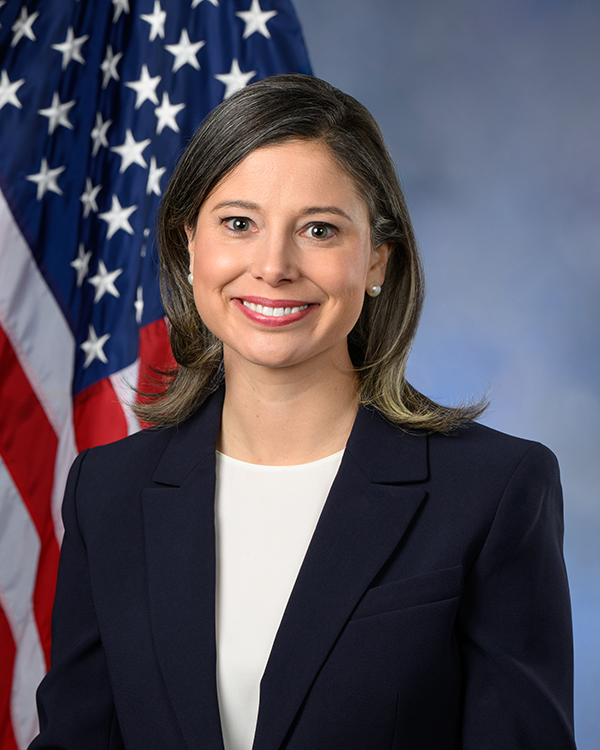
Rep. Maggie Goodlander
Sponsored bills
Maddy summaryThe Feed Hungry Kids Act adjusts eligibility for schools participating in the federal school meal program. Starting in the 2025-2026 school year, schools must have at least 25% of students eligible for free or reduced-price meals to qualify for a provision allowing all students to receive free meals without individual applications. This change directly affects public schools nationwide that receive federal meal funding under the National School Lunch Program. The bill sets a specific, measurable threshold for program access without altering other aspects of school meal eligibility.
Maddy summaryHR 5155, the Warrior Right to Repair Act of 2025, requires defense contractors to provide the Department of Defense (DoD) with fair and reasonable access to repair materials - such as parts, tools, and diagnostic information - for digital electronic equipment covered under DoD contracts. This applies to all new contracts and mandates the removal of intellectual property barriers in existing contracts to enable authorized repair providers. The law defines "fair and reasonable access" as pricing and terms equivalent to those offered to authorized repair providers, and allows limited waivers for pre-existing programs with congressional justification. The Comptroller General must report on implementation within one year of the law's enactment.
Maddy summaryThis bill prohibits Members of Congress, their spouses, and dependent children from owning or trading certain investments, including stocks, commodities, and derivatives (referred to as "covered investments"). It requires affected individuals to divest these investments within 90-180 days, with specific exemptions for Treasury bonds, diversified mutual funds, small business interests, and family trusts meeting strict conditions. Violations incur penalties of 10% of the investment's value plus disgorgement of profits, paid directly to the U.S. Treasury. The law applies to all covered individuals during federal service, with exceptions for investments acquired through inheritance or occupational trading (e.g., a spouse’s finance job).
Maddy summaryHR 5094, the "Protect Patients from Costly Care Act," repeals two specific provisions from a prior reconciliation law (Public Law 119-21) that would have increased patient costs. It restores Medicaid cost sharing rules to their pre-2023 state, directly affecting Medicaid beneficiaries by preventing higher out-of-pocket costs. It also reverses changes to orphan drug exclusions under the Drug Price Negotiation Program, bringing those medications back under federal price negotiation rules for manufacturers. The bill does not create new policies but undoes specific cost-increasing changes to existing programs.
Maddy summaryHR 5053, the Protecting Public Naval Shipyards Act of 2025, prohibits workforce reductions at public naval shipyards due to budget cuts or fund reprogramming. It specifically protects 12 categories of critical shipyard jobs, including welders, pipefitters, nuclear maintenance staff, engineers, apprentices, and infrastructure support roles. The bill ensures these positions remain exempt from hiring freezes or layoffs during fiscal adjustments, maintaining operational capacity. It does not override existing procedures for addressing employee misconduct or poor performance. The law directly affects federal shipyard workers at public naval facilities, safeguarding key technical and maintenance roles.
Maddy summaryHR 4989, the Streamlining Rural Housing Act of 2025, requires the Departments of Housing and Urban Development (HUD) and Agriculture (USDA) to simplify coordination for rural housing projects funded by both agencies. Within 180 days, they must create a memorandum of understanding to evaluate environmental review processes, designate a lead agency for efficiency, and maintain existing environmental standards. The bill establishes an advisory group with housing stakeholders - including nonprofits, developers, and residents - to guide implementation. It mandates a report within one year with recommendations to improve project efficiency without reducing resident safety, shifting long-term costs, or undermining environmental standards. This bill directly affects rural housing projects funded by HUD or USDA by targeting bureaucratic delays in approvals.
Maddy summaryThe Warehouse Worker Protection Act establishes new requirements for employers in warehouse facilities to protect workers from harmful quotas and workplace surveillance practices. It requires employers to provide written descriptions of quotas and workplace monitoring to workers, prohibits quotas that interfere with breaks, safety compliance, or anti-discrimination rights, and gives workers the right to access their work speed data. The bill creates a Fairness and Transparency Office within the Department of Labor to enforce these requirements and investigate violations, with enforcement also involving the Federal Trade Commission. Employers with more than 200 employees at covered warehouse facilities (including distribution centers, couriers, and warehouses) are directly affected by these new requirements, which include new protections against retaliation for workers who exercise these rights.
Maddy summaryHR 4899, the CANADA Act, exempts small businesses from import duties imposed under a 2025 national emergency order. Specifically, it removes duties on goods imported by or for small business concerns (as defined by the Small Business Act) related to the emergency declared on February 1, 2025. This provision directly affects small businesses importing goods subject to those duties, reducing their costs. The bill modifies the application of existing emergency import duties without changing the underlying emergency order.
Maddy summaryThis bill would prevent for-profit corporations from operating political action committees (PACs). It requires that any political fundraising fund must be run by a nonprofit organization (like a 501(c)(4) group), not a regular business, and restricts contributions to only executive and administrative staff - not stockholders. Existing corporate PACs would need to dissolve within one year of the law taking effect. The bill directly affects all for-profit companies currently using PACs to fund political activities.