

Maddy summaryThis bill requires the Secretary of Commerce to standardize and publish geospatial data about public ocean and waterway access rules on a public website within 4 years. It mandates detailed information on where fishing is restricted, waterway closures, speed limits, allowed vessel types (like motorboats or kayaks), and fishing method rules. The data will include geographic boundaries of protected areas, seasonal closures, and navigation details like depth charts. This directly affects recreational users (boaters, anglers) and commercial operators who need clear, up-to-date access information for Federal waterways and fishing areas. The bill does not change existing fishing regulations but makes compliance information more accessible.
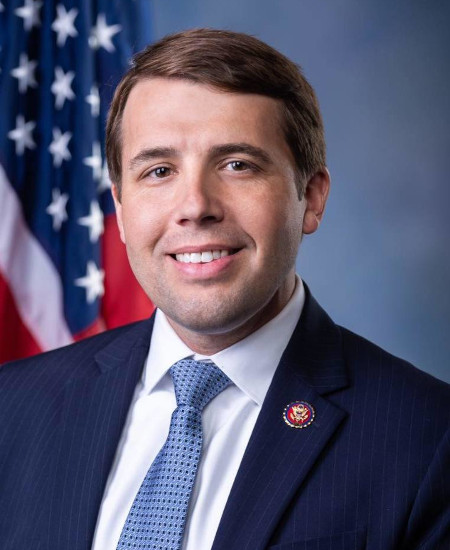
Rep. Chris Pappas
Sponsored bills
Maddy summaryThis bill expands Post-9/11 GI Bill benefits to National Guard members who perform specific full-time duty. It amends eligibility rules to include service on "full-time National Guard duty" (as defined in Title 32) and "active duty" (as defined in Title 32), which previously did not count toward full benefits. The change applies retroactively to service since September 11, 2001, and takes effect one year after enactment. This directly affects National Guard members serving in these specific full-time roles, granting them parity with other veterans for educational benefits.
Maddy summaryThis resolution expresses the U.S. House of Representatives' support for designating June 28, 2024, as "Stonewall Day" to commemorate the anniversary of the 1969 Stonewall Uprising in New York City, a pivotal event in LGBTQ+ rights history. It recognizes the significance of the uprising in sparking the modern LGBTQ+ civil rights movement and acknowledges the upcoming opening of the Stonewall National Monument Visitor Center on Christopher Street. The resolution does not create new laws or policies but formally supports the commemorative designation and the Visitor Center's role in honoring this history. It directly affects no individuals or groups, as it is a symbolic gesture of recognition. The resolution was introduced by multiple House members and referred to the Judiciary Committee.
Maddy summaryHRES 901 is a U.S. House resolution expressing support for democracy and human rights in Pakistan. It calls on the U.S. President and Secretary of State to collaborate with Pakistan to uphold democratic processes, human rights, and the rule of law. The resolution urges Pakistan to protect freedoms of speech, assembly, and press, and to avoid arbitrary detention or suppression of political participation. It also condemns efforts to undermine Pakistan's electoral or judicial systems, including harassment of citizens during protests or interference with elections.
Maddy summaryThe NEST Act (HR 8715) creates a federal pilot program to provide newborn supply kits to mothers in underserved communities. The kits, containing essentials like diapers, postpartum supplies, blood pressure monitors, and health resources, are distributed through grants to community organizations or hospitals. Priority goes to mothers in areas with limited maternal care access (e.g., rural regions or high-mortality "Delta" communities) and those earning under 185% of the poverty line. The program, funded at $5 million annually through 2029, requires annual reports tracking distribution demographics and health outcomes to Congress.
Maddy summaryHR 7989, the "ThinkDIFFERENTLY About Disability Employment Act," requires the Small Business Administration (SBA) to partner with the National Council on Disability to improve employment opportunities for people with disabilities. The bill directs the SBA to assist individuals with disabilities in starting businesses or finding jobs at small businesses, while also helping small businesses hire people with disabilities and address accessibility needs. No new funding is authorized for these activities, and the SBA must report to Congress within two years on its progress. The bill directly affects people with disabilities seeking employment or entrepreneurship, and small businesses hiring them.
Maddy summaryThe Rural Small Business Resilience Act requires the Small Business Administration (SBA) to ensure rural disaster victims have full access to existing disaster assistance within one year of the law's passage. It directly affects small business owners and individuals in rural areas (as defined by the Small Business Act) who live in regions with federally declared disasters. The key provision mandates the SBA to provide targeted outreach and marketing materials to these rural residents to overcome barriers in accessing current disaster aid programs. This is a concrete policy change to improve access to existing resources, not a new funding program.
Maddy summaryHR 5012 (SHINE for Autumn Act of 2023) authorizes federal funding to improve stillbirth research and data collection. It provides $5 million annually for states to collect standardized stillbirth data (including risk factors) while protecting privacy, $1 million annually for developing public educational materials and data collection guidelines, and $3 million annually for medical fellowships training pathologists in perinatal autopsy and stillbirth research. The bill directly affects state health departments, medical professionals (like obstetricians and pathologists), and families who experience stillbirth by improving data quality for future research. It requires federal reports on guidelines and program effectiveness within five years but does not provide direct medical care or financial assistance to families.
Maddy summaryHR 537 authorizes a Congressional Gold Medal to honor 60 diplomats who saved Jewish lives during the Holocaust by issuing visas and passports against their governments' orders, risking expulsion and personal danger. The medal will be presented to the next of kin of these diplomats, alongside representatives from their home countries, and permanently displayed at the United States Holocaust Memorial Museum. The bill also permits the sale of bronze duplicates to cover production costs, with proceeds going to the U.S. Mint. This legislation recognizes the diplomats' humanitarian actions without creating new government programs or altering existing laws.
Maddy summaryThis resolution (HRES 1286) supports continued U.S. funding for Gavi, the Vaccine Alliance, to expand access to vaccines in low-income countries. It directly aids children and communities in these nations by enabling immunization against preventable diseases like measles, malaria, and polio, which has averted an estimated 17.3 million deaths since 2000. Key provisions highlight Gavi's role in reducing child mortality from vaccine-preventable diseases by 70%, achieving a $54 economic return for every $1 invested, and strengthening health systems through cold-chain infrastructure. The resolution urges sustained U.S. financial commitments to maintain Gavi's market-shaping impact, support malaria vaccine rollout, and ensure global health security.