

Maddy summaryHRES 152 is a non-binding House resolution supporting existing state "move over" laws, which require drivers to move over a lane or slow down near emergency responders on roadways. It directly affects all drivers by promoting awareness of these safety laws, which aim to protect emergency workers, tow operators, and stranded motorists. The resolution urges federal, state, and nonprofit groups to increase public education about these laws, citing that 50 traffic responders were killed in roadside collisions in 2022. It emphasizes that raising public awareness - identified as the top challenge by state officials - is critical to improving road safety.
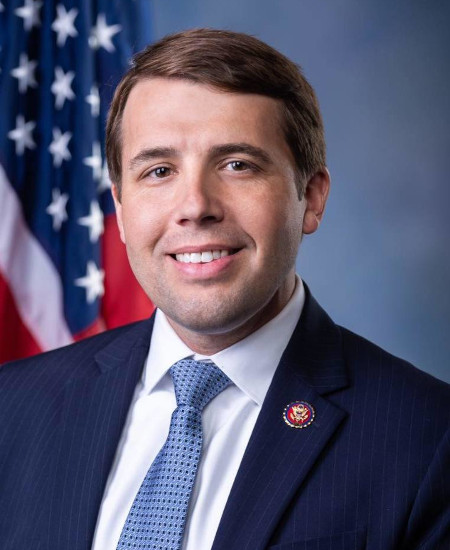
Rep. Chris Pappas
Sponsored bills
Maddy summaryHRES 1614 is a symbolic resolution expressing support for recognizing December 2024 as "National Impaired Driving Prevention Month." It highlights that impaired driving causes over 13,000 deaths annually (32% of U.S. traffic fatalities) and urges public awareness of preventable crashes. The resolution promotes existing efforts by the Department of Transportation and law enforcement, including the "Drive Sober or Get Pulled Over" campaign, without creating new laws or policies. It directly affects the public by encouraging safe driving practices like planning for a sober ride home.
Maddy summaryHR 7438 directs the U.S. Treasury to mint commemorative coins for the 2026 FIFA World Cup, including 100,000 $5 gold coins, 500,000 $1 silver coins, and 750,000 half-dollar coins. The coins will be sold to the public at face value plus surcharges ($35, $10, and $5 per coin, respectively), with all surcharge revenue paid to FWC2026 US, Inc. for U.S. soccer programs. These funds must support soccer initiatives, particularly in underserved communities and youth development, as specified in the bill. The coins are legal tender but will only be issued during 2026, with no net cost to the U.S. government.
Maddy summaryThis bill extends funding for the existing Public Health Service Act program focused on raising public awareness about Alzheimer's disease and related dementias. It authorizes $33 million annually for fiscal years 2025 through 2029 to support public health education and outreach initiatives. The program directly affects public health organizations and community groups that develop and distribute educational materials about Alzheimer's prevention, diagnosis, and care. The key provision is the multi-year funding extension, ensuring continued support for nationwide awareness efforts without altering the program's core structure.
Maddy summaryHR 5799, the James R. Dominguez Memorial Act of 2023, designates a U.S. Border Patrol checkpoint on U.S. Highway 90 West in Uvalde County, Texas, as the "James R. Dominguez Border Patrol Checkpoint" to honor Agent James R. Dominguez, who died in 2012 while clearing road debris. The bill updates all federal references - such as laws, maps, and documents - to use this new name for the checkpoint. It does not change border patrol operations or policies, only the official designation of the location. This memorial act directly affects the checkpoint's identity and all federal records referencing it.
Maddy summaryHR 2892, the WARN Act, directs the Comptroller General to study how local alert systems deliver weather emergency information during events like storms or power outages. The study will evaluate different alert methods - including social media - and develop best practices for clearer, faster public notifications. It requires a report to Congress within one year, but the bill itself creates no new laws or directly affects any group. This is a procedural study bill focused on improving future emergency communication systems.
Maddy summaryHR 6751 authorizes the U.S. Mint to produce commemorative coins honoring Roberto Clemente, a Hall of Fame baseball player and humanitarian, including 50,000 $5 gold coins, 400,000 $1 silver coins, and 750,000 half-dollar coins. The coins must feature Clemente's image and inscriptions like "Roberto Clemente" and "2027," with all sales including a surcharge ($5-$35 per coin) paid to the Roberto Clemente Foundation. The foundation, which supports youth sports, education, and disaster relief programs, will use these funds for its mission, while the U.S. Treasury must recover all production costs. The coins will be sold exclusively in 2027, with no net cost to the government.
Maddy summaryHR 10265 establishes the Department of Homeland Security Northern Border Mission Center within one year of enactment. The Center will be located near existing U.S. Border Patrol, Coast Guard, and Air and Marine Operations facilities along the U.S.-Canada border and Alaska-Russia maritime border. It will coordinate DHS components (like CBP and ICE-HSI), support training, test border security technology, and address resource challenges for northern border operations. The Center must report annually to Congress and will sunset on October 1, 2027, with no new funding authorized.
Maddy summaryThe Disaster Contract Improvement Act (HR 6997) requires the Federal Emergency Management Agency (FEMA) to establish an advisory group with state, tribal, local governments, and debris removal industry experts to improve oversight of federal disaster debris removal contracts. Within one year, FEMA must develop new guidance for states and localities to take primary oversight of these contracts, streamline cost reimbursement, and reduce duplication in debris management. The bill also mandates a Government Accountability Office (GAO) study to examine advance contracts, reimbursement rates, fraud prevention, and reporting processes for debris removal programs. This legislation directly affects states, tribes, and local communities receiving federal disaster relief funds for debris removal operations.
Maddy summaryThis bill renames U.S. Route 20 across 12 states (Oregon, Idaho, Montana, Wyoming, Nebraska, Iowa, Illinois, Indiana, Ohio, Pennsylvania, New York, and Massachusetts) as the "National Medal of Honor Highway." It directly affects the highway itself and all official U.S. government references to it, such as maps and documents. The key provision requires that any federal law, record, or document mentioning this highway must now use its new name to honor Medal of Honor recipients' service and valor. The bill makes no changes to highway operations, funding, or policy - only to the official designation.