

Pay Our Coast Guard Parity Act of 2025 This bill provides continuing appropriations to the Coast Guard for pay and benefits when there is a Coast Guard-specific funding lapse. Under the bill, a Coast Guard-specific funding lapse occurs when (1) a bill providing appropriations for the Coast Guard for a fiscal year has not been enacted before the beginning of that fiscal year, and no joint resolution providing continuing appropriations for the Coast Guard is in effect; and (2) a bill providing appropriations for the Department of Defense (DOD) for the fiscal year has been enacted before the beginning of the fiscal year, or a joint resolution providing continuing appropriation for DOD is in effect. If a Coast Guard-specific funding lapse occurs, the bill provides appropriations to the Coast Guard for pay and allowances for military members of the Coast Guard who perform active service or inactive-duty training; pay and benefits for certain civilian employees and contract employees; the payment of a death gratuity; payments for travel related to funerals, the dignified transfer of remains, and unit memorial services; and the temporary continuation of the basic allowance for housing for dependents of members of the Coast Guard dying on active duty. The bill generally provides the appropriations to the Coast Guard until the earlier of the enactment of specified Coast Guard appropriations legislation, the termination of the availability of appropriations for DOD, or two weeks after the beginning of the Coast Guard-specific funding lapse.
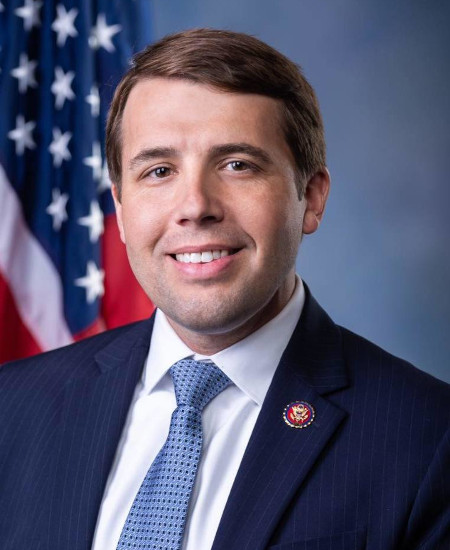
Rep. Chris Pappas
Sponsored bills
Maddy summaryHR 1502 authorizes the creation of a Congressional Gold Medal to honor the volunteers and communities (primarily from Nebraska, Colorado, and Kansas) who supported the North Platte Canteen during World War II. The bill directs the Treasury Secretary to design and strike the medal, which will be presented to the individuals who contributed to the canteen’s operations and then permanently displayed at the Lincoln County Historical Museum in North Platte, Nebraska. It also permits the sale of bronze duplicates to cover production costs, with proceeds going to the U.S. Mint. This is a commemorative measure recognizing historical service, not a policy change affecting current laws or programs.
More Options to Develop and Enhance Remote Nutrition in WIC Act of 2025 or the MODERN WIC Act of 2025 This bill permanently allows individuals to remotely certify their eligibility for, and receive benefits through, the Special Supplemental Nutrition Program for Women, Infants, and Children (WIC). Specifically, the bill requires that a state agency allow an individual seeking a WIC certification, recertification, or a nutritional risk evaluation to do so by phone or through video teleconference, in addition to the in-person option. A state agency has 90 days to collect data for a nutritional risk evaluation for a remotely certified individual. Further, a state agency may consider an applicant who meets the income eligibility standards to be temporarily eligible on an interim basis to participate in the program and may certify the individual for immediate participation without waiting for a nutritional risk evaluation. The bill also allows states to provide benefits on WIC electronic benefit transfer cards through mail or remote issuance instead of requiring participants to pick up or reload benefits in person at a WIC office. Further, the Department of Agriculture must report to Congress about the use of remote technologies and other digital tools in the WIC program. Currently, individuals are generally required to be physically present to certify their WIC eligibility and receive benefits, with exceptions. The Food and Nutrition Service has temporarily waived these requirements and allowed remote certification and benefits using authorities that were provided by laws that were enacted to address COVID-19.
Maddy summaryHR 1480, the Rural Health Innovation Act of 2025, creates two new federal grant programs to improve healthcare access in rural areas. The first program provides grants to rural health clinics and Federally Qualified Health Centers (FQHCs) to establish or expand walk-in urgent care centers that offer emergency triage, staffing (like doctors and nurses), and essential equipment (such as X-ray machines). The second program funds local public health departments in rural areas to enhance emergency services, primary care, and transport coordination through equipment upgrades and staff support. Grants last up to 5 years, with funding capped at $750,000 in the first year for new centers and $500,000 annually thereafter, prioritizing existing clinics. The bill requires annual reports to Congress on program success, patient access, and healthcare utilization by 2028.
Maddy summaryThis bill protects certain public safety workers - like police officers, firefighters, and emergency medical personnel - from job loss or punishment for expressing personal opinions about work-related issues. It allows covered employees to sue employers if they face adverse actions (like termination) for speaking out on topics such as working conditions, safety equipment, pay, policies, or even political/religious views. However, the protection does not cover speech made while on duty, threats of violence, discrimination, disclosure of confidential personal information, or calls to withhold essential services. The law explicitly states it doesn’t override existing civil rights laws like 42 U.S.C. 1983.
Maddy summaryHR 1410 expands access to mental health care for 9/11 responders and survivors by allowing licensed mental health providers (not just physicians) to conduct initial health evaluations and certifications under the World Trade Center Health Program. It adjusts the program’s funding formula to account for changing enrollment numbers by linking annual funding to the previous year’s enrollment ratio, and clarifies that deceased individuals are excluded from enrollment counts. The bill also extends the timeframe for adding new health conditions to the program’s list and requires a 2028 report assessing long-term funding needs through 2090. These changes aim to streamline eligibility, improve care access, and ensure sustainable funding for the program.
Goldie's Act This bill expands enforcement provisions under the Animal Welfare Act (AWA). Specifically, the bill directs the Department of Agriculture (USDA) to document and record detailed descriptions of violations of the act observed during inspections and investigations. USDA must provide a copy of all records documenting violations to state, local, and municipal animal control or law enforcement officials within 24 hours of such inspections or investigations. Inspections must be held at least once a year of each research facility, the premises of each animal dealer, and each exhibitor of animals. If violations are found during inspections, then USDA must conduct any necessary follow-up inspections until all the violations are corrected. Inspectors must confiscate or destroy in a humane manner animals found to be suffering physical or psychological harm as a result of failure to comply with the AWA. Violators are subject to civil penalties as outlined in the bill.
Maddy summaryThis bill amends the seniors farmers’ market nutrition program to include maple syrup as an eligible product, alongside fresh fruits, vegetables, and herbs. It directly affects seniors who use program coupons to purchase locally grown agricultural products at farmers' markets. The key change is a simple addition to the list of qualifying items in the program’s existing rules. This update expands the range of locally produced goods seniors can buy with their benefits, without altering the program’s structure or funding.
Rural Telehealth and Education Enhancement Act of 2025 This bill reauthorizes the Distance Learning and Telemedicine Program through FY2030. This Department of Agriculture program provides grants to help rural communities gain the technology and training necessary to engage in telemedicine and distance learning.
This concurrent resolution declares that Congress should not impose any new performance fee, tax, royalty, or other charge relating to the public performance of sound recordings on a local radio station for broadcasting sound recordings over the air, or on any business for such public performance of sound recordings.