

Maddy summaryThe IDEA Full Funding Act (HR 2598) mandates specific annual federal funding levels for the Individuals with Disabilities Education Act (IDEA), directly affecting schools and students with disabilities nationwide. It requires the federal government to appropriate either a fixed dollar amount or a specified percentage (increasing annually from 4.5% to 40%) of a calculated total - based on the number of eligible students and average per-pupil costs - starting in fiscal year 2026 through 2035. The bill sets clear, escalating funding targets, with the higher of two calculated amounts (dollar figure or percentage) becoming available for obligation each fiscal year. This establishes a binding financial commitment to address long-standing underfunding of special education services under IDEA.
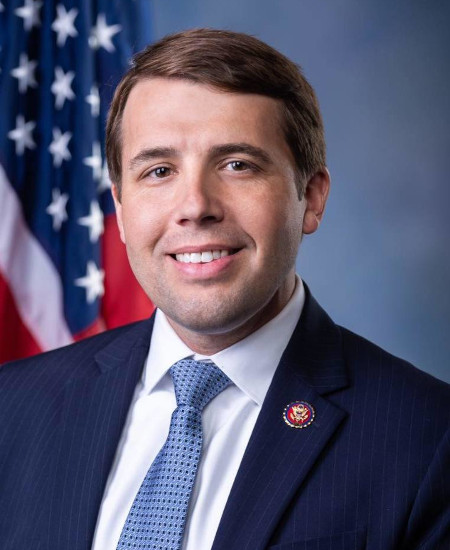
Rep. Chris Pappas
Sponsored bills
Workplace Violence Prevention for Health Care and Social Service Workers Act This bill requires the Department of Labor to address workplace violence in health care, social service, and similar sectors. Specifically, Labor must issue an occupational safety and health standard that requires certain employers to take actions to protect workers and other personnel from workplace violence. The standard applies to employers in the health care sector, in the social service sector, and in sectors that conduct activities similar to those in the health care and social service sectors. Among other elements, the standard must require each employer to (1) develop a workplace violence prevention plan, (2) promptly investigate incidents of workplace violence, and (3) provide relevant training and education to employees. The bill requires certain hospitals and skilled nursing facilities to comply with this standard as a condition of Medicare participation.
Maddy summaryHR 2585, the Armenian Genocide Education Act, establishes a federal program through the Library of Congress to develop educational resources about the 1915-1923 Armenian Genocide for K-12 schools. It requires the Librarian to create and distribute accurate teaching materials, provide teacher training workshops, and maintain an online resource hub focused on the genocide's history, lessons, and prevention of hate. The program directly supports local educational agencies, independent schools, and educators by offering professional development and curriculum resources. It defines key terms like "denial" and "distortion" to guide the educational content, aiming to improve understanding of this historical event and its relevance to preventing modern-day hate crimes.
Sanctioning Russia Act of 2025 This bill imposes penalties on certain persons (individuals and entities) if the President determines that the Russian government or a person acting at Russia's direction is involved with (1) refusing to negotiate a peace agreement with Ukraine; (2) violating a negotiated peace agreement; (3) initiating another invasion of Ukraine; or (4) overthrowing, dismantling, or seeking to subvert the Ukrainian government. If the President makes such a determination, the bill requires certain actions including the President must impose visa- and property-blocking sanctions on specified persons such as the Russian president, certain Russian military commanders, and any foreign person that knowingly provides defense items to the Russian armed forces; the President must increase the rate of duty on all goods and services imported from Russia into the United States to at least 500% relative to the value of such goods and services; the President must increase the rate of duty on all goods and services imported into the United States from countries that knowingly engage in the exchange of Russian-origin uranium and petroleum products to at least 500% relative to the value of such goods and services; the Department of the Treasury must impose property-blocking sanctions on any financial institution organized under Russian law and owned wholly or partly by Russia, and any financial institution that engages in transactions with those entities; and the Department of Commerce must prohibit the export, reexport, or in-country transfer to or in Russia of any U.S.-produced energy or energy product.
Maddy summaryThis bill extends funding for respite care programs through fiscal year 2029, replacing the previous 2020-2024 authorization. It updates the definition of "family caregiver" in federal law to include "unpaid individual" instead of "unpaid adult," broadening eligibility. The legislation directly supports family caregivers and their care recipients by maintaining access to temporary relief services. It ensures existing respite care programs continue operating without interruption under the new funding period.
Maddy summaryThis symbolic resolution (HCONRES 23) expresses Congress's support for International Transgender Day of Visibility, observed annually on March 31. It encourages Americans to recognize and celebrate transgender community achievements while acknowledging ongoing challenges like discrimination in employment, healthcare, and public accommodations. The resolution does not create new laws or policies but formally endorses the day's purpose through non-binding statements of support and recognition. It directly affects the broader public by promoting awareness and respect for transgender individuals' rights and contributions.
Maddy summaryHR 2514, the Trucker Bathroom Access Act, requires businesses like warehouses, distribution centers, and shipping facilities (but not small restaurants under 800 sq ft) to allow commercial truck drivers access to their restrooms when delivering goods or waiting to load cargo. It also mandates that port terminals provide sufficient restrooms for drayage truck operators (drivers of large trucks moving cargo at ports) in safe, accessible areas, including parking spots for vehicle access. The bill does not require businesses to make physical restroom changes and exempts locations where access would create health, safety, or security risks. It defines "covered drivers" as those operating commercial vehicles regulated by the Department of Transportation and "covered restrooms" as those safely accessible to drivers. This law directly affects truck drivers and the businesses they interact with during deliveries or port operations.
Save America's Forgotten Equines Act of 2025 or the SAFE Act of 2025 This bill permanently prohibits the slaughter of equines (e.g., horses and mules) for human consumption. (Current law prohibits the slaughter of dogs and cats for human consumption. This bill extends the prohibition to equines.) Specifically, this bill prohibits a person from knowingly (1) slaughtering an equine for human consumption; or (2) shipping, transporting, possessing, purchasing, selling, or donating an equine to be slaughtered for human consumption or equine parts for human consumption. The bill subjects a violator to a fine. The bill applies to conduct in or affecting interstate or foreign commerce or within the special maritime and territorial jurisdiction of the United States. However, it does not apply to an activity carried out by an Indian for a religious ceremony. As background, in recent years, the appropriations acts have prohibited the Department of Agriculture (USDA) from using federal funds to inspect horses before they are slaughtered for human consumption. Therefore, there are currently no USDA-inspected horse slaughter facilities in the United States.
Delivering for Rural Seniors Act of 2025 This bill directs the Food and Nutrition Service (FNS) to award competitive grants to state agencies under a home delivery pilot program for participants in the Commodity Supplemental Food Program (CSFP). As background, the CSFP works to improve the health of low-income persons at least 60 years of age by supplementing their diets with nutritious Department of Agriculture foods. Under the pilot program, a state agency must distribute grant funds to an eligible entity (i.e., a local agency or subdistributing agency) to operate projects that facilitate home delivery of commodities to CSFP participants. Grant funds may be used for costs associated with transportation and distribution of commodities to CSFP participants, staffing required to operate home delivery services, and home delivery outreach to CSFP participants or potential participants. A state agency must prioritize eligible entities that serve CSFP participants who reside in rural areas. A state agency must also submit an annual report to FNS about the project, including best practices regarding the use of home delivery to improve the effectiveness of the CSFP.
Maddy summaryHR 2467, America's Red Rock Wilderness Act, would designate approximately 1.3 million acres of public land across Utah as wilderness areas, protecting them from development and managing them for conservation. The bill specifically designates 77 wilderness areas in the Great Basin and Colorado Plateau regions, including lands within existing national monuments like Grand Staircase-Escalante and Bears Ears. It includes provisions for water rights protection, allows continued livestock grazing under certain conditions, and withdraws the designated lands from mining and mineral leasing. The bill also ensures Tribal rights are protected and requires the Secretary of the Interior to administer these areas according to wilderness management standards.