

Maddy summaryHR 3180, the Taiwan Representative Office Act, would rename the Taipei Economic and Cultural Representative Office in Washington, D.C., to the "Taiwan Representative Office." This change would apply to all U.S. government references, documents, and official purposes, ensuring consistency in communications. The bill explicitly states it does not restore formal diplomatic relations with Taiwan or alter U.S. policy on Taiwan’s international status, aligning with the Taiwan Relations Act and Six Assurances. It directly affects the operational name of Taiwan’s unofficial U.S. representative office and requires the Secretary of State to negotiate this name change with Taiwan’s office. The policy aims to provide Taiwan with practical diplomatic treatment equivalent to other foreign entities, without changing the U.S. stance on Taiwan’s sovereignty.
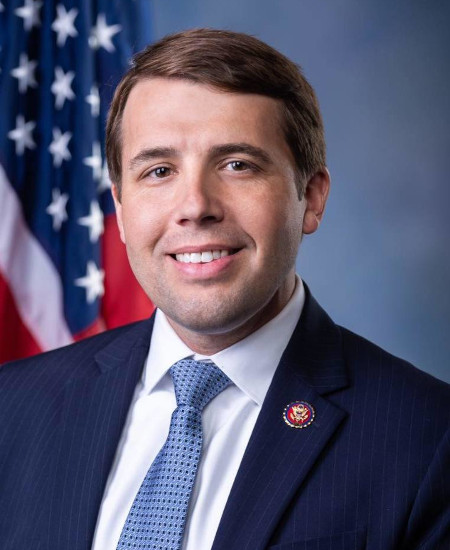
Rep. Chris Pappas
Sponsored bills
Maddy summaryThe Understanding the True Cost of College Act of 2025 requires colleges and universities to provide students with a standardized financial aid offer that clearly explains college costs, grants, scholarships, and loans in plain language. The form must display direct and indirect costs of attendance, net price after grants/scholarships, and detailed loan terms including repayment options and interest rates. It mandates institutions to disclose information about private loan alternatives, Federal education benefits for veterans, and provide links to repayment calculators. All institutions receiving federal financial aid must use this standardized form starting after the Secretary of Education finalizes the required format.
Maddy summary# Summary of the SHIPS for America Act This comprehensive legislation focuses on strengthening the U.S. maritime industry, shipbuilding capacity, and maritime workforce to enhance national security and economic competitiveness. ## Key Areas of Focus 1. **Shipbuilding & Maritime Infrastructure** - Establishes a United States Center for Maritime Innovation to accelerate adoption of commercial technologies - Creates a National Shipbuilding Research Program - Requires an annual survey of anticipated commercial vessel construction - Includes provisions for streamlined environmental reviews of maritime infrastructure 2. **Workforce Development** - Establishes the United States Merchant Marine Career Retention Program to maintain mariner qualifications - Creates Centers of Excellence for Domestic Maritime Workforce Training and Education - Implements military-to-maritime transition programs - Establishes a Maritime Career and Technical Education Advisory Committee 3. **Education & Training** - Expands educational assistance for merchant mariners - Creates eligibility for Naval Postgraduate School for merchant mariners - Establishes maritime education programs from K-12 through higher education - Provides for international exchanges for mariners and naval architects 4. **National Security & Strategic Readiness** - Requires reports on National Defense Reserve Fleet utilization - Includes measures to de-risk the maritime sector from Chinese influence - Enhances shipbuilding capacity for national security needs - Establishes programs to ensure sufficient mariner workforce for national defense 5. **Funding Mechanisms** - Authorizes appropriations from the Maritime Security Trust Fund - Includes funding for workforce programs, education, and shipbuilding initiatives - Establishes specific funding levels for various programs over multiple fiscal years The legislation aims to create a sustainable domestic maritime industrial base that supports both commercial shipping and national defense requirements, with a particular emphasis on developing and retaining a skilled U.S. maritime workforce.
Maddy summaryThe SBIR/STTR Reauthorization Act of 2025 extends the Small Business Innovation Research and Small Business Technology Transfer programs through 2032, requiring federal agencies to dedicate increasing percentages of their budgets to these programs (starting at 4% through 2025, rising to 7% by 2032). The bill introduces new provisions including fellowships for researchers, enhanced outreach to increase participation from women and disadvantaged groups, and improved technical assistance for small businesses. It also establishes new reporting requirements on commercialization outcomes and adds safeguards to ensure small business concerns owned by venture capital or private equity firms meet specific criteria. The bill extends several pilot programs, including those related to direct Phase II awards and commercialization readiness, through 2030.
Maddy summaryHR 3112, the Better CARE for Animals Act of 2025, strengthens enforcement of the federal Animal Welfare Act by requiring dealers and exhibitors to hold valid licenses for animal sales or transport (Section 4). It expands enforcement authority by allowing the Attorney General to sue violators for up to $10,000 per day, seize animals, and seek injunctions (Section 20), while clarifying that courts can address violations of related rules and regulations. The bill directly affects animal dealers, exhibitors, the USDA, and the Department of Justice, creating clearer pathways for holding violators accountable. Key provisions include updating definitions, broadening inspection powers to cover all regulations, and directing penalty funds toward temporary animal care costs during legal proceedings.
Maddy summaryThis bill creates a new federal program to expand high-speed broadband access in rural areas by providing grants, loans, and combinations of both. It sets minimum standards requiring 100 Mbps downstream and upstream speeds, prioritizes projects in communities where at least 90% of households lack such service, and directs funding toward areas with high poverty, small populations, or strategic community plans. Eligible applicants include tribal organizations, cooperatives, local governments, and rural utilities, with requirements to meet buildout deadlines, participate in federal affordability programs, and provide cost-sharing (up to 25%). The program authorizes $650 million annually from 2026 to 2030 to fund infrastructure construction, improvement, or acquisition in underserved rural communities.
Maddy summaryThis bill prohibits U.S. federal executive agencies from renewing or entering contracts for specific consumer products containing PFOS or PFOA (types of harmful PFAS chemicals) after its effective date. Covered items include nonstick cookware, cooking utensils, and furniture/carpet treated with stain-resistant coatings. Agencies must prioritize purchasing PFAS-free alternatives when available and practical for these items. The law applies to all contracts entered into six months after enactment.
Maddy summaryThe Equality Act (HR 15) amends federal civil rights laws to explicitly prohibit discrimination based on sexual orientation and gender identity in employment, housing, public accommodations, credit, and jury service. It expands existing protections under the Civil Rights Act of 1964 by adding sexual orientation and gender identity as protected characteristics under sex discrimination prohibitions. The bill clarifies that discrimination against LGBTQ people is a form of sex discrimination, consistent with the Supreme Court's Bostock decision, and adds specific definitions for gender identity and sexual orientation. This legislation directly affects businesses, employers, housing providers, financial institutions, and government entities that serve the public. The bill creates a more comprehensive legal framework to address discrimination that LGBTQ people face in multiple aspects of daily life.
Maddy summaryHR 3045, the West Bank Violence Prevention Act of 2025, imposes U.S. sanctions on foreign individuals and entities responsible for violence, displacement, or property destruction in the West Bank. It targets those directly involved in attacks on civilians, forced displacement, or property seizures, including settler leaders or officials of groups engaged in such activities. Key provisions require freezing assets of sanctioned individuals within U.S. jurisdiction and blocking their entry into the United States via visa restrictions. The law applies to foreign nationals meeting specific criteria outlined in the bill, not U.S. citizens or entities.
Maddy summaryHR 3043 prohibits U.S. federal funding for biomedical research involving vertebrate animals conducted in or by entities located in China (including Hong Kong), Iran, North Korea, or Russia. It directly affects research institutions receiving grants or contracts from the Department of Health and Human Services (HHS) that would conduct such animal testing in those four countries. The bill bans HHS from directly conducting this research or funding it through grants, contracts, or other federal support. It also requires HHS to submit detailed reports to Congress within 60 days when adding new countries to the restricted list, as determined with input from State and Defense departments. This is a funding restriction, not a ban on all international research.