

Maddy summaryHR 5894, the RESTRAIN Act, prohibits the United States from conducting any explosive testing of nuclear weapons or other nuclear explosions. It directly affects U.S. nuclear weapons programs by banning such testing using federal funds for fiscal year 2026 and beyond. The bill's key mechanism is a funding restriction: no money authorized for fiscal year 2026 or later may be used for explosive nuclear testing or other nuclear explosions. However, it explicitly excludes subcritical nuclear tests (which do not sustain a chain reaction) from this prohibition. The law aims to enforce a permanent ban on nuclear detonations while preserving the ability to conduct certain non-explosive testing.
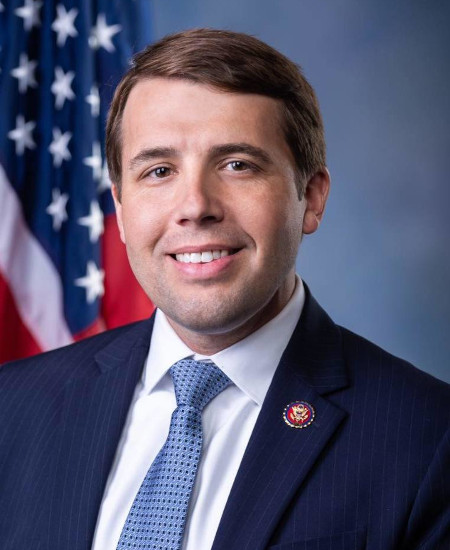
Rep. Chris Pappas
Sponsored bills
Maddy summaryHRES 891 is a ceremonial House resolution supporting the designation of National Rural Health Day, observed annually on the third Thursday of November (November 20, 2025, this year). It recognizes rural health care providers and the challenges rural communities face in accessing care, citing issues like hospital closures and workforce shortages. The resolution does not create new policies, funding, or requirements; it solely expresses the House's support for the day's goals and commitment to improving rural health accessibility. This is a non-binding acknowledgment, not a legislative action with concrete policy changes.
Maddy summaryHR 6104, the Dark Web Interdiction Act of 2025, creates a new federal offense for knowingly distributing controlled substances via the dark web and establishes the Joint Criminal Opioid and Darknet Enforcement Task Force. The bill mandates a 2-level sentencing increase for such violations and directs the new task force - comprising agencies like the FBI, DEA, and Customs - to disrupt dark web drug marketplaces through coordinated investigations, forensic training, and international collaboration. It requires annual reports on the task force’s activities and a separate report on virtual currency use in drug trafficking. The law applies directly to law enforcement agencies and targets individuals operating or using dark web marketplaces for illicit drug sales, with a 5-year sunset provision.
Maddy summaryHR 6103, the LAB Personnel Act of 2025, protects the Drug Enforcement Administration's (DEA) forensic laboratory workforce from reductions due to budget cuts or funding shifts. It specifically exempts forensic chemists, fingerprint specialists, digital forensic examiners, and other roles relocating to new DEA forensic labs from hiring freezes or workforce cuts. The bill does not affect the Attorney General's authority to address misconduct or poor performance under existing procedures. This law directly affects DEA forensic lab personnel by guaranteeing their positions remain secure during budget adjustments.
Maddy summaryThe NEST Act (HR 6096) requires the federal government to provide newborn supply kits to new mothers, focusing on low-income families and communities with high maternal health risks. These kits include essential items like diapers, postpartum pads, breastfeeding supplies, blood pressure monitors, and health information resources. Funds for the kits come from a $5 million annual set-aside in Social Security Act funding, distributed through grants to community health centers, tribal organizations, and hospitals. Priority is given to rural areas, maternity care deserts, and mothers earning below 185% of the poverty line. The program mandates annual reporting on distribution demographics and health outcomes to Congress.
Maddy summaryHR 6056, the International Human Rights Defense Act of 2025, establishes a permanent Special Envoy at the State Department to lead U.S. foreign policy efforts addressing discrimination and violence against LGBTQI+ people globally. The bill requires the U.S. government to develop and update a biannual global strategy to prevent criminalization and violence against LGBTQI+ individuals, mandate detailed reporting on such abuses in annual country reports, and ensure all U.S. foreign assistance programs include inclusive nondiscrimination policies. This legislation directly affects U.S. foreign policy implementation, federal agencies receiving funding, and LGBTQI+ communities facing persecution worldwide. The bill aims to coordinate U.S. government efforts across departments and with international partners to advance LGBTQI+ rights globally through concrete policy mechanisms.
Maddy summaryThis bill ensures continuous funding for SNAP (food assistance) and WIC (nutrition program for mothers/children) during government funding gaps. It authorizes emergency Treasury funds to cover SNAP/WIC benefits and reimburse states for costs if Congress fails to pass regular appropriations for the Department of Agriculture by September 30, 2025. The funding covers missed payments retroactively from September 30, 2025, through the bill’s enactment date, and continues until either regular appropriations pass or September 30, 2026. It directly affects low-income households relying on these programs and state agencies administering them during funding lapses.
Maddy summaryThis bill extends the annual open enrollment period for health insurance marketplaces (Exchanges) to cover the 2026 plan year. It requires the Health and Human Services Secretary to adjust the enrollment window to begin November 1, 2025, and end May 1, 2026 - significantly lengthening the typical enrollment period. This change directly affects individuals and families purchasing health insurance through federal or state-based marketplaces who rely on the annual enrollment period to select or change coverage. The key provision modifies the existing enrollment timeline under the Affordable Care Act, providing a longer window for enrollment decisions.
Maddy summaryHR 5907 authorizes the U.S. Department of Housing and Urban Development (HUD) to award grants to local governments, tribal entities, and municipal organizations to select pre-approved construction plans for mixed-income housing structures. These structures include duplexes, cottage courts, and other small-scale developments (up to 25 units) designed to promote affordability, with a specific requirement that 10% of annual funding must support rural areas. The bill mandates grantees to report on housing impacts, permits issued using the approved designs, and units built, while requiring the return of funds if selected designs aren’t adopted within five years. It focuses on streamlining housing approvals through pre-reviewed plans, not construction funding, to increase affordable housing supply.
Maddy summaryHRES 846 is a symbolic resolution designating October 2025 as National Domestic Violence Awareness Month. It expresses the House's support for raising awareness about domestic violence and its impacts, and calls for continued congressional attention to ending domestic violence through existing programs. The resolution does not create new laws, allocate funding, or directly affect any specific groups - it is purely a statement of support. It references statistics on domestic violence prevalence but focuses on awareness rather than policy changes.