

Public Housing Fire Safety Act This bill creates a grant program, to be administered by the Department of Housing and Urban Development, for public housing agencies to install automatic sprinkler systems in certain public housing projects.
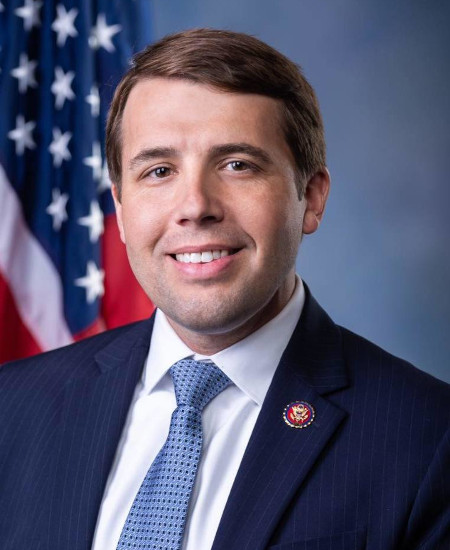
Rep. Chris Pappas
Sponsored bills
FDA Modernization Act of 2021 This bill allows an applicant for market approval for a new drug to use methods other than animal testing to establish the drug's safety and effectiveness. Under this bill, these alternative methods may include cell-based assays, organ chips and microphysiological systems, sophisticated computer modeling, and other human biology-based test methods.
Fire Fighters and EMS Employer-Employee Cooperation Act This bill requires the Federal Labor Relations Authority to determine whether a state substantially provides fire and emergency medical services (EMS) personnel the right to form and join a labor organization; recognition by fire and EMS employers of the employees' labor organization, agreement to bargain with the organization, and reduction of any agreements to writing in a contract or memorandum of understanding; the right to bargain over hours, wages, and terms and conditions of employment; and arbitration or other mechanisms to resolve an impasse in collective bargaining negotiations. The bill makes the authority responsible for (1) determining the appropriateness of units for labor representation; (2) supervising elections; (3) conducting hearings and resolving complaints of unfair labor practices; and (4) protecting the right of employees to form, join, or assist any labor organization, or to refrain from doing so. An employer, fire and EMS personnel, or labor organization may not engage in a lockout, sickout, work slowdown, strike, or any other organized job action that will measurably disrupt the delivery of emergency services and is designed to compel an employer, fire and EMS personnel, or labor organization to agree to the terms of a proposed contract.
Tax Fairness for Workers Act This bill allows an above-the-line tax deduction for union dues and expenses. (An above-the-line deduction is subtracted from gross income and is available whether or not a taxpayer itemizes other deductions.) The bill also reinstates the miscellaneous itemized tax deduction for unreimbursed expenses attributable to the performance of services as an employee (Under current law, all miscellaneous itemized deductions are suspended through 2025).
Comprehensive Care for Alzheimer's Act This bill allows the Center for Medicare and Medicaid Innovation (CMMI) to test a Dementia Care Management Model that provides comprehensive care to Medicare beneficiaries with Alzheimer's disease or a related dementia. Under the model, participating health care providers receive payment under Medicare for comprehensive care management services that are provided to individuals with diagnosed dementia, excluding Medicare Advantage enrollees, hospice care recipients, and nursing home residents. Required services include medication management, care coordination, and health, financial, and environmental monitoring, as well as trainings and other support services for unpaid caregivers. Providers must furnish services through interdisciplinary teams and must ensure access to a team member or primary care provider 24-7. The CMMI must set payments and determine quality measures for the model in accordance with specified requirements. The bill also allows the CMMI to design a similar model under Medicaid.
Invest in American Railroads Act This bill revises and expands the Railroad Rehabilitation and Improvement Financing program of the Department of Transportation (DOT). Specifically, the bill authorizes DOT to pay certain credit risk premiums for loans or loan guarantees; requires DOT to set aside at least $100 million for passenger rail projects in a given fiscal year; directs DOT to provide loans and loan guarantees to private entities with controlling ownership in one or more freight railroads other than Class I carriers; expands eligibility under the loan program to include reimbursement of planning, permitting, and design expenses related to acquiring, improving, or rehabilitating intermodal or rail equipment or facilities; sets forth collateral and appraisal standards under the program; and allows loan repayment terms to be extended up to 50 years after the date of substantial completion of a project, or the estimated useful life of the rail equipment or facilities to be acquired, rehabilitated, improved, developed, or established.
Veterinary Medicine Loan Repayment Program Enhancement Act This bill modifies the requirements for calculating taxable income to exclude from gross income payments under the federal veterinary medicine loan repayment program or any state loan repayment or forgiveness program that is intended to provide for increased access to veterinary services in such state.
Providing Responsible Emergency Plans for Animals at Risk of E merging Disasters Act or the PREPARED Act This bill establishes requirements governing the care of animals by entities, such as zoos, in emergencies or disasters. Specifically, the bill requires each research facility, dealer, exhibitor, intermediate handler, and carrier to develop and follow a contingency plan to provide for the humane handling, treatment, transportation, housing, and care of their animals in the event of an emergency or disaster.
Invasive Species Prevention and Forest Restoration Act This bill directs the Department of Agriculture (USDA) to award competitive grants to certain institutions for research to promote the restoration of tree species affected by non-native plant pests and noxious weeds. USDA may also award competitive grants to implement the research or other solutions to restore forest tree species native to the United States that have suffered severe levels of mortality caused by non-native plant pests and noxious weeds. The bill also expands the authority of USDA to transfer funds to respond to an emergency involving an outbreak of a plant pest or noxious weed. Further, USDA must enter into an agreement with the National Academy of Sciences or another nongovernmental entity to analyze available resources in federal agencies for research of, and solutions to, non-native forest pests and pathogens.
This resolution expresses the sense of the House of Representatives that blood donation policies should be grounded in science, minimize deferral periods, and allow donations by all those who can safely make them.