

Bipartisan Border Solutions Act of 2021 This bill establishes regional processing centers for conducting immigration-related activities and addresses other related issues. The Department of Homeland Security (DHS) shall establish at least four regional processing centers along the southern border in high-traffic Border Patrol sectors. These centers shall conduct processing activities such as criminal history checks, medical screenings, asylum interviews and credible fear determinations, and short-term detention of individuals. The bill imposes various requirements, such as requiring the centers to (1) allow nongovernmental entities access to detained individuals to provide humanitarian or legal assistance, and (2) provide detained aliens access to legal counsel for certain asylum proceedings. The bill also requires DHS and the Department of Justice (DOJ) to develop pilot programs to improve asylum decisions, credible fear determinations, access to counsel, and case management of aliens awaiting asylum hearings or decisions. DOJ shall, to the greatest extent practicable, prioritize removal cases involving aliens apprehended while entering the United States during an irregular migration influx. Before placing an unaccompanied alien child with an individual, the Department of Health and Human Services must conduct a criminal background check of each adult member of that individual's household. An alien child may not be placed in a household where an individual has been convicted of certain crimes, including offenses involving sex or domestic violence. The bill also makes it a crime to make a materially false statement or knowingly use a false document to obtain custody of an unaccompanied alien child.
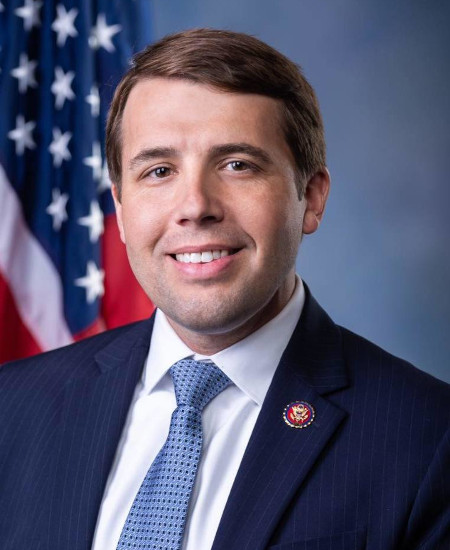
Rep. Chris Pappas
Sponsored bills
Gay and Trans Panic Defense Prohibition Act of 2021 This bill generally prohibits a federal criminal defendant from asserting, as a defense, that the nonviolent sexual advance of an individual or a perception or belief of the gender, gender identify or expression, or sexual orientation of an individual excuses or justifies conduct or mitigates the severity of an offense.
Extending Temporary Emergency Scheduling of Fentanyl Analogues Act This bill extends until October 22, 2021, the temporary scheduling order issued by the Drug Enforcement Administration to place fentanyl-related substances in schedule I of the Controlled Substances Act. The temporary order expires on May 6, 2021.
Fair Housing for Domestic Violence and Sexual Assault Survivors Act of 2021 This bill prohibits discrimination against survivors of domestic violence, sexual assault, or sex trafficking in the sale or rental of housing and other related real estate activities.
Khalid Jabara and Heather Heyer National Opposition to Hate, Assault, and Threats to Equality Act of 2021 or the Jabara-Heyer NO HATE Act of 2021 This bill creates grants for state and local governments to combat hate crimes. It also authorizes additional penalties for hate crime offenses. Specifically, it establishes grants for states to create state-run hate crimes reporting hotlines. It also authorizes grants for states and local governments to implement the National Incident-Based Reporting System and to conduct law enforcement activities or crime reduction programs to prevent, address, or respond to hate crimes. Finally, in the case of an individual convicted of a hate crime offense and placed on supervised release, the bill allows a court to order that the individual participate in educational classes or community service as a condition of supervised release.
Camp Lejeune Justice Act of 2021 This bill allows certain individuals to sue and recover damages for harm from exposure to contaminated water at Camp Lejeune in North Carolina between August 1, 1953, and December 31, 1987. This action is available only to individuals who were exposed to contaminated water for at least 30 days. The bill prohibits the U.S. government from asserting specified immunity from litigation in response to such a lawsuit. The bill also prohibits an individual who brings such an action from bringing a separate tort action against the United States based on the same harm.
Healthcare Workforce Resilience Act This bill makes previously unused immigrant visas available to nurses and physicians who petition for such a visa before the date that is 90 days after the end of the declared national emergency relating to the COVID-19 (i.e., coronavirus disease 2019) outbreak. The number of visas available shall be the total number of unused employment-based immigrant visas from FY1992-FY2020, up to 40,000. Of such visas, 25,000 shall be reserved for nurses and 15,000 for physicians. Certain family members may accompany the principal beneficiary of a visa provided under this bill, and visas for such family members shall (1) be made available from the unused visas from FY1992-FY2020, and (2) not be counted against the 40,000 cap. Visas provided under this bill shall be exempt from per-country limitations.
Equal Access to Abortion Coverage in Health Insurance Act of 2021 or the EACH Act of 2021 This bill requires federal health care programs to provide coverage for abortion services and requires federal facilities to provide access to those services. The bill also permits qualified health plans to use funds attributable to premium tax credits and reduced cost sharing assistance to pay for abortion services.
Stop shielding Assets from Corporate Known Liability by Eliminating non-debtor Releases Act or the SACKLER Act This bill prohibits a bankruptcy court from releasing claims against non-debtors brought by states, tribes, municipalities, or the federal government. However, the bankruptcy court may issue a stay not exceeding 90 days regarding such a claim. Complex bankruptcies may involve creditor claims against non-debtors associated with the debtor, such as the debtor's officers, directors, or employees. Currently, in carrying out a bankruptcy plan, certain courts may release non-debtors from liability (there is a circuit split regarding this practice).
Help Extract Animals from Red Tape Act of 2021 or the HEART Act of 2021 This bill modifies notice requirements in a civil forfeiture proceeding that involves the seizure of an animal involved in animal fighting. Specifically, the government must notify interested parties of an animal's seizure within 30 days (currently, 60 days). The notice period may be extended only if a delay is warranted after considering certain factors, including the cost to the government of providing shelter for the animal, the health of the animal and the effect of a delay on its rehabilitation, any increased risk that a delay could necessitate the euthanasia of the animal, and any psychological harm incurred by the animal's owner due to the delay in disposition. Additionally, the bill authorizes amounts in the Department of Justice Assets Forfeiture Fund to be used to pay for costs associated with a seized animal, including transportation, shelter, care, veterinary services, and humane euthanasia.