

Greater Leadership Overseas for the Benefit of Equality Act of 2021 or the GLOBE Act of 2021 This bill contains provisions related to (1) the protection of LGBTQI individuals globally; and (2) immigration protections for vulnerable individuals. The bill establishes (1) an interagency group to respond to urgent threats to LGBTQI people in foreign countries, and (2) a permanent Special Envoy for the Human Rights of LGBTQI Peoples in the Department of State. The President shall impose visa-blocking sanctions on foreign persons responsible for violating the human rights of individuals based on sexual orientation, gender identity, or sex characteristics. The State Department shall establish the Global Equality Fund to provide assistance to nongovernmental organizations working to advance and protect human rights. The U.S. Agency for International Development shall establish the LGBTQI Global Development Partnership to work with the private sector and nongovernmental organizations to support LGBTQI rights. The bill removes prohibitions against providing foreign assistance to nongovernmental organizations that offer certain medical services (e.g., abortion-related services) using non-U.S. government funds. The bill contains several immigration-related provisions, such as those establishing that persecution based on sexual orientation or gender identity may form the basis of an asylum request, allowing certain applicants to file asylum claims more than a year after their arrival in the United States, including a permanent partnership between two partners as a marriage for immigration law purposes, providing for free counsel in certain immigration proceedings, and granting U.S. citizenship to a child born abroad through assistive reproductive technology from a U.S. citizen who is the child's nonbiological parent.
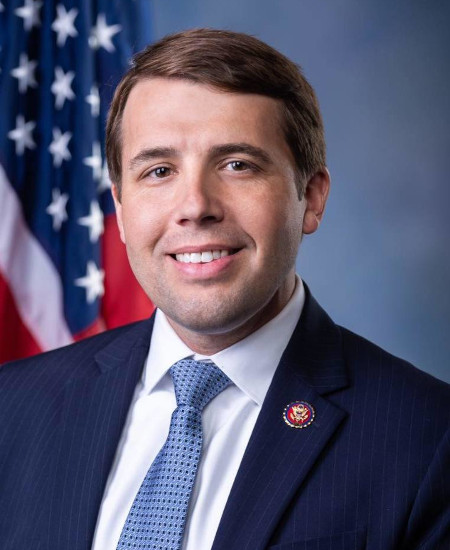
Rep. Chris Pappas
Sponsored bills
National ACERT Grant Program Authorization Act This bill requires the Department of Justice, in coordination with the Department of Health and Human Services, to award grants for states, tribal nations, localities, and community-based organizations to establish response teams to address adverse childhood experiences associated with exposure to trauma.
Menstrual Equity For All Act of 2021 This bill expands access to free sanitary napkins and tampons (i.e., menstrual products) in certain locations and for particular groups. It also requires Medicaid to cover menstrual products, as well as liners, cups, and similar items used by individuals with respect to menstruation. Specifically, the bill imposes requirements to make free menstrual products available in federal and state correctional facilities (including facilities that house aliens detained by the Department of Homeland Security) and restrooms in federal buildings that are open to the public. It also establishes a demonstration grant program to support the provision of free menstrual products on campuses of institutions of higher education and permits elementary and secondary schools to use certain grants to provide menstrual products to students. Furthermore, the bill requires employers with at least 100 employees to provide free menstrual products for employees. It also permits the use of certain grants for emergency food and shelter to provide menstrual products to homeless individuals.
Establishing Accreditation Grants for Law Enforcement Act of 2021 or the EAGLE Act of 2021 This bill requires the Department of Justice to provide grants to eligible local law enforcement agencies for activities related to obtaining qualified accreditation or recertification. Such accreditation or recertification shall be provided by a professional law enforcement organization involved in developing standards for law enforcement at the national, state, regional, or tribal level, such as the Commission on Accreditation for Law Enforcement Agencies.
Conrad State 30 and Physician Access Reauthorization Act This bill modifies the Conrad 30 Waiver program, which incentivizes qualified foreign physicians to serve in underserved communities. It also extends statutory authority for the program for three years from this bill's enactment. Aliens coming to the United States under a J-1 nonimmigrant visa to receive medical training typically must leave the country and reside for two years abroad before being eligible to apply for an immigrant visa or permanent residence. The Conrad program waives this requirement for individuals who meet certain qualifications, including serving for a number of years at a health care facility in an underserved area. The bill increases the number of waivers that a state may obtain each fiscal year from 30 to 35 if a certain number of waivers were used the previous year, and provides for further adjustments depending on demand. An alien physician may be employed at an academic medical center to meet the Conrad program's employment requirements if the alien's work is in the public interest, even if the medical center is not in an underserved area. Employment contracts for alien physicians under the Conrad program shall contain certain information, such as the maximum number of on-call hours per week the physician shall have to work. Certain alien physicians (along with the physician's spouse and children) shall be exempt from the direct annual numerical limits on immigration, including those physicians that have met certain requirements related to visas for physicians to serve in underserved areas.
Maddy summaryHCONRES 106 designates the week of September 19-23, 2022, as "Malnutrition Awareness Week" to highlight the widespread issue of malnutrition in the U.S., which disproportionately affects vulnerable groups like children, older adults, and communities of color. The resolution recognizes that malnutrition contributes to health disparities, higher medical costs (e.g., 300% more for hospitalized patients), and is linked to poverty and food insecurity. It supports existing federal nutrition programs, such as the Older Americans Act and child nutrition initiatives, and encourages better access to malnutrition screening and nutrition services without creating new laws or funding. As a symbolic resolution, it aims to raise public awareness and promote prevention efforts rather than enact policy changes.
This resolution supports the designation of Oxi Day in commemoration of Greece's refusal to submit to the Axis Powers during World War II and notes that this resistance likely led to the ultimate defeat of Nazi Germany. (Greece's Prime Minister at the time, Ioannis Metaxas, had responded to Italy's demand for surrender with the single word Oxi! or No! )
Original National Domestic Violence Awareness Month Resolution of 2022 This resolution supports the goals and ideals of National Domestic Violence Awareness Month. Further, it expresses the sense of the House of Representatives that Congress should continue to raise awareness of and support programs to end domestic violence.
Major Richard Star Act This bill provides that combat-disabled uniformed services retirees with fewer than 20 years of creditable service may concurrently receive, without reduction, veterans' disability compensation and retired pay or combat-related special compensation.
Maddy summaryHRES 1438 is a non-binding House resolution expressing support for Lights On Afterschool, an annual event held on October 20, 2022. It recognizes the value of afterschool programs in providing safe, engaging learning opportunities for children, especially during the pandemic. The resolution highlights how such programs support working families, enhance academic and social development, and strengthen community partnerships. It does not create new policies or affect any specific groups, as it solely serves to publicly endorse this national celebration of afterschool initiatives.