

Maddy summaryHR 1919, the "Anti-CBDC Surveillance State Act," prohibits the Federal Reserve from developing, testing, or issuing any central bank digital currency (CBDC) or similar digital assets. It specifically bans the Fed from offering direct financial products to individuals, maintaining individual accounts, or issuing CBDCs directly or indirectly through intermediaries like banks. The bill also blocks the Fed from using any digital asset for monetary policy and clarifies that physical currency's privacy protections remain intact. This policy directly affects the Federal Reserve System's ability to create or manage digital monetary tools.
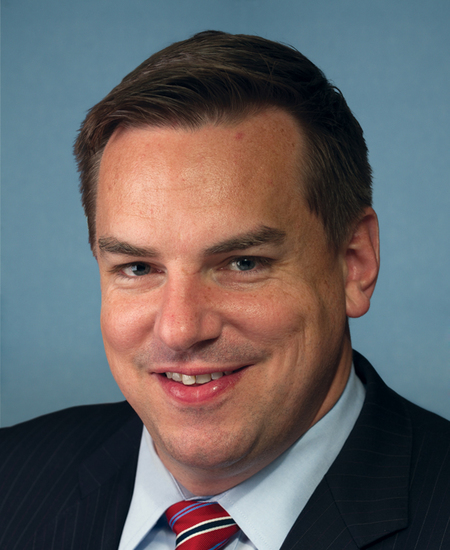
Rep. Richard Hudson
Sponsored bills
Maddy summaryHR 2037, the Open RAN Outreach Act, requires the Commerce Department's Assistant Secretary for Communications and Information to provide outreach and technical assistance to small communications network providers. The bill focuses on raising awareness about Open RAN networks - standardized wireless networks using multi-vendor equipment that follow open industry standards - and directing providers to the Wireless Supply Chain Innovation Grant Program. It does not create new regulations but offers support to help small providers understand the benefits, challenges, and grant opportunities related to Open RAN technology. This assistance is intended to help small providers navigate adopting open network architectures.
Maddy summaryHRES 570 is a House resolution commending Petty Officer 3rd Class Scott Ruskan for rescuing 165 people during catastrophic July 2025 flooding in central Texas. The resolution honors Ruskan, a Coast Guard Aviation Survival Technician from Air Station Corpus Christi, for his role as the sole triage coordinator during the disaster. It recognizes his "exceptional courage" and "selflessness" in saving lives during the Guadalupe River flooding that caused extensive damage and loss of life. As a ceremonial resolution, it does not create new laws or policies but formally expresses the House's gratitude for Ruskan's service.
Maddy summaryHRES 571 is a symbolic resolution passed by the U.S. House of Representatives to commemorate the one-year anniversary of the July 13, 2024, attempted assassination of President Donald J. Trump in Butler, Pennsylvania. It condemns two assassination attempts against the President (in Butler and West Palm Beach), honors victims Corey D. Comperatore (who died shielding his family), David Dutch, and James Copenhaver (who were critically injured), and expresses gratitude to first responders. The resolution also condemns incitement of violence against political officials and calls for unity against political violence. As a non-binding resolution, it does not create new laws or policies but formally states the House’s position on these events.
Maddy summaryHRES 565 designates the week of June 30-July 4, 2025, as "National Tire Safety Week" to promote education about tire maintenance for American motorists. The resolution supports existing safety practices like checking tire pressure monthly (when tires are cold), verifying tread depth (using the penny test), and rotating tires per manufacturer guidelines. It encourages drivers to inspect tires for damage and follow recommended maintenance to reduce risks like underinflation, hydroplaning, and premature wear. As a non-binding resolution, it expresses congressional support for public awareness efforts but does not create new legal requirements.
Treat and Reduce Obesity Act of 2025 This bill expands Medicare coverage of intensive behavioral therapy for obesity. Specifically, the bill allows coverage for therapy that is provided by (1) a physician who is not a primary care physician; or (2) other health care providers (e.g., physician assistants and nurse practitioners) and approved counseling programs, if provided upon a referral from, and in coordination with, a physician or primary care practitioner. Currently, such therapy is covered only if provided by a primary care practitioner. The bill also allows coverage under Medicare's prescription drug benefit of drugs used for the treatment of obesity or for weight loss management for individuals who are overweight.
Maddy summaryHR 4199, the Modernize the Au Pair Program Act of 2025, updates federal regulations for the au pair program to improve affordability and flexibility for host families. The bill requires the Department of State to propose new rules within 90 days, including a revised stipend formula reflecting room, board, and childcare costs without making the program prohibitively expensive. It also mandates greater program flexibility to accommodate military families, first responders, single parents, and shift workers with non-traditional schedules. The bill explicitly prohibits states from regulating the program, ensuring all rules remain uniform under federal law as intended by Congress. This directly affects American host families seeking affordable childcare and au pairs participating in the cultural exchange program.
Maddy summaryHR 4132, the Prescription Information Modernization Act of 2025, allows drug manufacturers to provide FDA-approved prescribing information for prescription drugs exclusively through electronic means, while requiring them to offer paper copies at no additional cost upon request by prescribers or dispensers. The bill directly affects drug manufacturers, doctors, pharmacists, and other healthcare professionals who rely on prescribing information. Key provisions include mandating that manufacturers give prescribers/dispensers the choice to continue receiving paper copies or request them as needed, and requiring the HHS Secretary to issue implementing regulations within one year to support this transition. The law takes effect two years after enactment or when final regulations are issued, whichever comes first.
Maddy summaryHR 4148 disapproves a Department of Labor regulation (88 Fed. Reg. 57526) that would have updated wage requirements under the Davis-Bacon Act for federal construction projects. The bill states this regulation "shall have no force or effect," preventing federal contractors from being subject to the proposed changes. This is a procedural measure targeting a specific regulatory update, directly affecting contractors working on federally funded construction projects.
Maddy summaryThis bill makes technical corrections to the Camp Lejeune Justice Act of 2022 to streamline claims for individuals harmed by water contamination at Camp Lejeune. It clarifies the evidence required (30+ days at the base plus a link between contaminants and health harm), specifies that cases must be handled in North Carolina courts (with limited transfer options), and sets attorney fee caps (20% before suit, 25% after). These changes directly affect veterans and civilians who lived at Camp Lejeune and filed claims under the 2022 law. The bill does not create new eligibility but aims to improve the legal process for existing cases.