

Maddy summaryHR 3323 (RAPID Act) streamlines permitting for small wireless infrastructure by exempting small personal wireless service facilities (like compact cell towers under 3 cubic feet) from standard environmental reviews under the National Environmental Policy Act (NEPA) and historic preservation reviews under the National Historic Preservation Act. The bill creates a 45-day presumption that tribal nations have disclaimed interest in projects if they don’t respond to FCC forms requesting input, unless tribes provide evidence the applicant failed to follow up properly or FCC rules violate existing agreements. This directly affects wireless providers deploying small-scale 5G infrastructure and tribal nations consulted during the permitting process. The law aims to accelerate deployment by reducing regulatory delays while establishing a clearer process for tribal consultation.
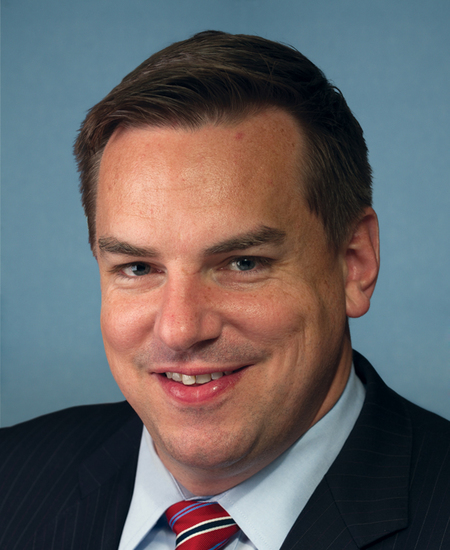
Rep. Richard Hudson
Sponsored bills
Maddy summaryHCONRES 46, the "Fiscal State of the Nation Resolution," requires the House and Senate Budget Committees to hold an annual joint hearing within 45 days of the Treasury's submission of the federal government's audited financial statement. At this hearing, the Comptroller General will present an objective, nonpartisan analysis of the government's financial condition, including deficits, surpluses, and long-term fiscal projections, as required by the Government Accountability Office's standards. The hearing must be open to the public and allow all members of Congress to participate, regardless of committee membership. This resolution ensures Congress receives regular, factual reviews of federal finances without political bias.
Maddy summaryHRES 417 is a non-binding resolution commending North Carolina Central University's (NCCU) football team for winning the 2022 Celebration Bowl, the HBCU national championship. It specifically recognizes their 41-34 overtime victory over Jackson State University on December 17, 2022, marking NCCU's fourth Black College Football National Title. The resolution formally congratulates the team, university community, and requests that an official copy be sent to NCCU's chancellor, provost, and head coach. This is purely ceremonial with no policy changes or funding implications.
National Law Enforcement Officers Remembrance, Support and Community Outreach Act This bill directs the Department of Justice (DOJ) to establish a National Law Enforcement Officers Remembrance, Support, and Community Outreach Program. The bill further directs DOJ to award a grant under the program to the National Law Enforcement Officers Memorial Fund for the expenses associated with community outreach, public education, and officer safety and wellness programs operated by the of the National Law Enforcement Officers Memorial Fund and National Law Enforcement Museum.
Maddy summaryHRES 363 is a resolution expressing support for recognizing National Police Week, an annual observance established by law to honor law enforcement officers who have died in the line of duty. The resolution acknowledges 556 officers killed in the line of duty during 2022 and calls for ensuring law enforcement officers have necessary equipment, training, and resources to protect both themselves and the public. It encourages the American public to observe National Police Week by honoring law enforcement personnel and recognizing their essential mission in serving communities across the United States. This resolution does not create new law but formally expresses congressional support for an existing observance.
This resolution supports the goals and ideals of Sports Eye Safety Month and encourages all Americans, especially youth, to play sports with protective eyewear.
Maddy summaryThe PAST Act of 2023 amends the Horse Protection Act to ban specific devices used to cause pain (soring) in horses at shows, particularly affecting Tennessee Walking Horses, Racking Horses, and Spotted Saddle Horses. It defines prohibited "action devices" (like boots or chains causing friction) and requires licensed, conflict-free inspectors at events to enforce rules. The bill increases penalties for violations to up to $5,000 fines or 3 years in jail, and mandates longer disqualifications for repeat offenses (180 days → 1 year → 3 years). Horse show organizers, exhibitors, and participants must comply with these new inspection and penalty requirements.
Maddy summaryHR 3238, the Affordable Housing Credit Improvement Act of 2023, updates the Low-Income Housing Tax Credit (LIHTC) program to increase the availability of affordable housing across the United States. The bill makes several key changes including increasing state funding formulas, modifying tenant eligibility rules to better serve vulnerable populations (such as domestic violence victims and students), and expanding credit eligibility for projects in rural and Native American communities. Specific provisions raise the credit for properties serving extremely low-income households, clarify rules around tenant income increases, and require housing providers to protect victims of domestic violence. The bill also updates terminology from "low-income" to "affordable" throughout the tax code and enhances program transparency through data sharing requirements. These changes aim to make the LIHTC program more effective at creating and preserving affordable housing units for low-income households nationwide.
Maddy summaryHR 3175, the Regulation Reduction Act of 2023, requires federal agencies to repeal two existing regulations before issuing a new rule, and three for "major rules" (those with significant economic impact). For major rules, the new rule's cost must not exceed the cost of the repealed rules, and the Office of Management and Budget must certify this. Agencies must also submit a 90-day review to Congress identifying costly, ineffective, duplicative, or outdated regulations. This bill directly affects federal agencies and the businesses, states, and local governments subject to federal regulations.
Maddy summaryThe ACRE Act of 2023 amends the tax code to exclude interest income from certain rural and agricultural loans from taxable income for eligible lenders. It directly affects banks, savings associations, and their wholly-owned entities that provide qualified loans secured by rural or agricultural real estate, including single-family homes in designated rural areas (with a $750,000 loan balance cap) or aquaculture facilities. The key provision allows these lenders to exclude interest earned on qualifying loans from their gross income, effectively reducing their tax liability on such lending activity. The bill applies to loans made after its enactment date and aligns with existing definitions of rural property from the Agricultural Credit Act of 1987.