

Maddy summaryHR 1640, the Save Our Gas Stoves Act, prevents the Department of Energy from implementing energy efficiency standards for gas stoves that would make them unavailable in the U.S. market. It amends federal law to require that any new standard for gas stoves must not result in the unavailability of gas stove types, directly affecting gas stove manufacturers and consumers who rely on these appliances. The bill specifically blocks the implementation of the 2023 proposed rule (Energy Conservation Program: Energy Conservation Standards for Consumer Conventional Cooking Products) and any similar rule. This is a policy change focused on maintaining the availability of gas stoves by altering the criteria for energy standard approval.
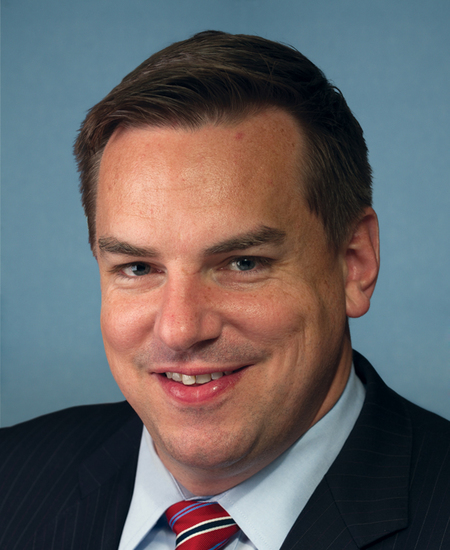
Rep. Richard Hudson
Sponsored bills
Maddy summaryThe School Guardian Act of 2023 creates a federal grant program to fund armed law enforcement officers at K-12 schools. It directs $80 billion in redirected IRS funds to provide grants to states, which then distribute subgrants to local law enforcement agencies to hire full-time officers for school security. Each school must have at least one assigned officer under written agreements between law enforcement agencies and schools. States must report annually on grant usage, including the number of schools and officers covered, with unused funds returned to the federal government.
Maddy summaryHR 4035, the Protecting Small Business Information Act of 2023, requires the Treasury Secretary to coordinate the effective dates of all rules under the Corporate Transparency Act. It mandates that all final rules related to beneficial ownership reporting must take effect on the same date, delaying implementation until the Secretary certifies to Congress that all rules are issued and will align on a single effective date. This directly affects small businesses required to report beneficial ownership information under the Corporate Transparency Act. The bill’s key mechanism is creating a unified implementation timeline, preventing staggered rule deadlines that could complicate compliance for small entities. It does not change reporting requirements but ensures a synchronized rollout of the regulations.
This resolution expresses support for keeping AM radios in cars. (Several car manufacturers announced plans to remove AM radio options from some or all of their models.)
Maddy summaryHR 3792 extends U.S. security funding for Israel through 2028 (Section 3) and expands energy cooperation to include advanced nuclear technologies and carbon capture (Section 5). It requires annual reports on regional security partnerships involving Israel (Section 6) and ensures countries in the Abraham Accords can access U.S. development programs (Section 8). The bill also mandates reports on diplomatic efforts against ICC investigations targeting the U.S. and Israel (Section 10) and encourages people-to-people programs to strengthen the Abraham Accords (Sections 7, 9). These provisions directly affect Israel’s diplomatic engagement, security partnerships, and economic cooperation in the Middle East.
Maddy summaryThe HALT Fentanyl Act expands the definition of fentanyl-related substances in the Controlled Substances Act to include many structurally similar compounds, making it easier to regulate new fentanyl analogs without individual listing. It defines these substances based on specific chemical modifications to fentanyl, with limited exceptions for substances already controlled or listed elsewhere. The bill also streamlines research procedures for schedule I substances by creating expedited registration processes and allowing multiple studies under one registration, while requiring the Attorney General to publish a list of substances meeting the new definition.
Maddy summaryHR 3699, the WORKER Act, directs the U.S. Department of Energy to prioritize workforce training for energy and manufacturing jobs through existing federal grant programs. It requires the Secretary to focus on specific sectors (like renewable energy, oil/gas, nuclear, coal, and manufacturing) and emphasize training for underrepresented groups, including minorities, women, and veterans. The bill mandates creating a clearinghouse for workforce resources, strengthening outreach to minority-serving institutions and dislocated workers, and collaborating with industry partners to share best practices. Crucially, it prohibits creating new programs or forcing schools to adopt specific curricula, and requires using existing funds without additional appropriations.
Maddy summaryHR 3577, the Medical and Health Stockpile Accountability Act of 2023, requires the federal government to create an automated tracking system for critical medical supplies held in the national stockpile and shared with state, tribal, local, and private entities like hospitals and manufacturers. The system must provide near real-time data on supply levels, establish standardized reporting for product categories and inventory, and ensure private entities' data remains confidential and cannot be used for reallocation or commercial purposes. It mandates annual testing of the system, provides $250 million for development (2024-2029), and offers support to smaller healthcare facilities without automated tracking systems. The bill directly affects federal agencies managing the stockpile, healthcare providers, and medical supply manufacturers by standardizing and securing supply chain data during emergencies.
Maddy summaryThe READI Act prohibits U.S. military installations from housing undocumented immigrants or individuals in immigration removal proceedings. It directly affects military bases (excluding overseas locations) and individuals without lawful immigration status or undergoing deportation processes. The law explicitly bans using domestic military facilities for this purpose, aligning with existing immigration rules that define "unlawful presence." This creates a clear policy change by restricting the use of military infrastructure for immigration detention.
Maddy summaryThis bill requires that AM radio receivers be included as standard equipment in all new motor vehicles (such as cars and trucks) sold in the United States, with a rule to be issued by the Department of Transportation within one year. The rule must ensure AM radio is easily accessible on the dashboard and allows manufacturers to use digital AM radio technology instead of traditional AM. During the one-year period between the bill's enactment and the rule's effective date, manufacturers must clearly label vehicles without AM radio. The bill also directs a study to evaluate whether an alternative system could deliver emergency alerts as reliably as AM radio across the country, especially during crises.