

Maddy summaryHR 6734 prohibits the use of federal funds to finalize, implement, or enforce the Bureau of Alcohol, Tobacco, Firearms, and Explosives' (ATF) proposed rule (2022R-17) defining "engaged in the business as a dealer in firearms." This bill directly affects the ATF by blocking funding for this specific regulatory rule, which was proposed in August 2023. The legislation does not create new requirements but prevents federal resources from being used to advance this particular ATF regulation.
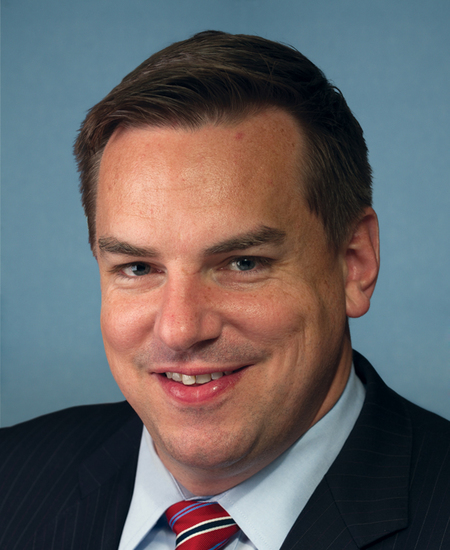
Rep. Richard Hudson
Sponsored bills
Maddy summaryHR 6573, the Protecting Military Servicemembers' Data Act of 2023, prohibits data brokers from selling, reselling, or sharing military servicemember lists to "covered nations" (as defined in federal law). It directly affects military members by preventing their personal information - contained in specialized lists created for compiling military service details - from being sold to specific foreign governments. The key mechanism bans the commercial transfer of these lists, with enforcement handled by the Federal Trade Commission and state attorneys general. The law takes effect within one year of enactment or when the FTC issues final rules, whichever comes first. This is a concrete policy change targeting data brokers' practices, not a procedural measure.
Maddy summaryHR 6625, the Chinese Spy Balloon Assessment Act, requires the Secretary of Defense to submit a report to Congress within 90 days of the bill's enactment. The report must detail the national security effects of surveillance conducted by China via a high-altitude balloon shot down in U.S. airspace in February 2023, including impacts on military installations and an analysis of recovered technology's country of origin. This bill directly affects the Department of Defense and Congress by mandating a specific, time-bound assessment of a single incident. It does not create new policies or funding but establishes a procedural requirement for transparency about the 2023 balloon event. The report must be unclassified, though it may include a classified annex.
Maddy summaryHR 6612, the Birthright Citizenship Act of 2023, clarifies who qualifies for U.S. citizenship at birth under the 14th Amendment. It amends immigration law to define that a child born in the U.S. is "subject to the jurisdiction" for citizenship if one parent is a U.S. citizen, a lawful permanent resident living in the U.S., or an active-duty military member. The bill directly affects children born in the U.S. to parents in these specific categories, ensuring they meet the citizenship definition without altering the constitutional right itself. It explicitly states this definition applies only to births occurring after the law's enactment, leaving existing citizenship status unaffected for those born before. The bill aims to codify existing constitutional principles through specific, narrow criteria for parental status.
Maddy summaryThe Advanced Nuclear Deployment Act (HR 6526) accelerates the development of advanced nuclear reactors by streamlining regulatory processes and creating new funding mechanisms. It directs the Department of Energy to cover costs for early site permits at federal sites (including national security infrastructure) and requires the Nuclear Regulatory Commission to develop risk-informed licensing guidance for micro-reactors within 18 months, focusing on safety, security, and efficient review processes. The bill also establishes an expedited 25-month timeline for combined license approvals for reactors using previously licensed designs at existing nuclear sites, and creates a pilot program for federal agencies to enter 10-40 year power purchase agreements with first-of-a-kind nuclear reactors prioritizing national security assets and resilient grid capabilities. This directly affects federal land managers, nuclear developers, the NRC, and federal agencies purchasing power.
Maddy summaryHR 6504, the Protect American Gun Exporters Act, blocks the Department of Commerce from implementing a pause on new export licenses for specific firearm exports (items under Commerce Control List numbers 0A501, 0A502, 0A504, and 0A505). The bill directly affects U.S. gun exporters by preventing the Commerce Secretary from enforcing the October 2023 pause or similar restrictions on these exports. Key provisions prohibit the Secretary from taking any action to carry out the pause unless it follows standard regulatory processes, including a required impact analysis and compliance with the Administrative Procedure Act and Congressional Review Act. This bill does not create new export rules but stops the existing pause on certain firearm exports.
Maddy summaryHJRES 103 is a congressional resolution seeking to block a Department of Labor rule updating the Davis-Bacon Act regulations. It specifically targets the rule published in the Federal Register on August 23, 2023 (88 Fed. Reg. 57526), which would have modified requirements for paying prevailing wages on federal construction projects. The resolution invokes Chapter 8 of Title 5, U.S. Code, to formally disapprove the rule, stating it "shall have no force or effect" if passed. This procedural measure directly affects federal contractors and the Department of Labor, aiming to prevent the implementation of the updated wage regulations.
Maddy summaryThis bill appropriates $14.3 billion in supplemental security funding to Israel following the October 7, 2023 attacks. The funding includes $4 billion for Iron Dome and David's Sling defense systems, $1.35 billion for the Iron Beam defense system development, and $3.5 billion for foreign military financing. The bill requires regular reporting to Congress on security assistance provided to Israel and designates all funds as "emergency requirements" under federal budget law. It also modifies existing laws to facilitate the transfer of defense articles and services to Israel, aiming to strengthen Israel's defense capabilities against rocket threats.
Maddy summaryHRES 848 is a symbolic House resolution (not a bill) urging Americans to connect with active-duty service members and veterans to support their transition from military service. It encourages individuals to reach out directly - through conversation and referrals - to help those dealing with mental health challenges, invisible wounds like traumatic brain injury, or isolation. The resolution cites rising suicide rates among active duty personnel (377 in 2020) and veterans (6,261 in 2019) as context for its call to action. It does not create new programs or funding but formally encourages personal engagement to promote access to existing support systems.
Maddy summaryThis bill would authorize the U.S. government to confiscate Russian sovereign assets held in U.S. jurisdiction and use those funds to support Ukraine's reconstruction and humanitarian needs following Russia's invasion. It prohibits releasing these blocked assets until Russia fully compensates Ukraine or agrees to an international compensation mechanism. The bill establishes a "Ukraine Support Fund" to hold confiscated assets and requires regular congressional reporting on how these funds are allocated for Ukraine's recovery. It also includes provisions for international coordination with allies on sanctions and asset management related to Russia's invasion of Ukraine.