

Maddy summaryThis bill would amend federal law to strengthen penalties for organized retail crime by expanding definitions of theft to include digital goods, gift cards, and setting a $5,000 aggregate value threshold for charges over a 12-month period. It would establish a new "Organized Retail and Supply Chain Crime Coordination Center" under Homeland Security to coordinate Federal, State, local, and Tribal law enforcement efforts against cross-jurisdictional theft groups. The Center would share information with retailers, transportation companies, and law enforcement agencies, track crime trends, and produce annual reports on organized retail crime. This legislation directly affects retailers, supply chain businesses, and law enforcement agencies, while targeting organized crime groups responsible for a 93% increase in larceny incidents and rising safety concerns for retail employees. The bill aims to address significant financial losses and supply chain disruptions noted in the National Retail Federation's 2023 data.
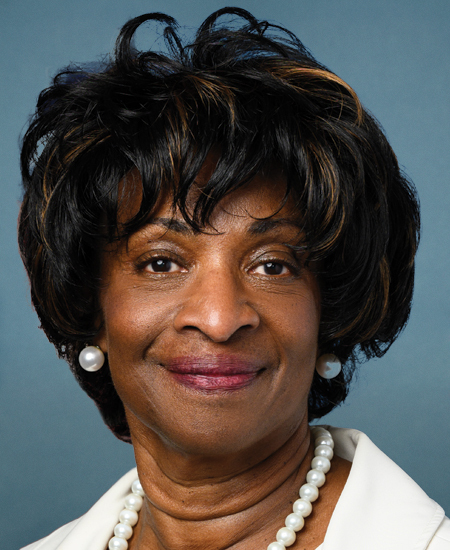
Rep. Valerie P. Foushee
Sponsored bills
Maddy summaryThis bill prohibits the U.S. government from spending money on military actions against Iran between its enactment and December 31, 2026, unless Congress explicitly approves the use of force. It allows for military action only if Congress declares war, passes a specific authorization, or if the action is necessary to defend the United States or its allies from an imminent attack while following reporting requirements. The law directly restricts the President's ability to deploy troops without legislative approval during the specified timeframe.
Maddy summaryThis bill aims to make permanent the rules for Optional Practical Training, which allows international students to work in the United States after completing their studies. It directly affects F-1 visa holders by codifying their ability to gain up to 24 months of work experience related to their field of study, or up to 48 months if they studied science, technology, engineering, or mathematics. The legislation also directs the Department of Homeland Security to classify nursing as a STEM field, thereby extending the longer work authorization period to nursing graduates. By adding these provisions to federal law, the bill ensures that these work opportunities remain consistent and legally defined for future students.
Maddy summaryThe Vote by Mail Protection Act of 2026 directly affects the federal government by nullifying Executive Order 14399, which previously required citizenship verification in federal elections. This legislation prohibits any federal agency from enforcing the order or using taxpayer funds to carry out its activities. By repealing the executive order, the bill removes the mandate for agencies to verify citizenship as a condition for voting in federal elections.
Maddy summaryH.R. 1243 is a House resolution that formally recognizes May as Asian American, Native Hawaiian, and Pacific Islander Heritage Month to celebrate the contributions of these communities to U.S. history. The bill highlights the diverse populations, historical milestones, and significant achievements of Asian Americans, Native Hawaiians, and Pacific Islanders in government, the military, and society. It also acknowledges the ongoing challenges faced by these groups, including a rise in hate crimes and historical discrimination. As a commemorative resolution, the measure does not create new laws or funding but serves to express official congressional appreciation and awareness.
Maddy summaryThe GUARD Act requires companies that offer AI chatbots designed to simulate human friendship to verify the age of every user and block access for anyone under 18. To comply, these platforms must collect verifiable age data, clearly disclose that the chatbot is not a human, and ensure the AI does not claim to be a licensed professional like a therapist or doctor. The law also makes it a federal crime to design or distribute such chatbots that encourage minors to engage in sexually explicit acts or promote self-harm and violence, with penalties of up to $100,000 per violation.
Maddy summaryThis bill, titled the Protecting Human Rights and Public Health in Foreign Assistance Act, aims to cancel specific regulations issued by the Department of State. It directly affects the federal government by prohibiting any department or agency from enforcing, implementing, or proposing rules related to protecting life, combating discriminatory equity ideology, and combating gender ideology in foreign aid programs. The legislation treats these cancelled rules as if they never existed, effectively nullifying their impact on future foreign assistance policies.
Maddy summaryThis bill, known as the Lowering Utility Bills Act, aims to reduce electricity and natural gas costs by regulating how utility companies calculate their profits and what expenses they can pass on to customers. It requires transmission providers and investor-owned utilities to determine a reasonable profit range based on historical stock market returns from academics, large financial institutions, and major global banks, then generally limits their authorized profit to the lowest point in that range. Additionally, the legislation bans utilities from recovering specific costs in customer rates, including lobbying fees, political contributions, executive travel, and entertainment expenses. The bill also mandates that utilities prioritize lower-cost grid technologies in their planning and requires them to publicly justify any decision to use a higher profit rate than the standard minimum.
Maddy summaryThe Timely Access to Coverage Decisions Act of 2026 establishes strict deadlines for Medicare contractors to review and decide on requests regarding local coverage rules, ensuring that complete requests are resolved within one year and incomplete ones are addressed within 60 days. To improve transparency, the bill mandates that new or significantly revised local coverage decisions go through a public process involving published drafts, open meetings with remote access options, expert panel advice, and a 30-day window for written public comments before they take effect. Additionally, the law requires the Secretary to review reconsideration decisions if requested by interested parties, such as patients, providers, or other entities, to check for errors in evidence interpretation or legal application. These measures aim to create a more predictable and open system for determining which medical items and services are covered under Medicare in specific geographic areas.
Maddy summaryThis bill requires developers of artificial intelligence data centers to publicly disclose project details, such as location and environmental impact, at least 180 days before taking definitive construction steps. To ensure community awareness, the legislation mandates that developers engage local media, post on social media, send direct mail, place physical signs at the site, and provide materials in multiple languages. Additionally, the bill restricts the use of non-disclosure agreements with government entities and requires independent third-party environmental impact analyses funded by the developers. The Federal Trade Commission is designated as the enforcement agency, with violations treated as unfair or deceptive acts under existing federal law.