

Health Care for Burn Pit Veterans Act This bill updates policies and procedures related to Department of Veterans Affairs (VA) health care and benefits for veterans who have been exposed to toxic substances. Specifically, the bill extends the eligibility period for VA hospital care, medical services, and nursing home care for combat veterans who served after September 11, 2001, and were exposed to toxic substances, radiation, or other conditions, including those who did not enroll to receive VA care during the eligibility period. The VA must incorporate into its existing health care screening a screening to help determine potential exposures to toxic substances during military service. Among other requirements, the VA must also provide annual training to health care and benefits personnel with respect to veterans who were exposed to toxic substances; analyze total and respiratory disease mortality in veterans who served in specified locations on specified dates; conduct an epidemiological study on the health trends of veterans who served in the Armed Forces after September 11, 2001; conduct a study to determine trends in the rates of the incidence of cancer in veterans; publish a list of VA resources for veterans who were exposed to toxic substances, families and caregivers of such veterans, and survivors of such veterans who are receiving death benefits; and report on the data quality of the Individual Longitudinal Exposure Record and its usefulness in supporting veterans in receiving VA health care and benefits.
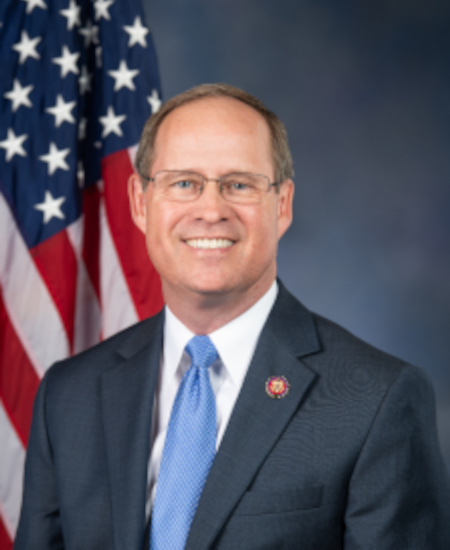
Rep. Gregory F. Murphy
Sponsored bills
Protecting Family and Small Business Tax Cuts Act of 2022 This bill makes permanent provisions affecting individual and business taxpayers that were enacted in 2017 by the Tax Cuts and Jobs Act and are scheduled to expire at the end of 2025. The bill makes permanent provisions that reduce individual and capital gain tax rates. The bill increases the standard tax deduction for individual taxpayers. It also increases and modifies the child tax credit and raises the contribution base for the tax deduction of charitable contributions. The bill allows additional contributions to ABLE accounts (tax-exempt accounts designed to enable individuals with disabilities to save and pay for disability-related expenses). It exempts from taxation combat zone benefits of members of the Armed Forces serving in the Sinai Peninsula of Egypt and the moving expenses of servicemembers. Additionally, the bill lowers to $750,000 the amount of mortgage debt eligible for an interest expense tax deduction; excludes from the gross income of student borrowers income attributable to the discharge after 2025 of loan debt due to death or disability; makes permanent the limitation on the tax deduction for state and local taxes and denies a deduction for foreign real property taxes; makes permanent the tax deduction of the income of certain pass-through business entities; repeals the tax deduction for personal tax exemptions and the exclusion of employer-provided bicycle commuter fringe benefits; terminates certain miscellaneous itemized tax deductions; doubles the estate and gift tax exemption amount; and makes permanent the increase of the alternative minimum tax exemption amount for individual taxpayers.
This bill requires the military departments to reinstate individuals (upon their request) who were involuntarily separated from the Armed Forces solely based on their refusal to receive a COVID-19 vaccination. Such individuals must be reinstated in the grade they held prior to the separation.
Accelerating Access to Critical Therapies for ALS Act This bill establishes grant programs to address neurodegenerative diseases, such as amyotrophic lateral sclerosis (also known as ALS or Lou Gehrig's disease), and contains other related provisions. The Department of Health and Human Services (HHS) shall award grants to eligible entities for scientific research utilizing data from expanded access to investigational ALS treatments for individuals who are not otherwise eligible for clinical trials. The Food and Drug Administration (FDA) shall award grants to public and private entities to cover the costs of research and development of drugs that diagnose or treat ALS and other rare neurodegenerative diseases. HHS shall also establish the Public-Private Partnership for Neurodegenerative Diseases between the National Institutes of Health, the FDA, and at least one eligible entity (generally, an institution of higher education or a nonprofit organization). The partnership shall support the development and regulatory review of drugs that address ALS and other rare neurodegenerative diseases. The FDA shall publish on its website a five-year action plan for fostering the development of drugs that improve or extend the lives of people living with rare neurodegenerative diseases. The Government Accountability Office must report to Congress about the grants provided under this bill, including an analysis of the impact of such grants on research and development of treatments for ALS.
This concurrent resolution expresses the sense of Congress that tax-exempt fraternal benefit societies provide critical benefits to the people and communities of the United States and their work should continue to be promoted.
This bill posthumously provides for the award of a Congressional Gold Medal in commemoration of the 13 service members who died on August 26, 2021, while stationed at Hamid Karzai International Airport in Afghanistan.
Haiti Economic Lift Program Extension Act of 2021 or the HELP Act of 2021 This bill extends through FY2035 the special duty-free rules for Haiti. It also extends through December 19, 2035, the duty-free treatment provided for apparel articles assembled in Haiti and imported from Haiti or the Dominican Republic.
Parents Bill of Rights Act This bill outlines various rights of parents and guardians regarding the elementary or secondary school education of their children. Among other requirements, the bill (1) directs local educational agencies to publicly post the curriculum for each elementary and secondary school grade level; and (2) requires schools to notify parents and guardians of their rights, including the right to review the school's curriculum and budget.
Parental Rights Protection Act This bill restricts government entities from requiring that individuals age 18 or younger receive certain COVID-19 vaccines that were authorized through emergency use and related procedures. Specifically, a federal, state, tribal, territorial, or local government entity (including a local educational agency) that receives funding from either the Department of Education or the Department of Health and Human Services may not require such COVID-19 vaccinations for individuals age 18 or younger. In particular, a local educational agency that mandates COVID-19 vaccinations for students loses its eligibility for federal education funding. The bill also requires the prior, informed, written consent of a parent or guardian before administration of such COVID-19 vaccines to an individual age 18 or younger.
This bill authorizes the Department of Transportation to provide formula grants for passenger ferry boat projects in non-urbanized areas regardless of population size.